Adventures in Banjo Making – 01

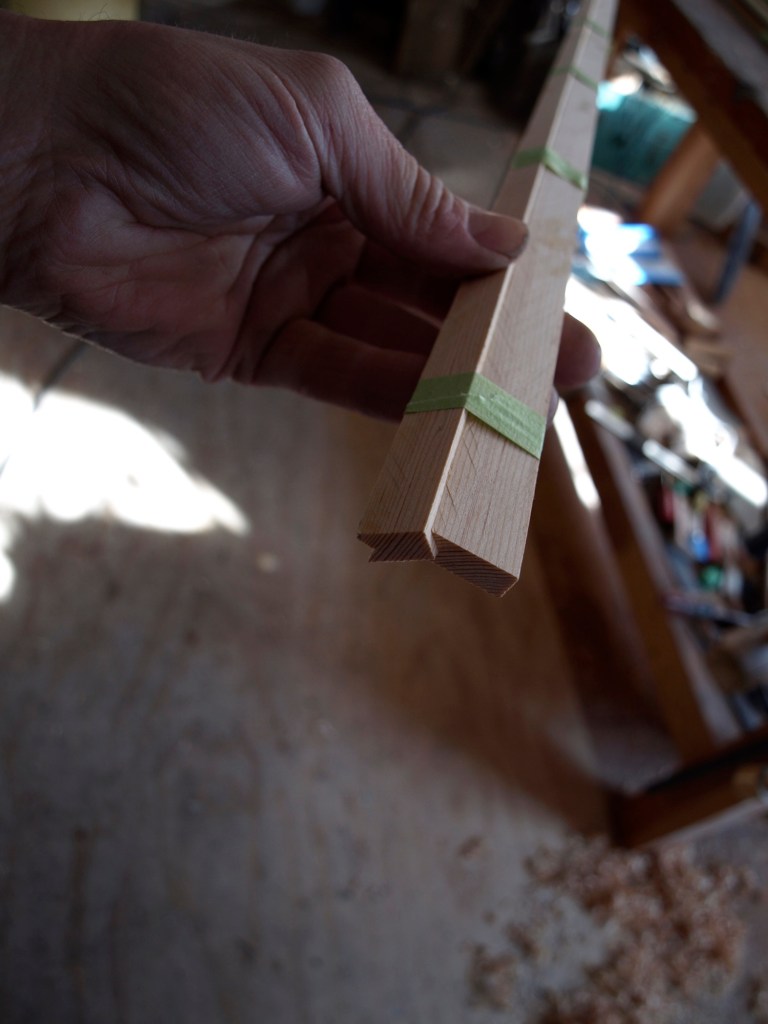
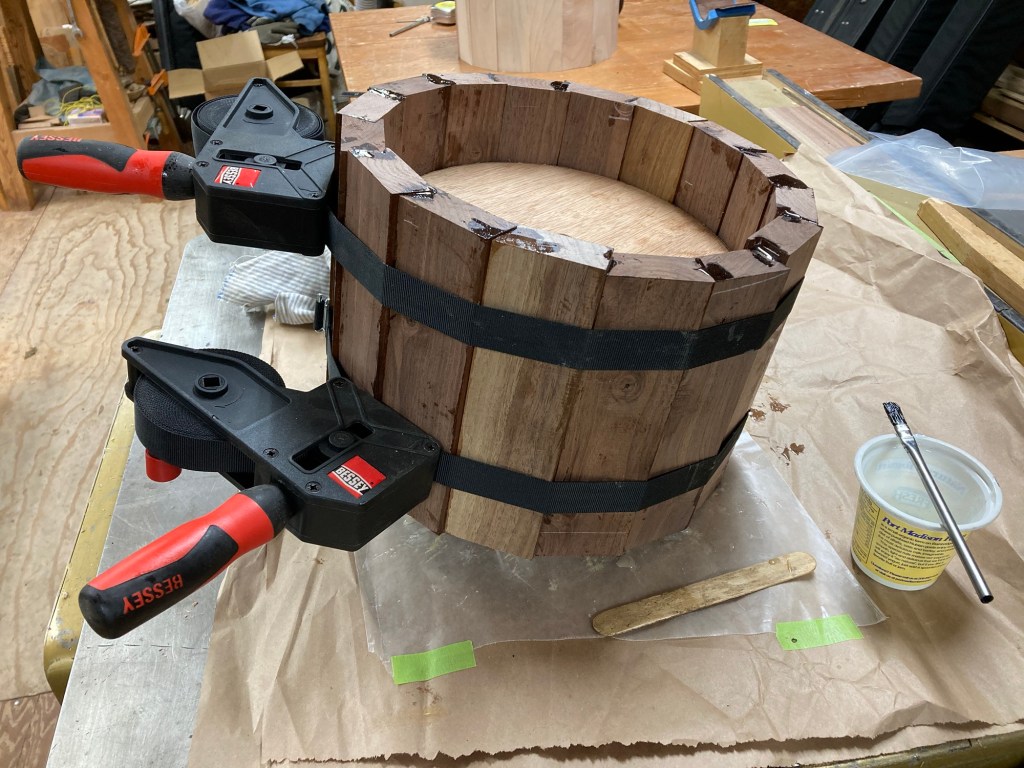
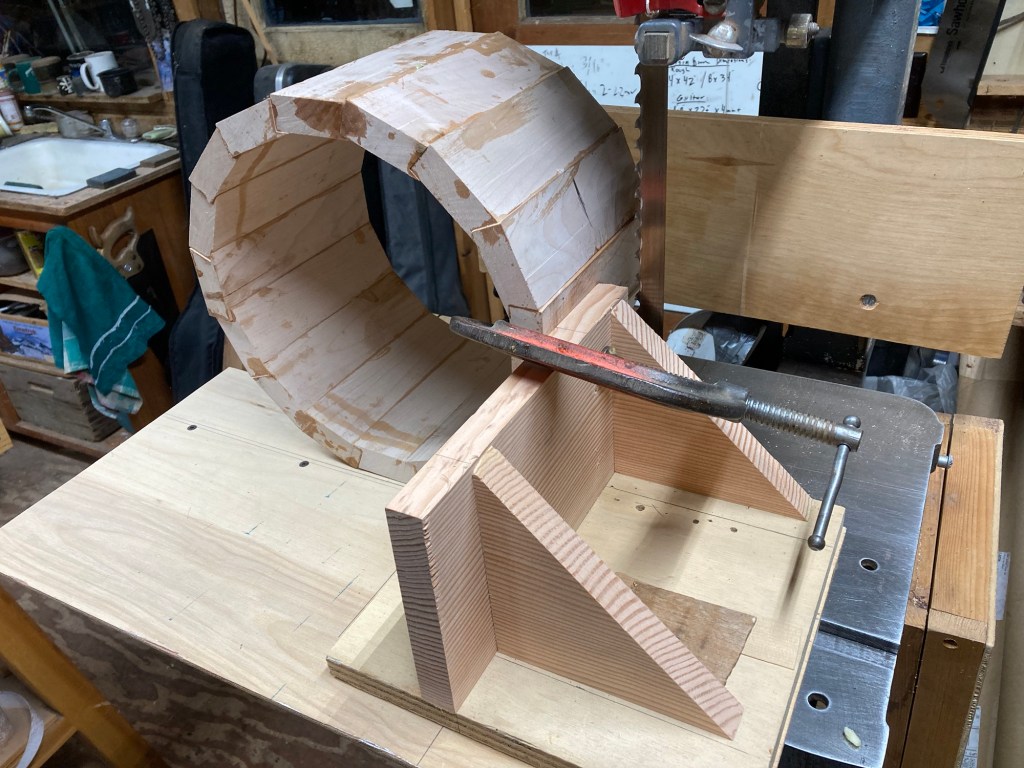
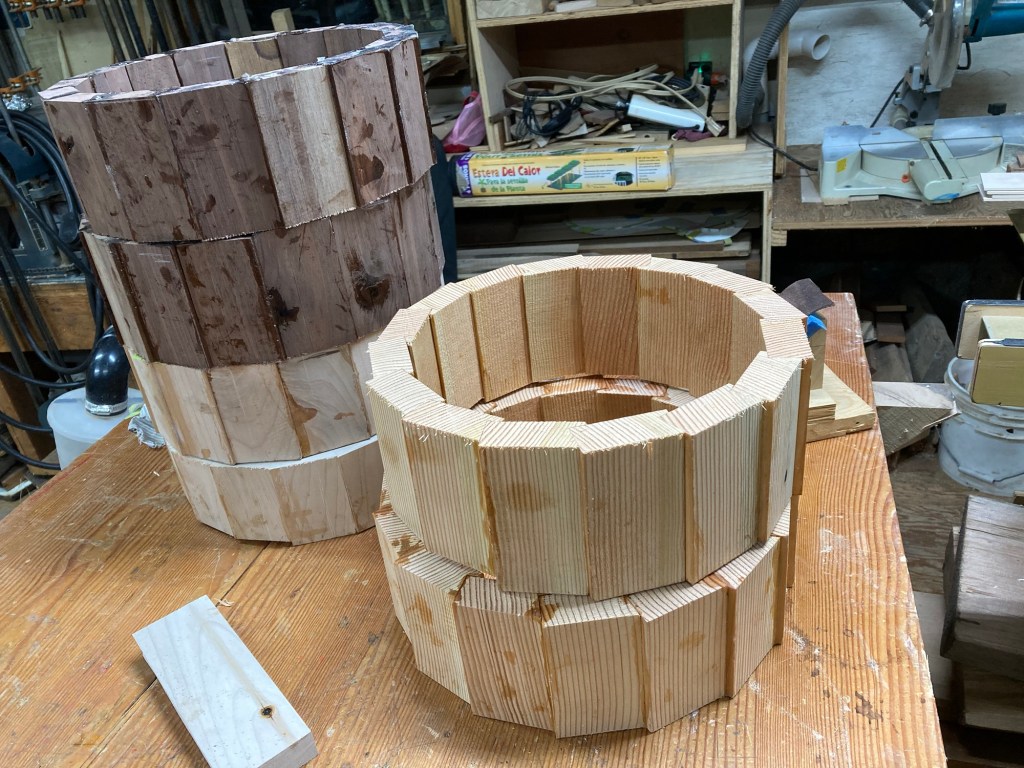
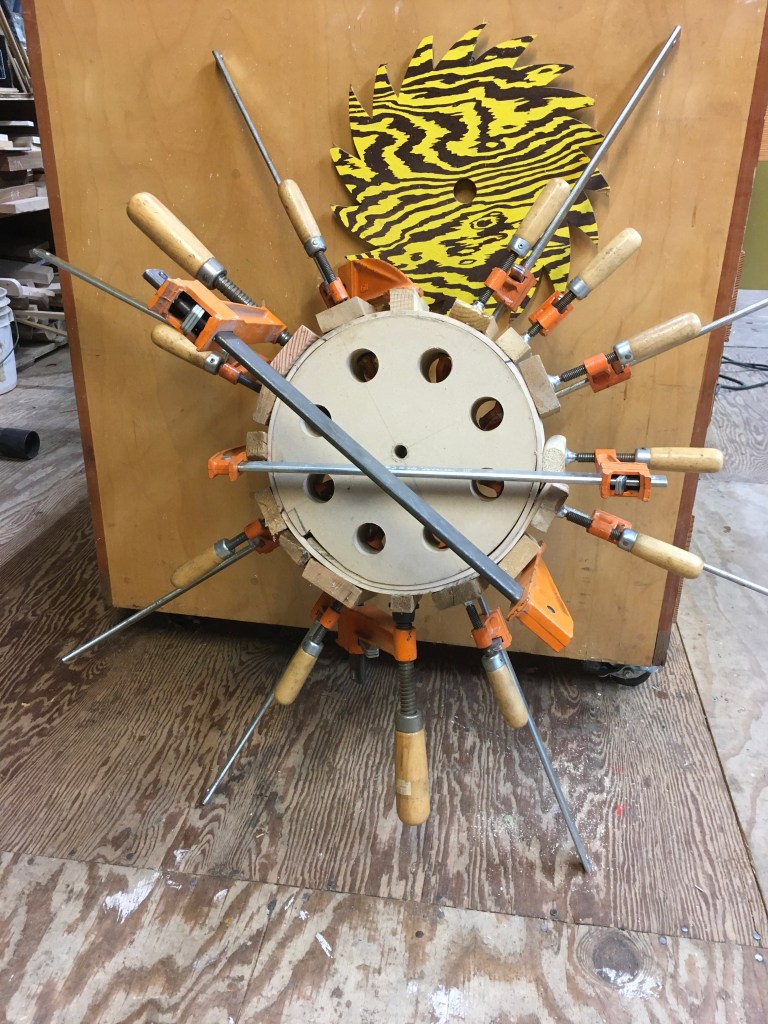
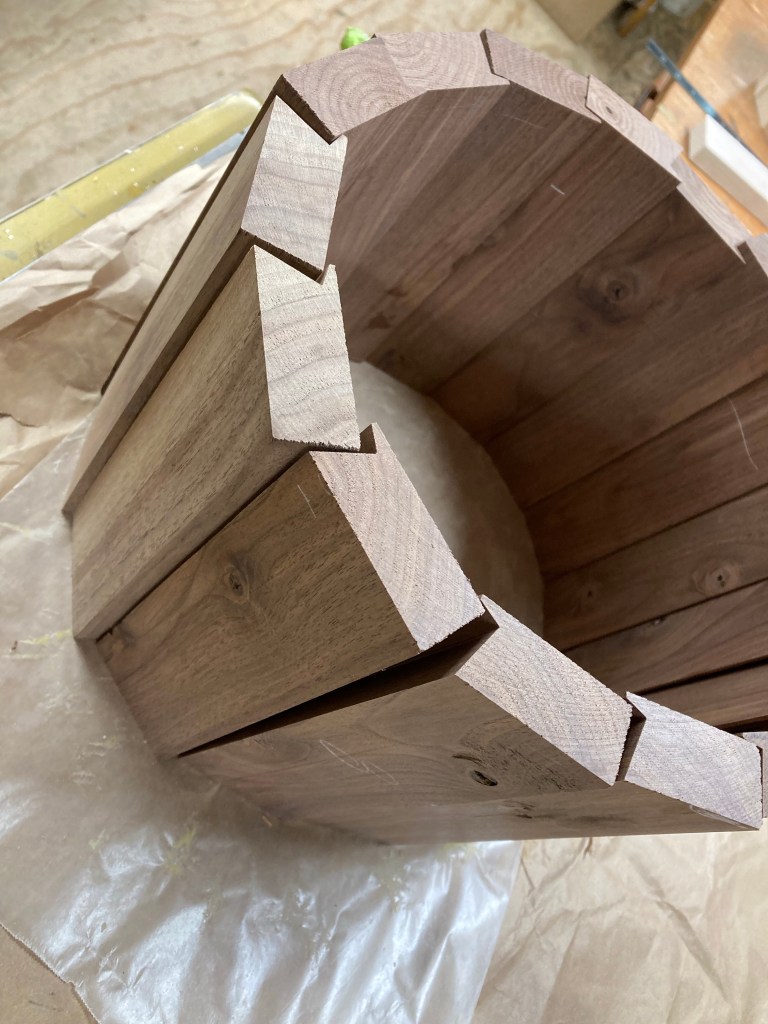
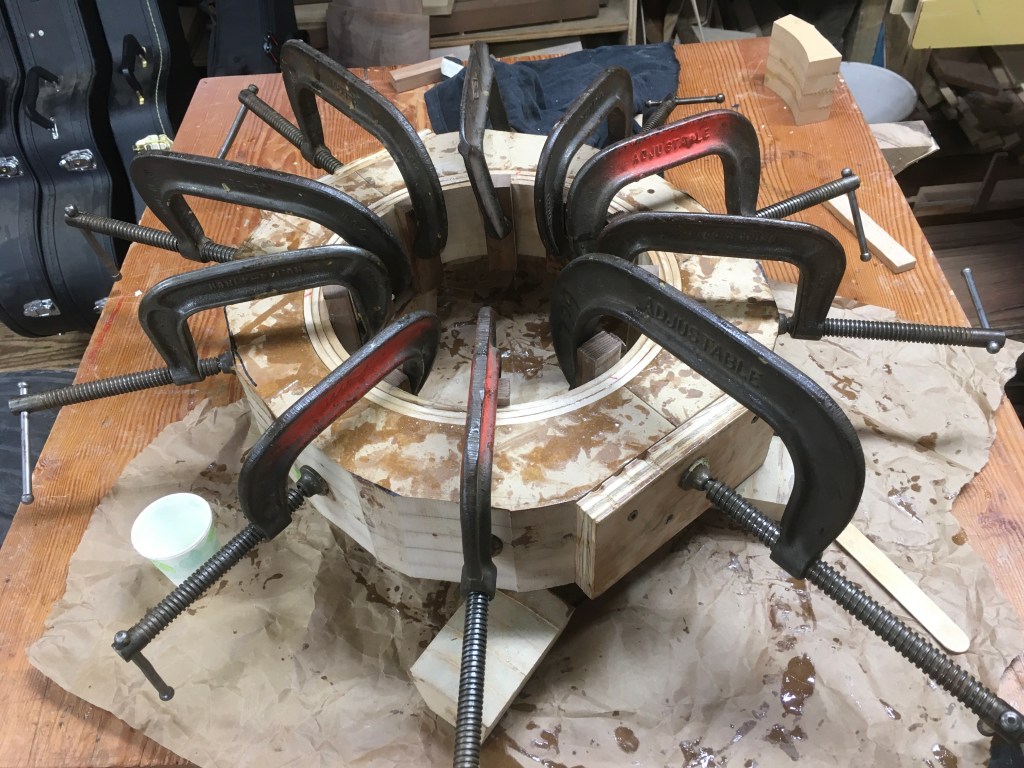
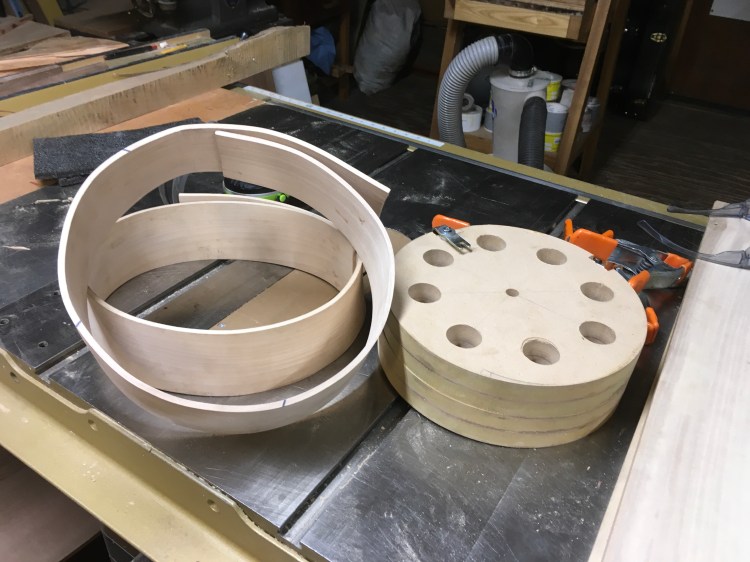
A good friend handed me a banjo a few years ago and I loved it. I’ve had some experience playing in open G tuning on a guitar, so that was a plus not having to learn a new tuning, and there were only four strings! (It was a tenor banjo). The same friend later loaned me another banjo (a bluegrass, 5 string with a resonator) he had so I was able to dive in a bit more. I’ve never become terribly proficient at it and sort of have my own way of playing, but so began my love of the instrument. Having made a few guitars at that point, of course then I wanted to attempt making a banjo. Easy right? Basically a drum with a stick on it.. Ha! Ends up there’s a lot more to it than meets the eye as far as making one. They are that, a drum with a stick for the strings, which can be made as basic as you want, a can with a neck attached will do, you can make music with it. I want(ed) to go deeper, so with this occasional blog posting I’ll document my efforts.
Open Back Banjo

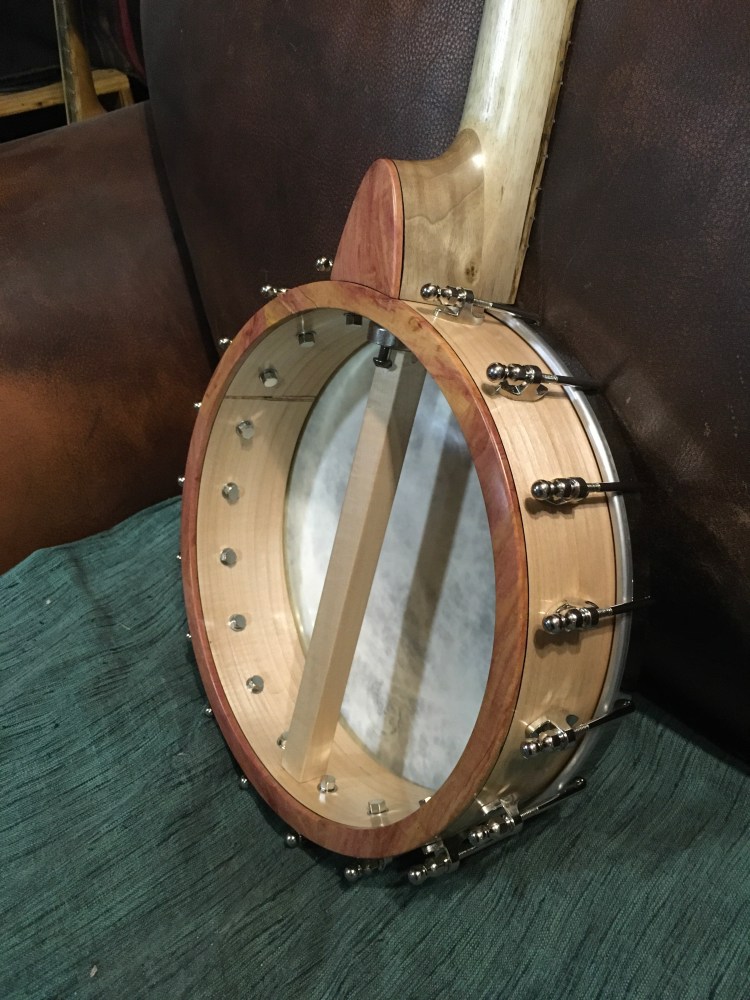
The bluegrass banjo is a great instrument, it has a resonator shell on the back of the pot, or body. Probably the banjo most people are familiar with. The resonator really helps project the sound out and increase the volume, perfect for an all acoustic jam or stage performance, especially without electric amplification. What I’m more interested in is an open back banjo, not as loud and with nylon (or NylGut) strings for a quieter, warmer tone. I mostly play by myself at home, and don’t want my wife or dogs to dread when I play it. (They may still..)

My knowledge of banjos is very limited, I’m learning more as I go. Please don’t hesitate to educate me when I get it wrong. More to come…

New Guitars – March 2023

Koa & Maple #20

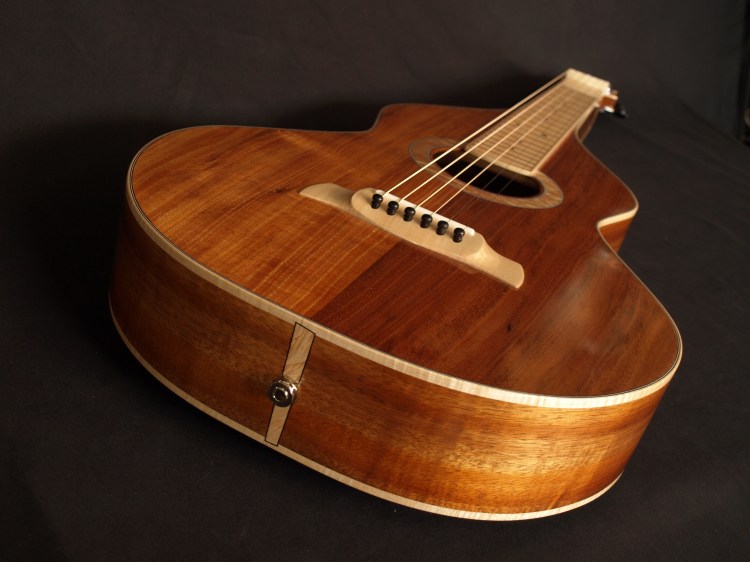
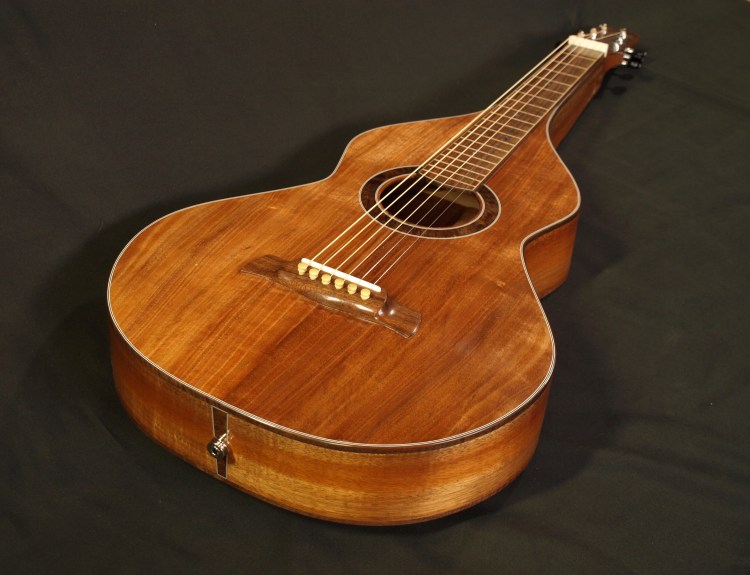
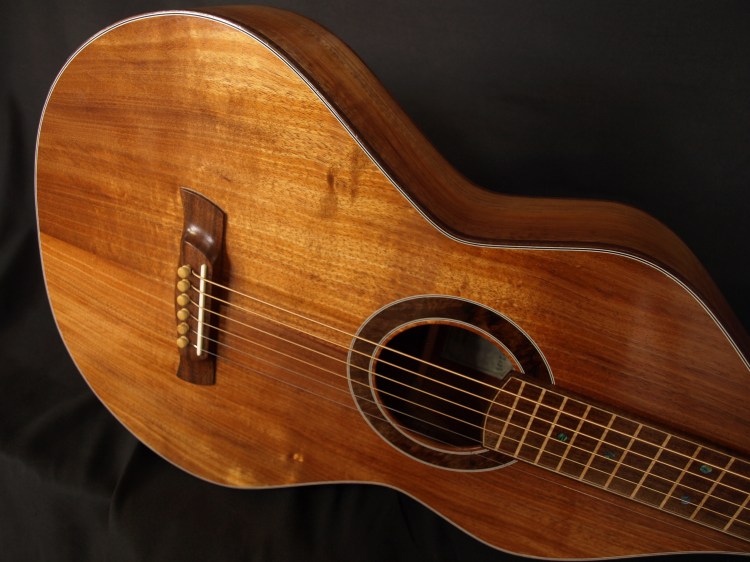
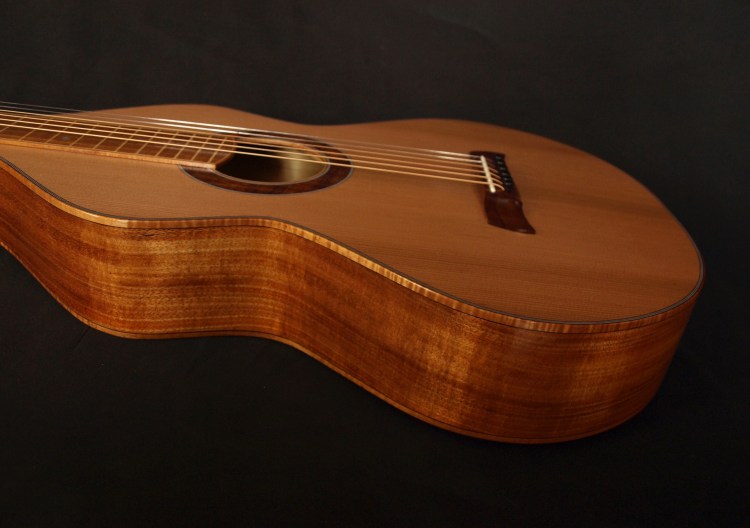
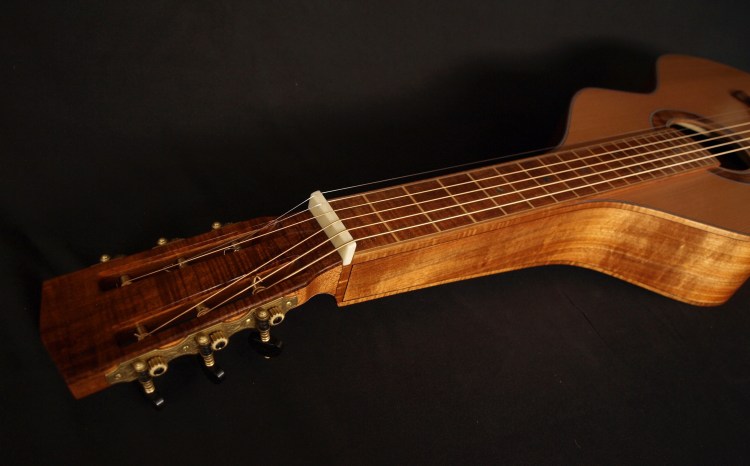
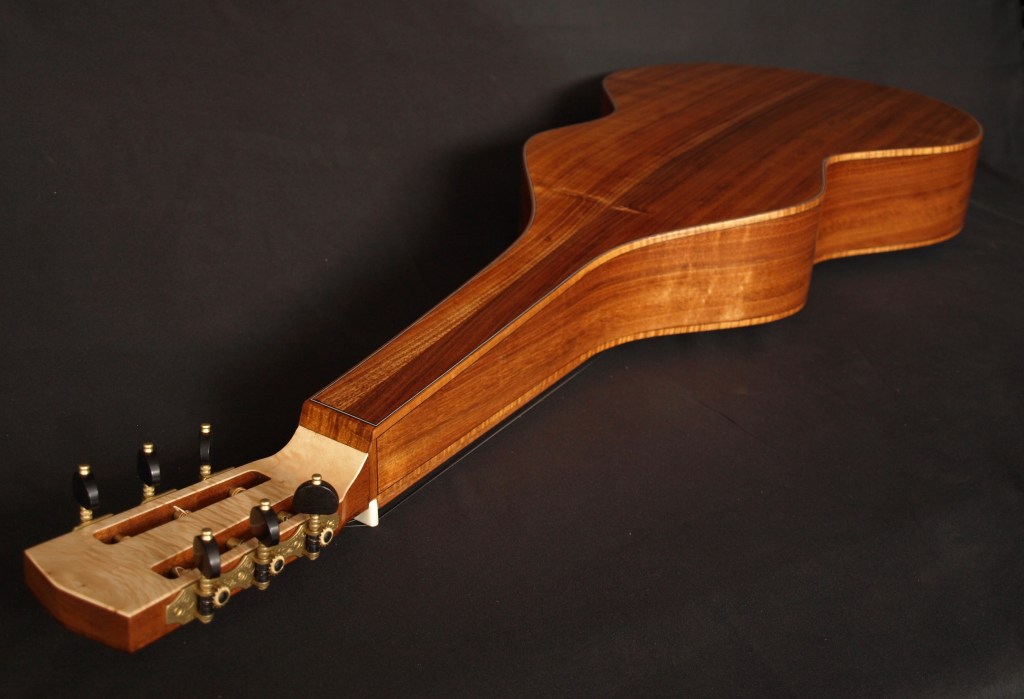
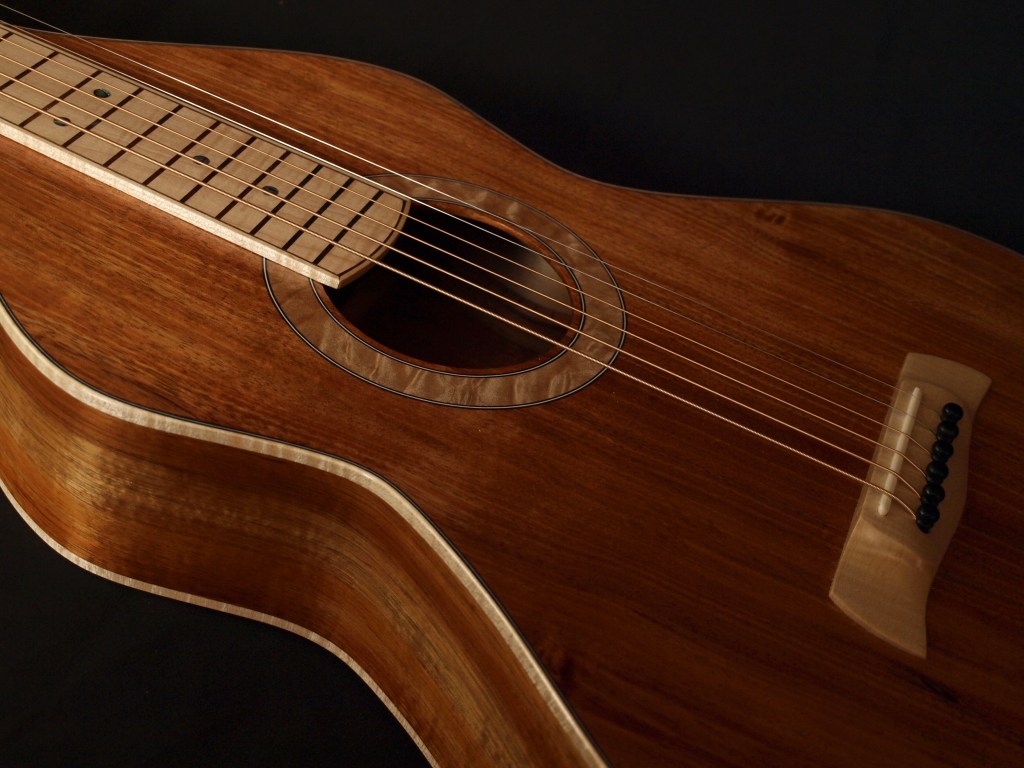
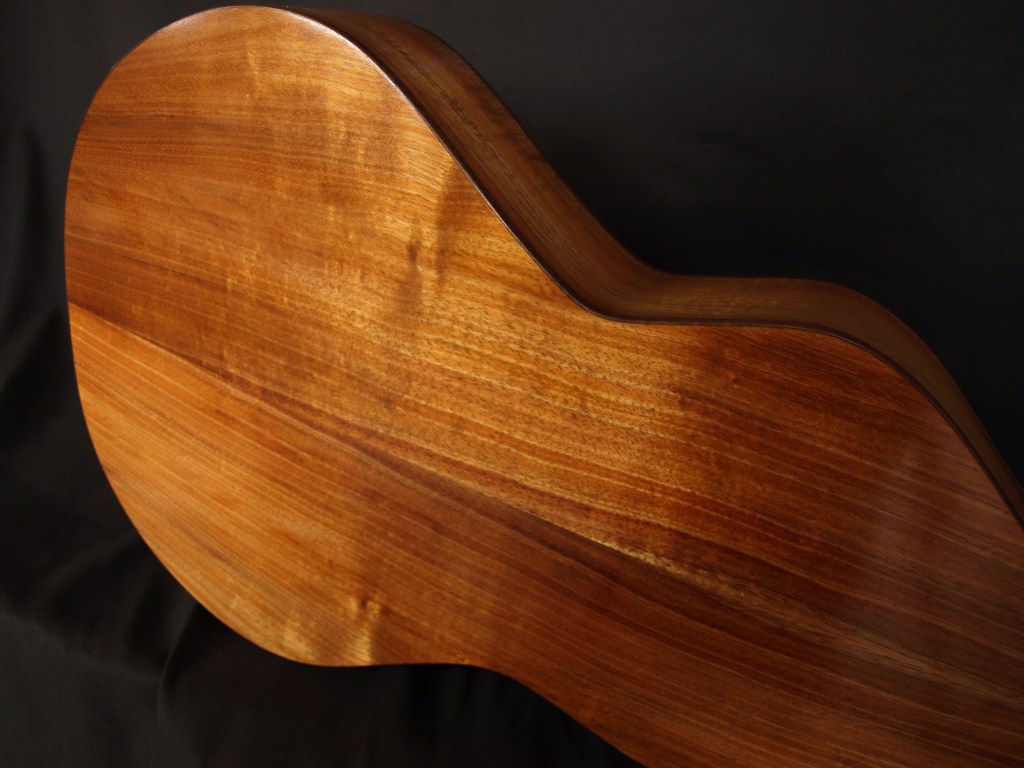
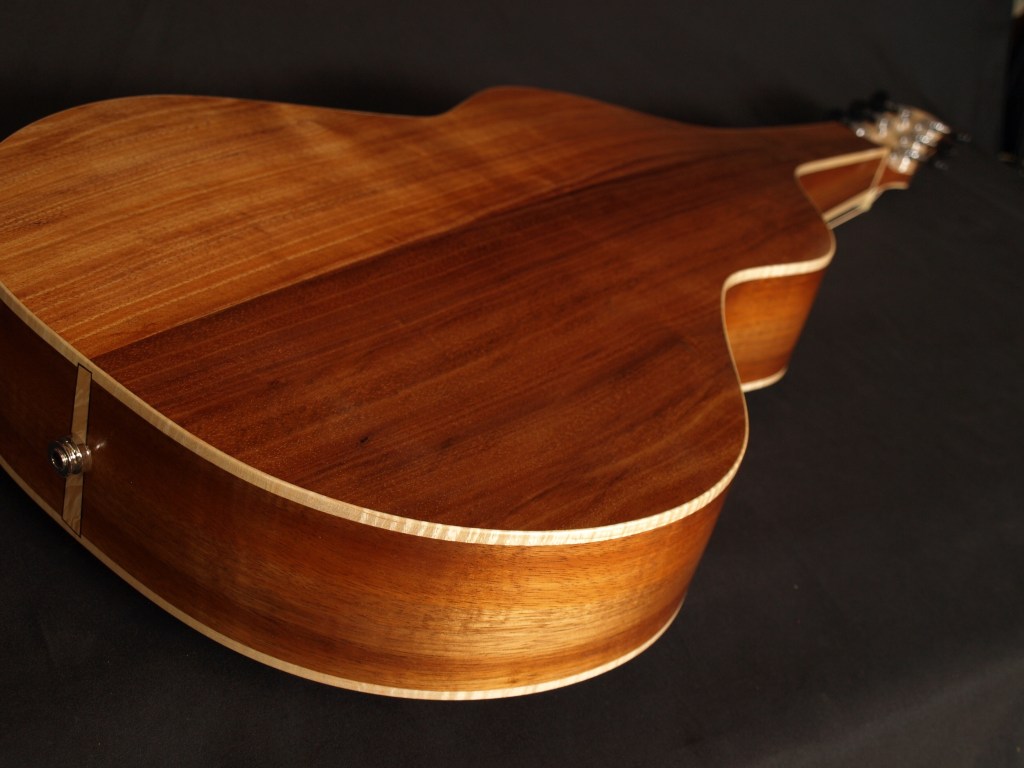
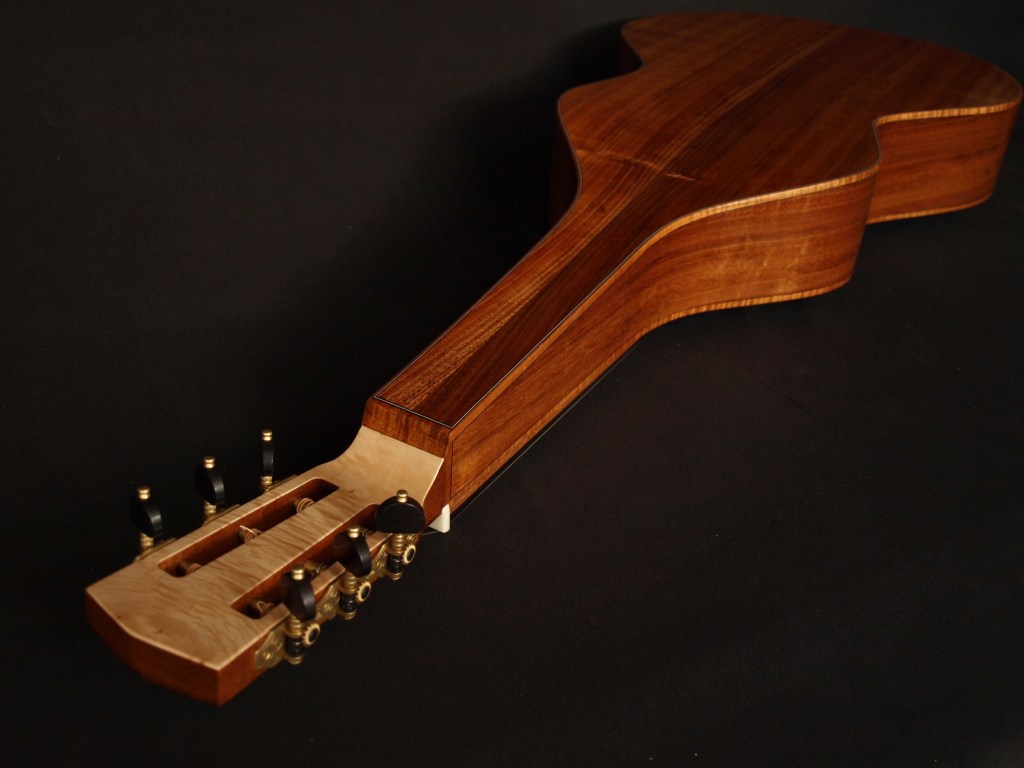
It’s been a while since I’ve been here. I will try to do better.. I’ve recently finished three Koa Weissenborn type guitars. Two are all Koa, the top, back and sides, the third has Koa back and sides with a Red Cedar top. Almost all my work is with local/domestic woods, but I went exotic with these. A nod to the traditional Weissenborn or Knudson ‘Hawaiian Guitar’ which were largely made from Koa. It’s a decent wood to work with, has a rich sound when put in an stringed instrument and is incredibly beautiful when finished.

Koa & Black Walnut #19
Koa & Black Walnut Weissenborn #19

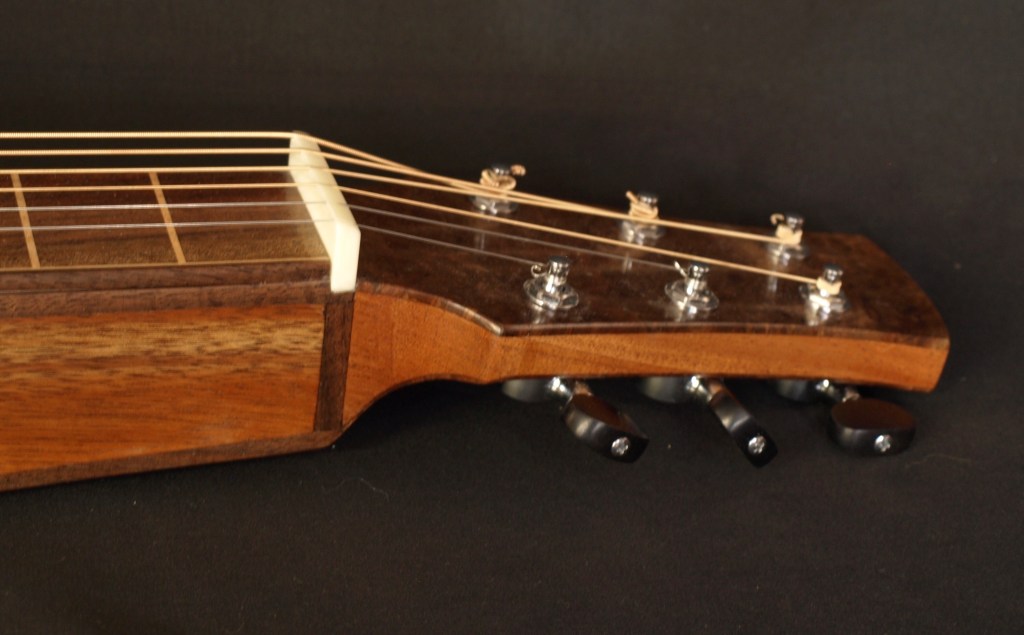
The Weissenborn is a lap guitar, it’s played with a metal, glass, ceramic or bone slide. The strings aren’t fretted as with a traditional guitar, the slide plays on the strings, think bottleneck playing or pedal steel, it’s a beautiful sound and it’s acoustic. I can’t say I play slide guitar, but I do play around with them, I love the sound and making them. The names Weissenborn and Knudson are of Chris Knudson and Hermann Weissenborn, who made these type of guitars in the early 20th century, part of a Hawaiian music craze then. Knudson guitars were made in Tacoma, Port Townsend and Seattle, the Weisseborns were made in Los Angeles.

Koa with a Red Cedar Top #21
Koa, Red Cedar #21

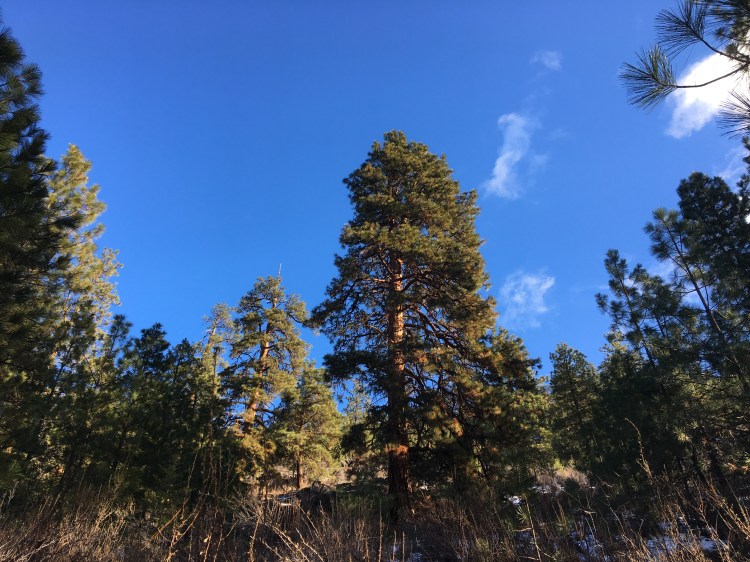
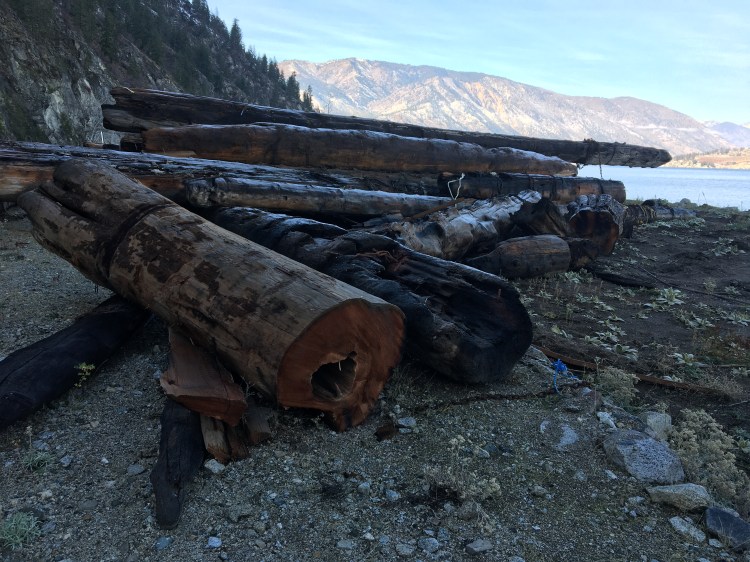
The Koa came from Notable Woods on Lopez Island in Washington state, who I highly recommend for sourcing instrument woods, great service and excellent material. Of course the wood originates from the big island of Hawaii exclusively, it is in the Acacia family. The bracing is made from Sitka Spruce from Alaska Woods, also great material. The Red Cedar was rescued from what was an old dock that was in Lake Chelan for many years. The dock was rebuilt and the old logs were disposed of, a few sections from a particularly nice log was harvested by yours truly before they got taken away. I’m guessing it’s origins are from somewhere up lake, a great find and wonderful tone wood.

Treasure in Plain Sight..

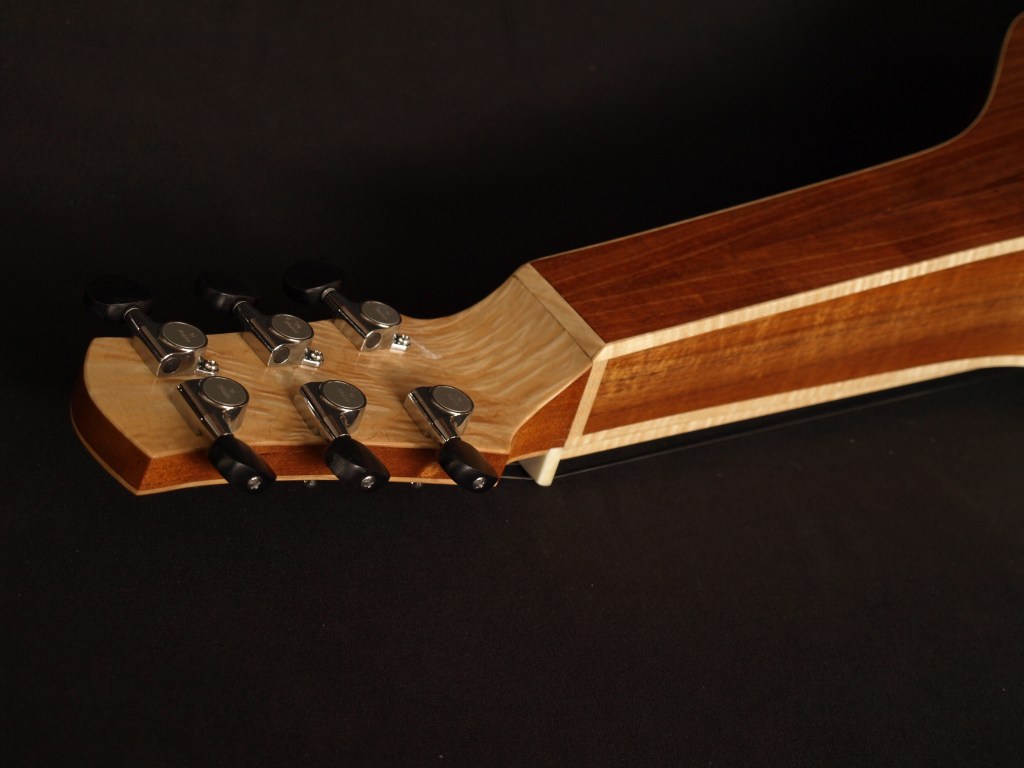
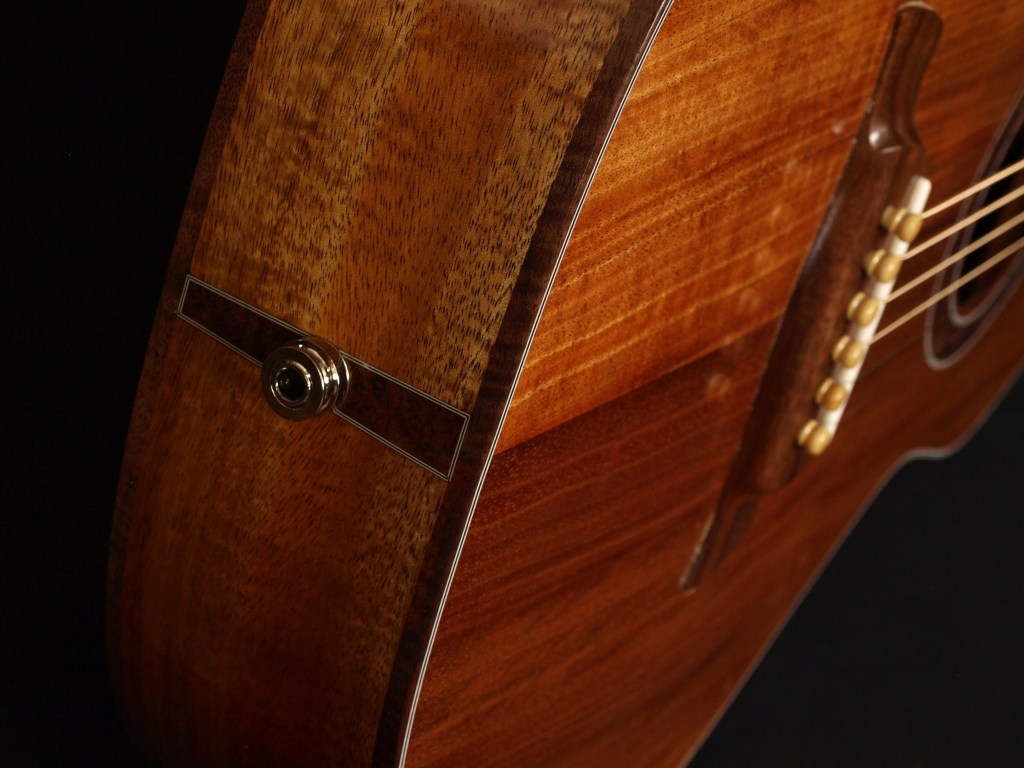
Specifications: -Koa top, back & sides, except for the Cedar top on #21. The sides are structured (laminated). —Sitka Spruce bracing -#19 Black Walnut fretboard, bridge, rosette, binding and headstock veneer #20 Maple fretboard, bridge, rosette, binding and headstock veneer -#21 Koa fretboard, bridge, rosette, binding and headstock veneer -Bone nut & saddles -Pau Abalone fret markers at the 5, 7, 9, 12, 15, 17th frets -K&K Pure Mini under bridge pickups -19 & 20 have Gotah tuners with ebony buttons, 21 has Rubner tuners with ebony buttons -John Pearce Weissenborn strings .015″ – .060″ – Hard Shell cases for 19, 20 – Access Stage Three case for 21 -Overall length 39″, lower bout 15″ – 19, 20 3 1/4″ body depth – 21 3 3/4″ body depth #19 & #20 are available, contact me if interested.

# 11

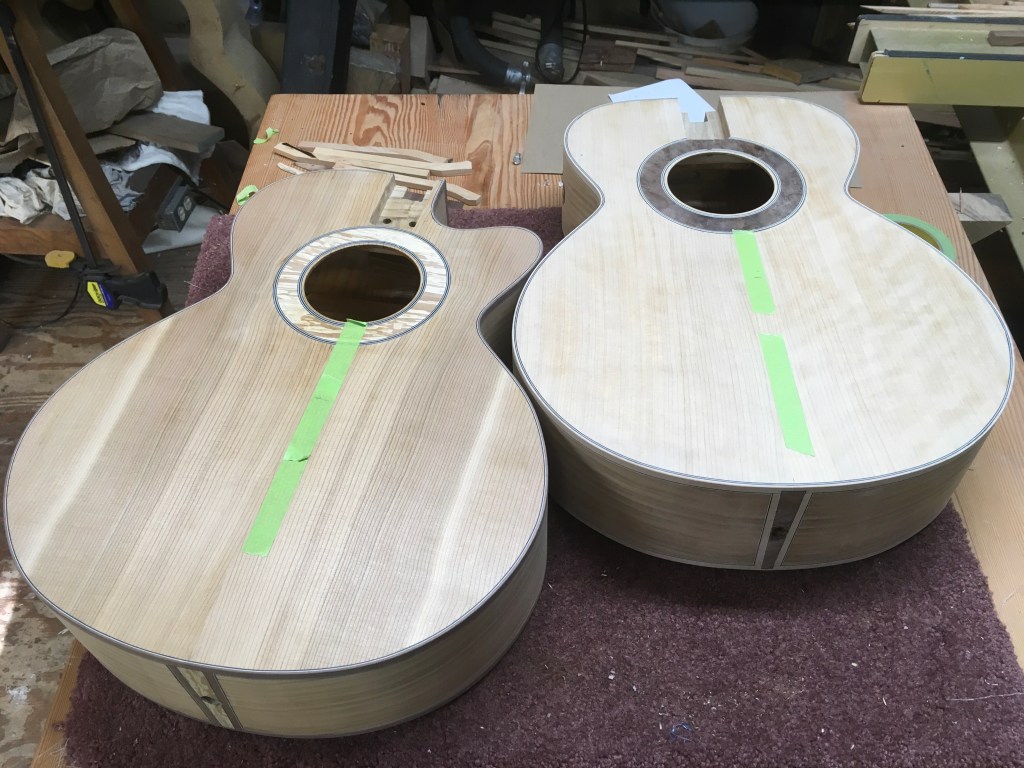
When I make guitars, I usually make at least two at a time. It doesn’t take twice as long, maybe half as long again as making two separately. I don’t have any inclinations to become a factory, but more then one at a time seems to work well for me. In 2018 I made four, two OM’s and two Weissenborn Hawaiian lap steel guitars. It ended up taking me more then a Winter to finish them, the Weiss’ were finished that Summer, but the OM’s were finished the following Winter. My building season is pretty much just the Winter, my wife and I have a small farm, which takes up most of our time Spring, Summer and Fall. We grow mostly tree fruit but also plenty of row crops as well, which we sell at a farmers market in Seattle all Summer & Fall. I can manage a little bit of shop time during the growing season, depending how a particular crop is and how hot it is in the afternoon.

#11

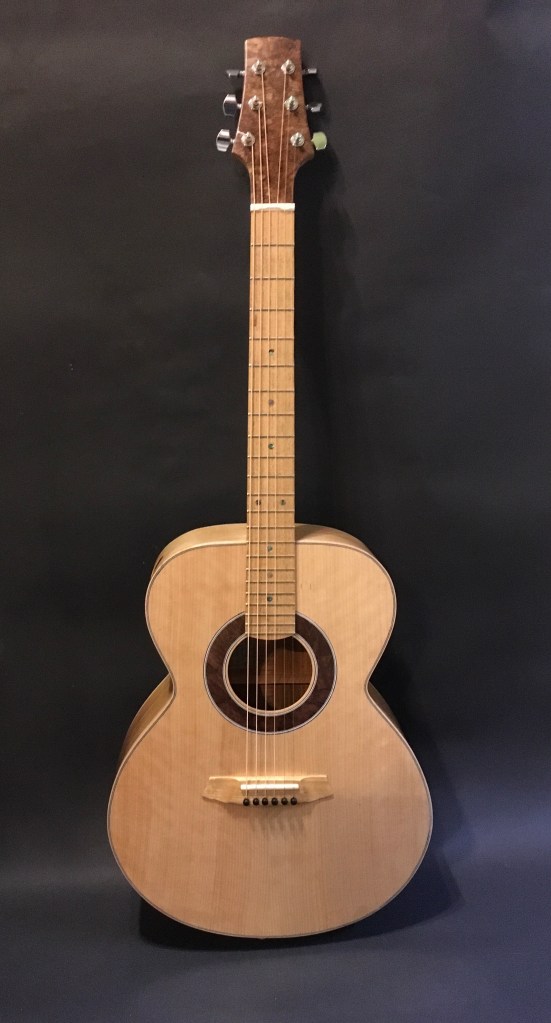
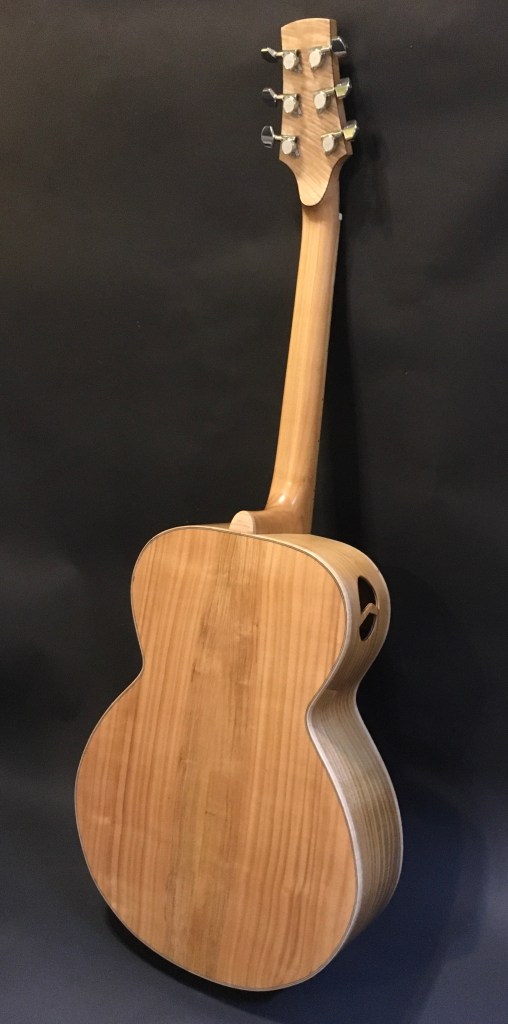
The #11 is one of two I started last Winter and just finished a few weeks ago (still trying to catch up from 2018). Like #10, it is mostly all local wood, not quite as local as #10 is, but all the wood came from the Lake Chelan valley, not limited to 25 Mile Creek valley. Execpt for the soundboard, which is Port Orford Cedar from the southwestern coast of Oregon and the bridge pins, which are ebony.

The back, sides and neck are Cherry from a neighbors place, the fretboard is Black Locust from local homestead trees. The Walnut burl in the rosette and headstock veneer are from a old homestead in the town of Chelan, which has been developed into condos, that’s the reason the tree was removed. The bracing is from some straight pieces of Douglas Fir which we harvested for firewood in the woods in our valley. The linings are made from Chestnut wood also from local homesteads, I consider it a soft hardwood, strong but lightweight as well. The Maple bindings came from trees in Chelan as well, from Lakeside Park, the trees were cut down when a big hotel went in where a few homes were and the Maples had to go to make room for an expanded parking area. They are Bigleaf Maples.

The more I play these guitars with the side soundports, the more I really like extra sound which comes out of them, almost like a surround sound, and it’s a cool view into the instrument. This guitar has a lot of volume and well defined bass and treble, and plays very well. It is available, email if interested. Thanks.

#10 & #11

New guitars

Just finished two guitars which I’m pretty happy with. With the time I have to make guitars I can usually make two a year, sometimes I start and work on more then that, but realistically only two get done a season. These two are a couple I started last Winter, numbers 10 & 11. My goal with these, besides trying to make playable and great sounding instruments, was to make them with as much local wood as I could manage.

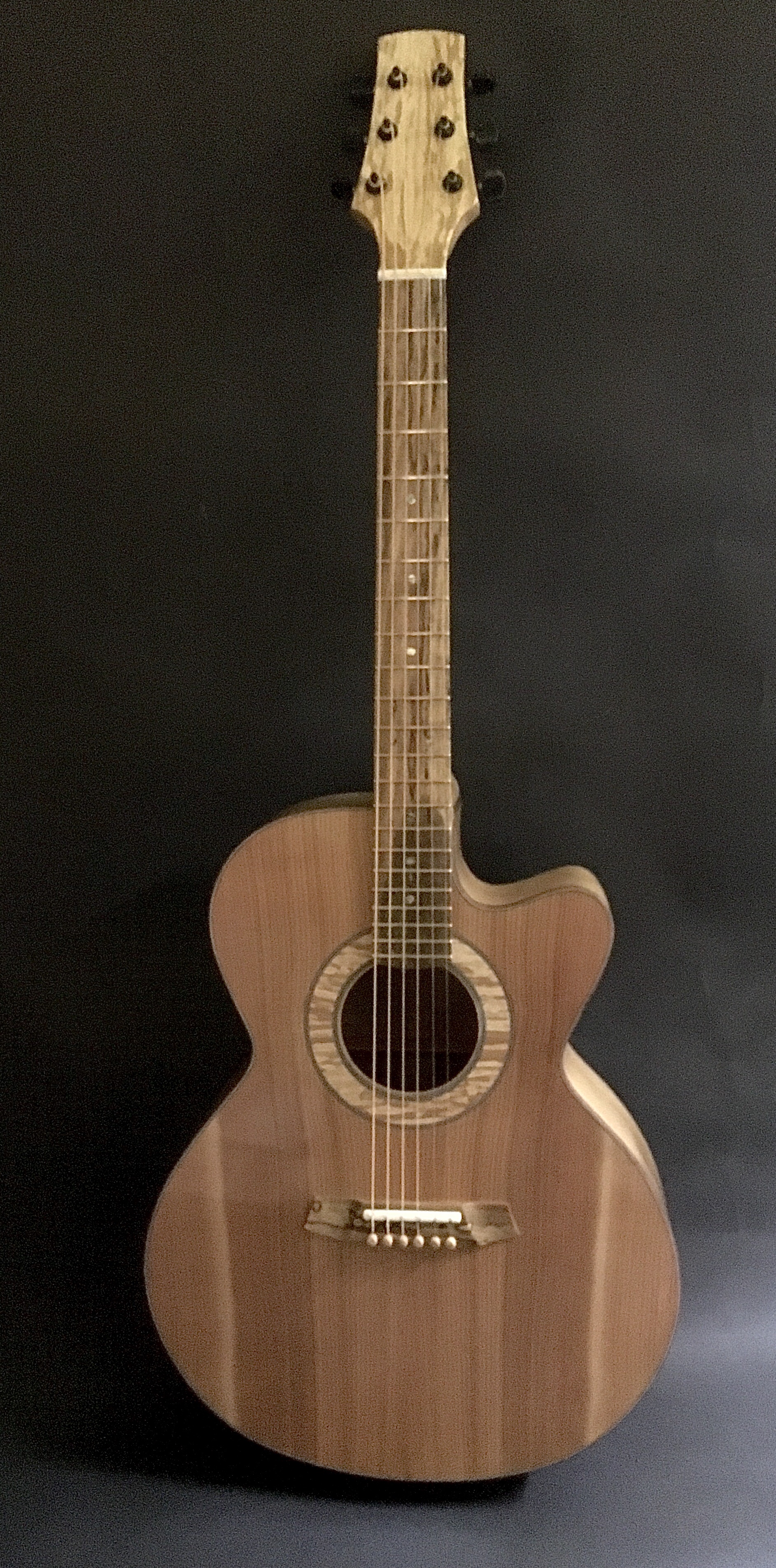
This is #10, every piece of wood came from 25 Mile Creek Valley, which drains into Lake Chelan in the eastern foothills of the North Cascades. Some of the material came from native trees and the rest from trees grown on farms or homesteads.

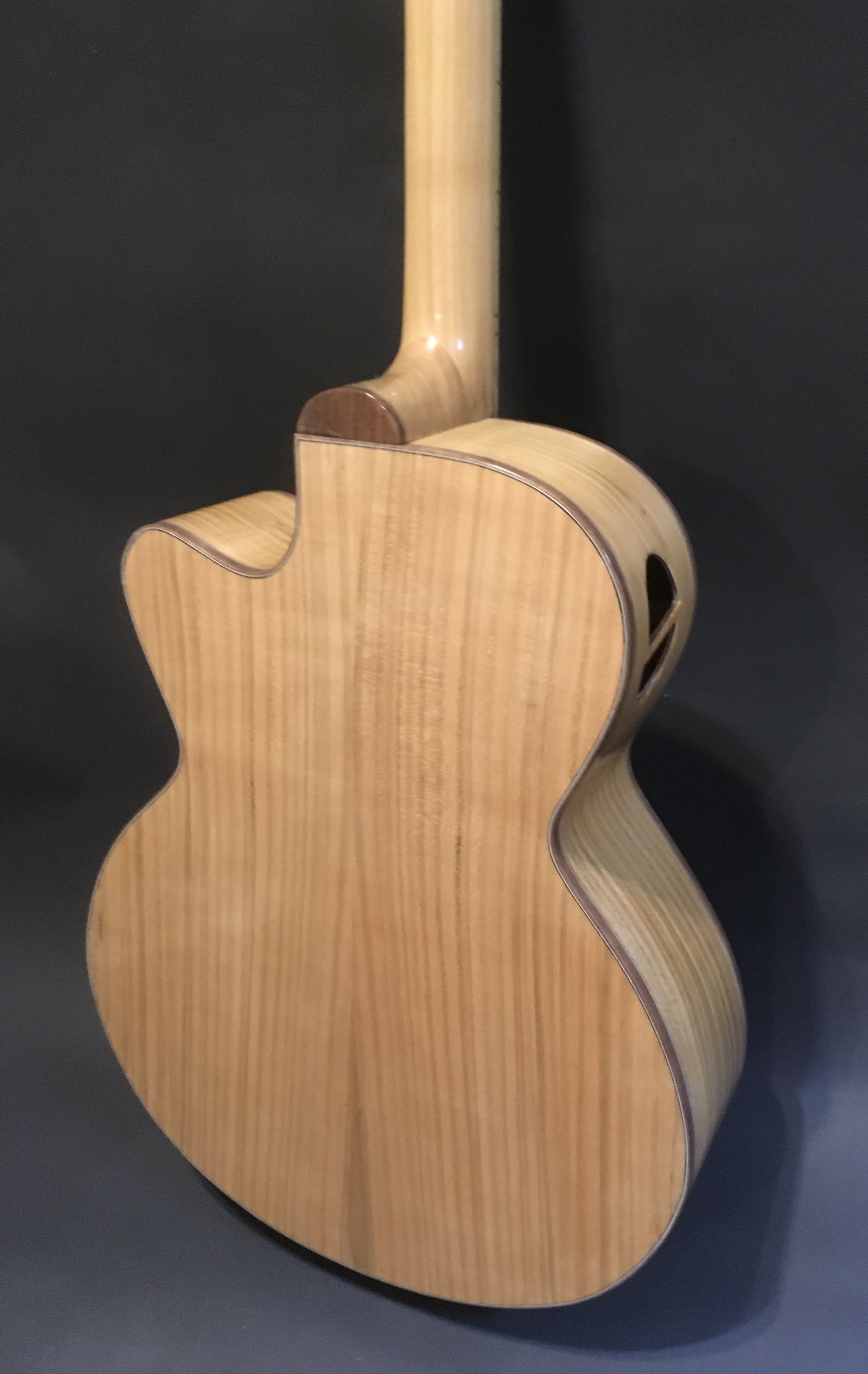
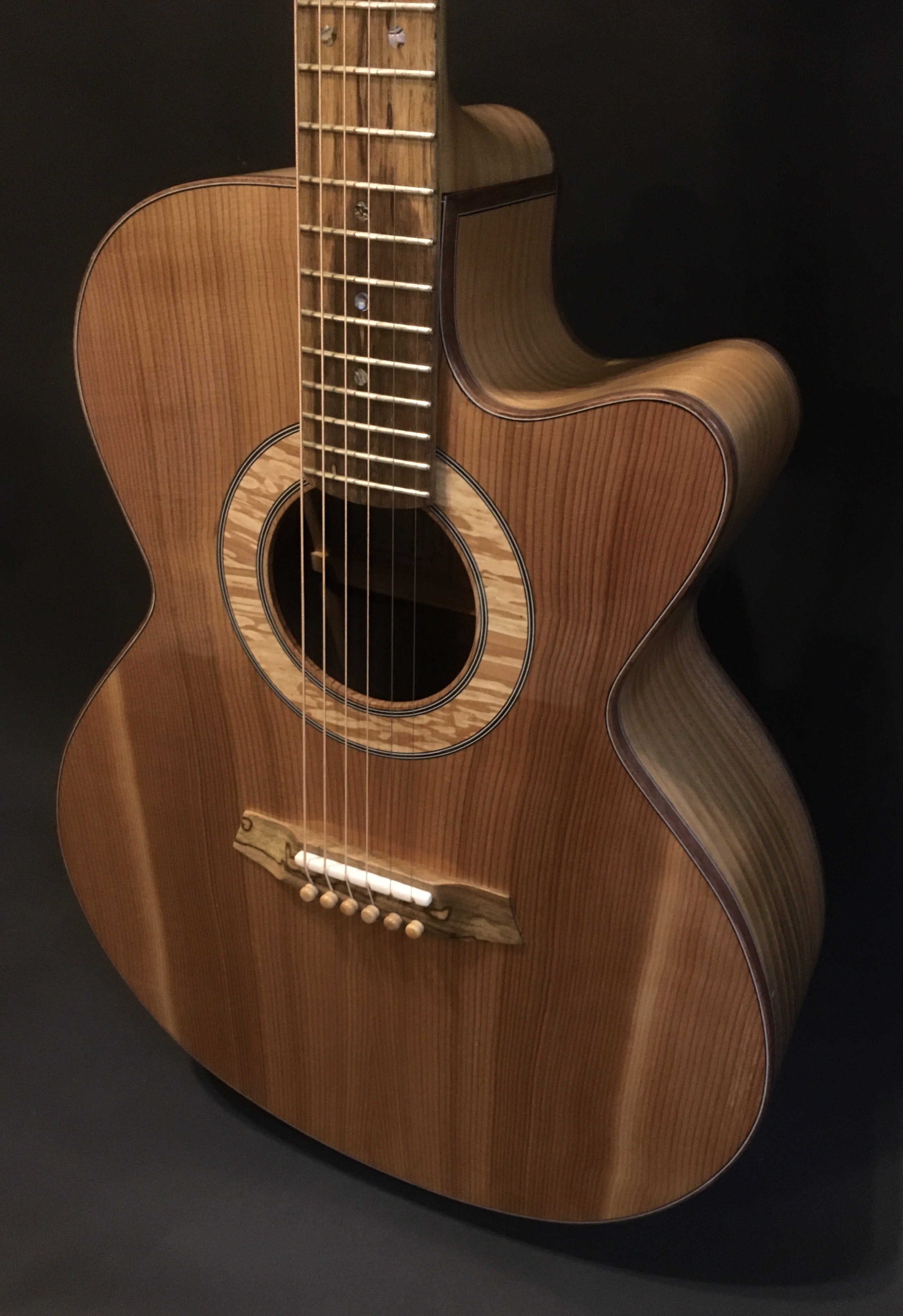
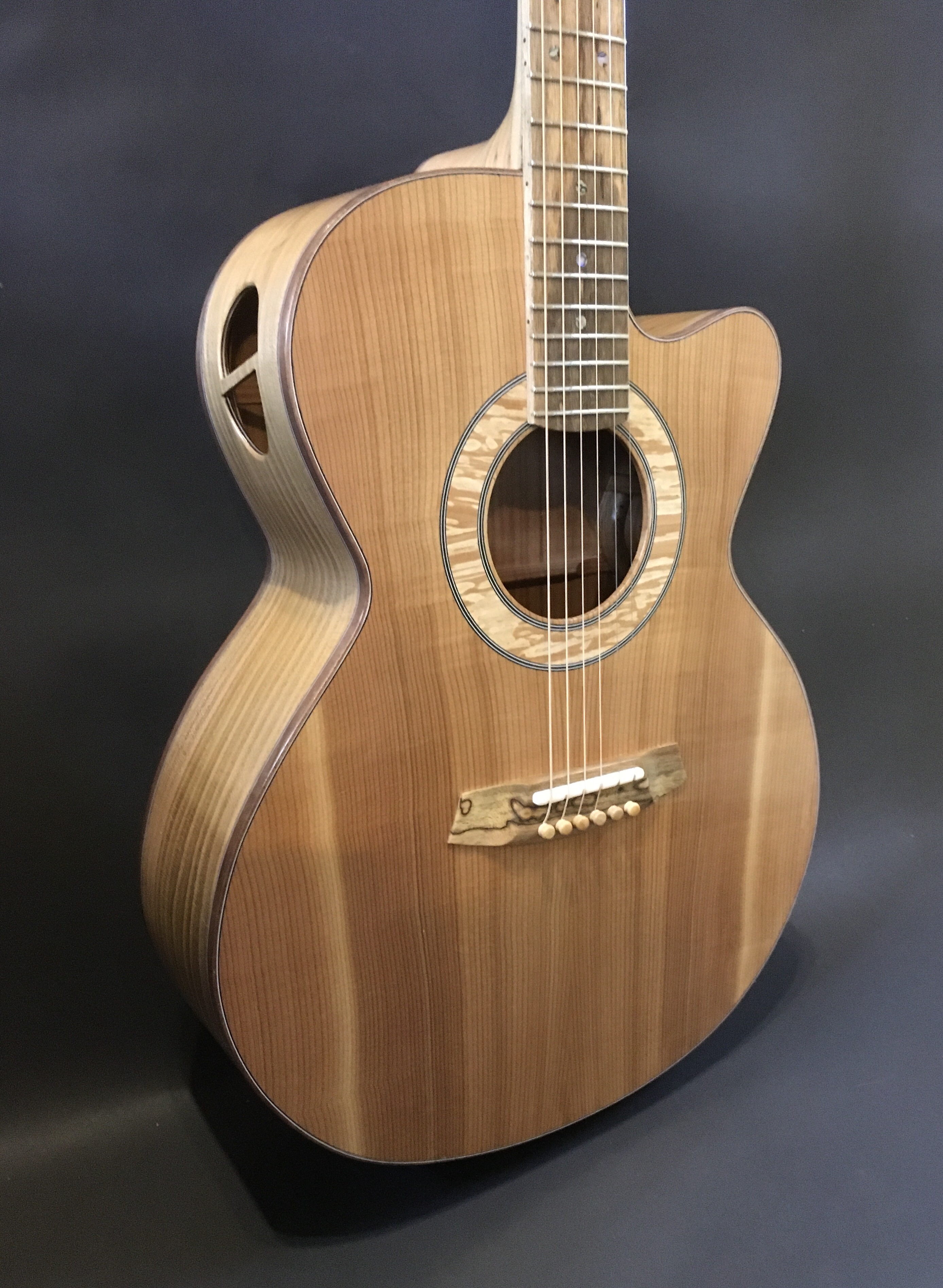
The back and sides are Cherry from a neighbors home/orchard trees, the soundboard is western Red Cedar, which may or may not have grown in 25 Mile, but was harvested as driftwood on the shore of Lake Chelan at the mouth of 25 Mile Creek. The bracing is made with Douglas Fir from the upper slopes of Grouse Mountain. The kerfing (which goes around the inside, top and bottom, used to attach the top and back of the guitar to the sides) is made from Chestnut wood, grown on our farm. The fretboard and bridge are Persimmon, the northern most relative of ebony (Diospyros) also grown here. The rosette and peghead veneer are apple wood, and the binding is black walnut from one of the oldest settlements in the valley. The only material not from here is the bridge pins which are made from boxwood, the nut and saddle which are cow bone and the abalone fret markers.

I started putting sound ports on some of my guitars, they’re the openings on the sides of the upper bout. With a conventional sound hole, the sound is directed outward, away from the player, the idea of the sound port is to give the person playing more of the sound coming out of guitar. I haven’t been playing a guitar with a side port for very long, but it really adds so much more sound while playing it.

I’m like the idea of making instruments from domestically grown wood. I don’t have anything against using tropical tonewoods, and I know that only a small percentage of the tropical wood harvest globally goes to making guitars, but there is an incredible selection of woods that grow here, that would and do make great instruments. It’s my drop in the bucket to trying not to contribute to the pillage of tropical forests. That’s not to say that Northern forests aren’t over harvested or that poachers stealing trees from the forest isn’t a problem too. I think it’s worth trying to procure the wood we use from a legit and responsible sources, ask. In truth, I haven’t worked with that much tropical hardwoods, so it could be said that I don’t know what I’m talking about, as far as comparing it with domestic woods. It’s also probably not as easy to sell stringed instruments using non traditional woods, so.. There are plantations in the tropics to try to supply those beautiful woods in managed, sustainable systems, which is great news.

I’ll post #11 in another entry.

Michael Hampel Guitars

e667a0d2-bc0a-4cdf-a42f-9174a98b8799

I make my guitars in my shop located in the Eastern Foothills of the North Cascades of Washington state. The wood I use is local or regionally harvested. My goal is to make a great playing and sounding guitars using wood from trees grown in the Pacific Northwest.

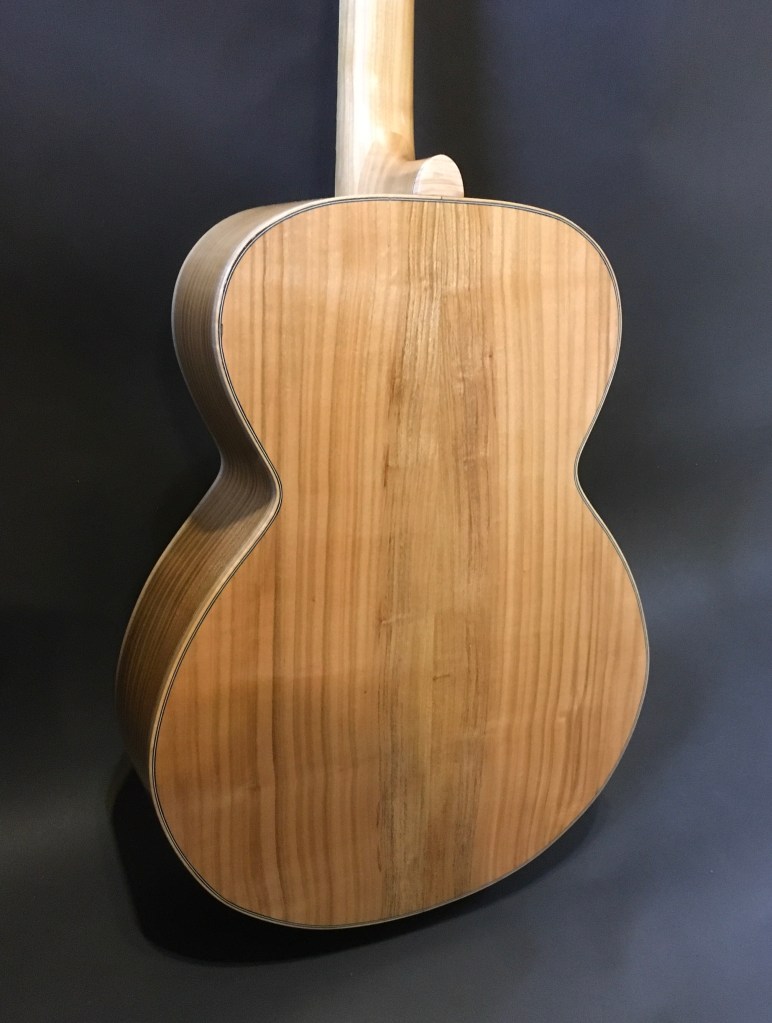
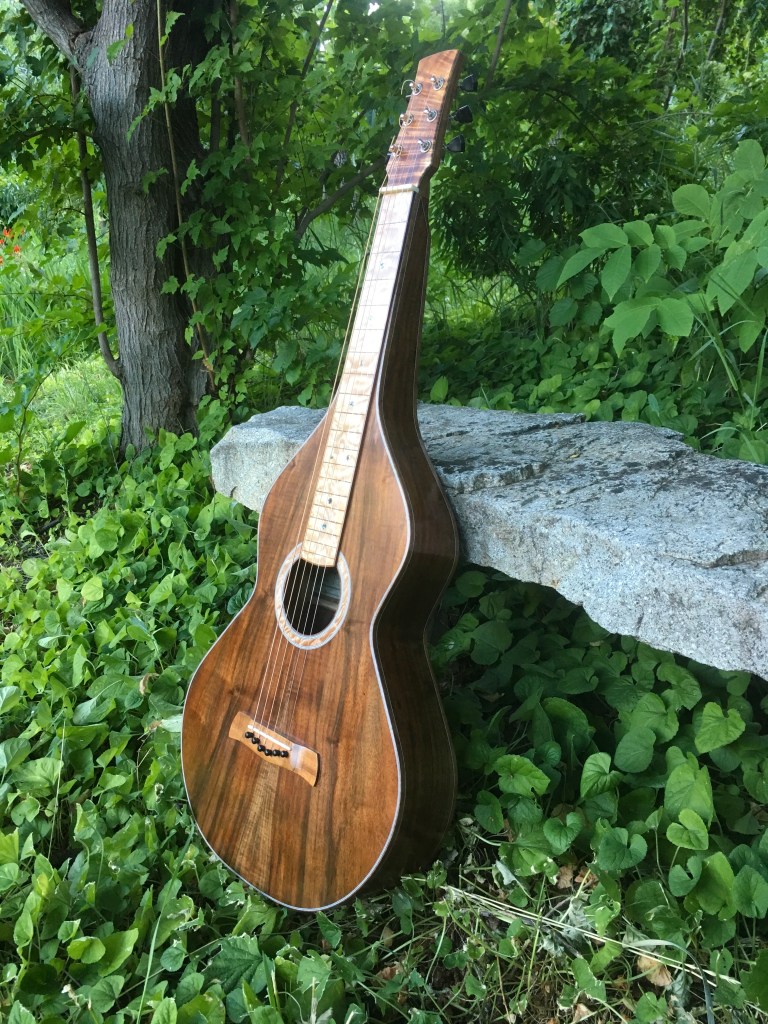
Black Walnut Weissenborn style guitar, also
known as Hawaiian Acoustic Lap Steel Guitar.

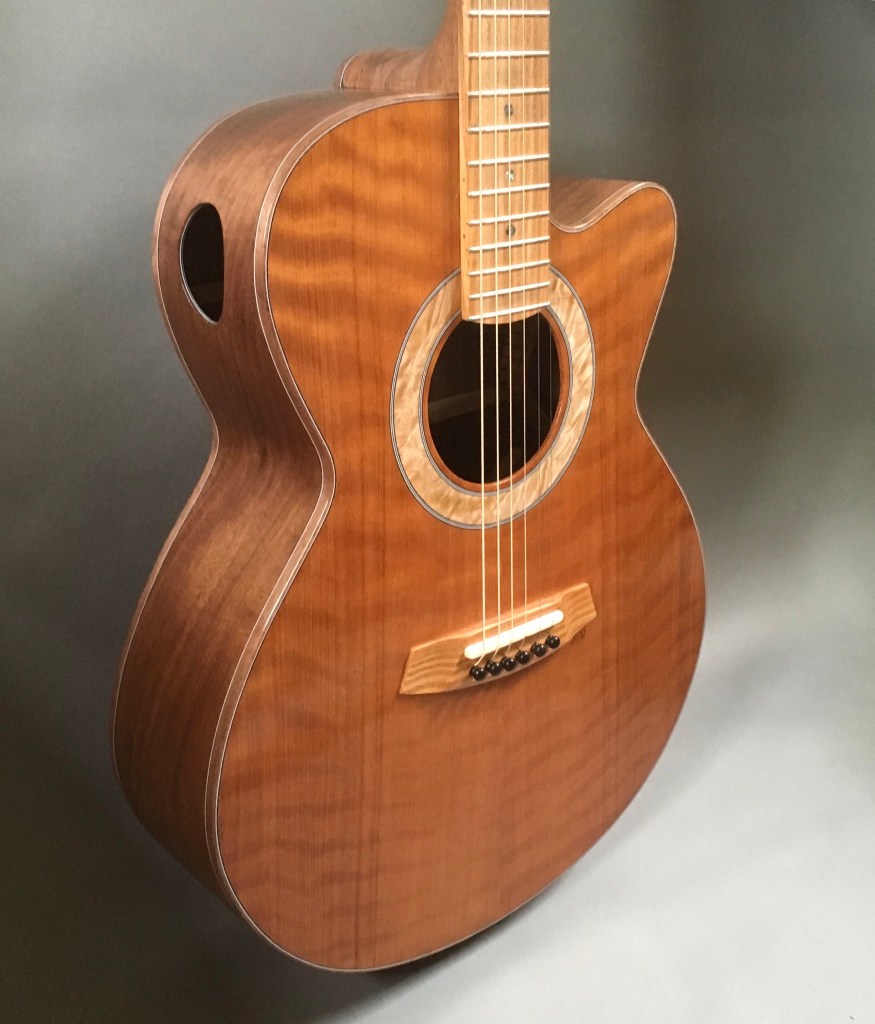
OM style guitar made with Black Walnut back, sides and neck and a Redwood soundboard and Yellowhorn fretboard and bridge, Walnut bindings and curly Maple rosette and headplate.
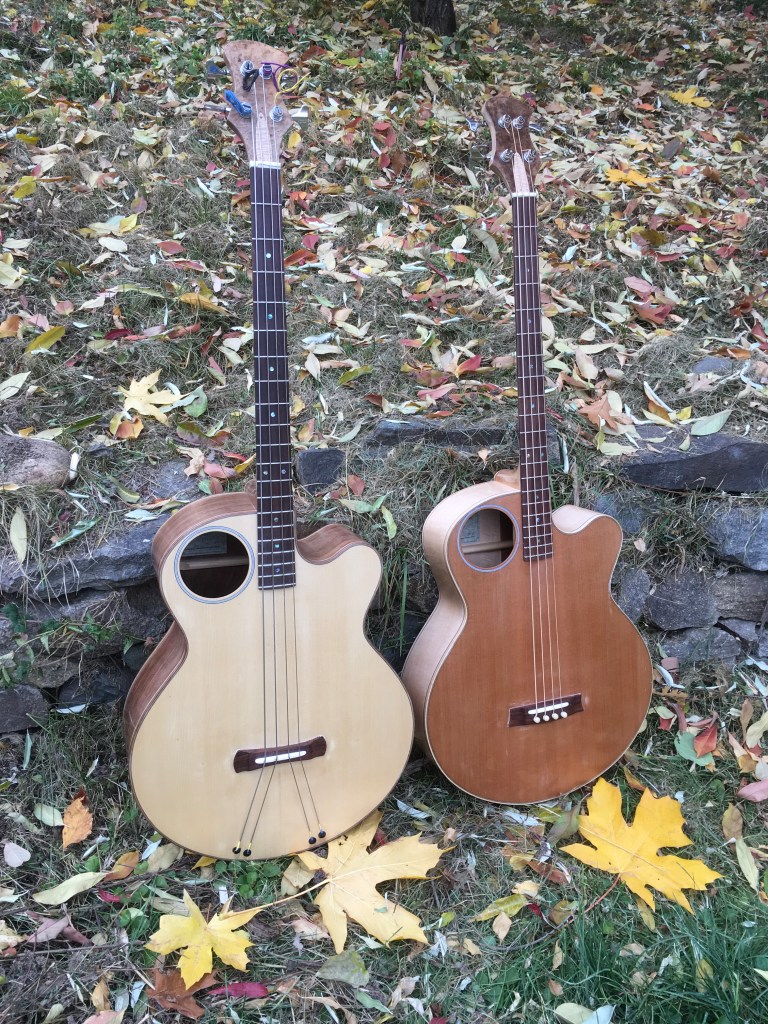
Acoustic Bass Guitars, l to r ; Black Walnut back and sides and neck, Engelman Spruce soundboard,
Bigleaf Maple body with a Western Red Cedar top.