New Guitars & Laminated Sides – April 2025

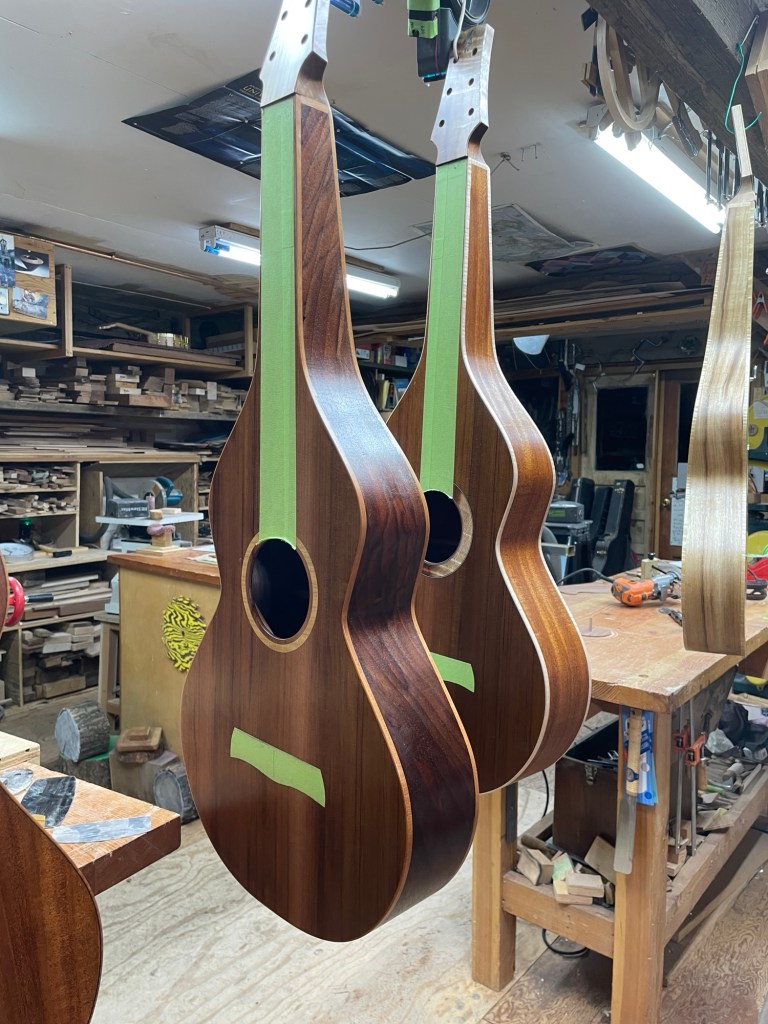
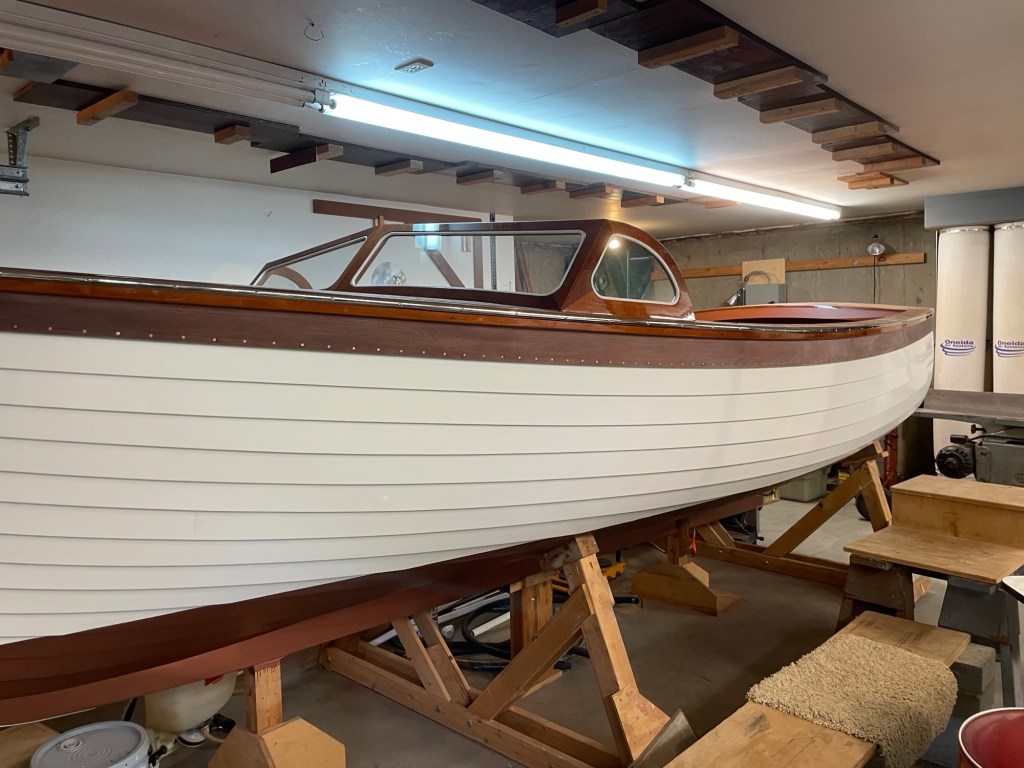
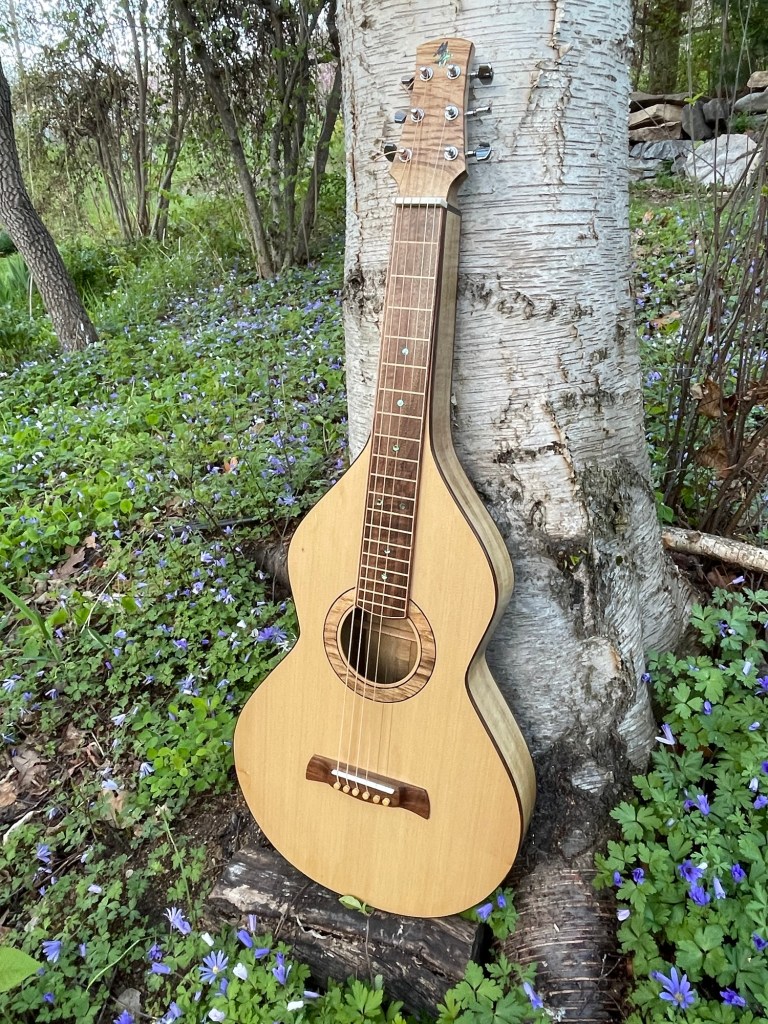
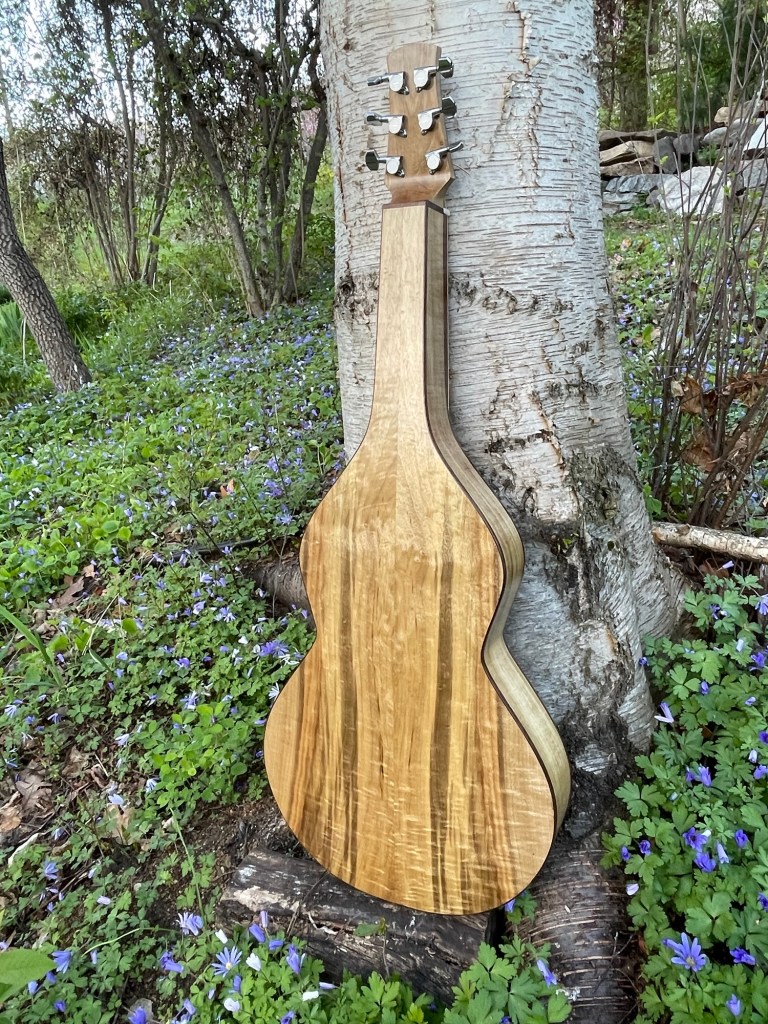
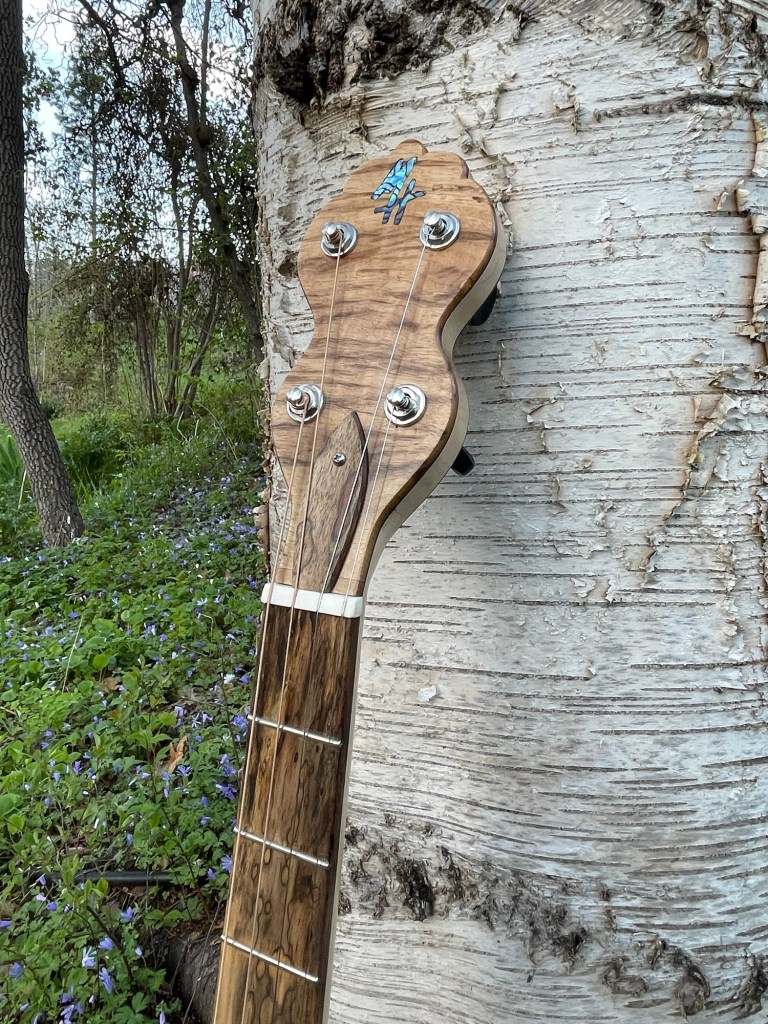
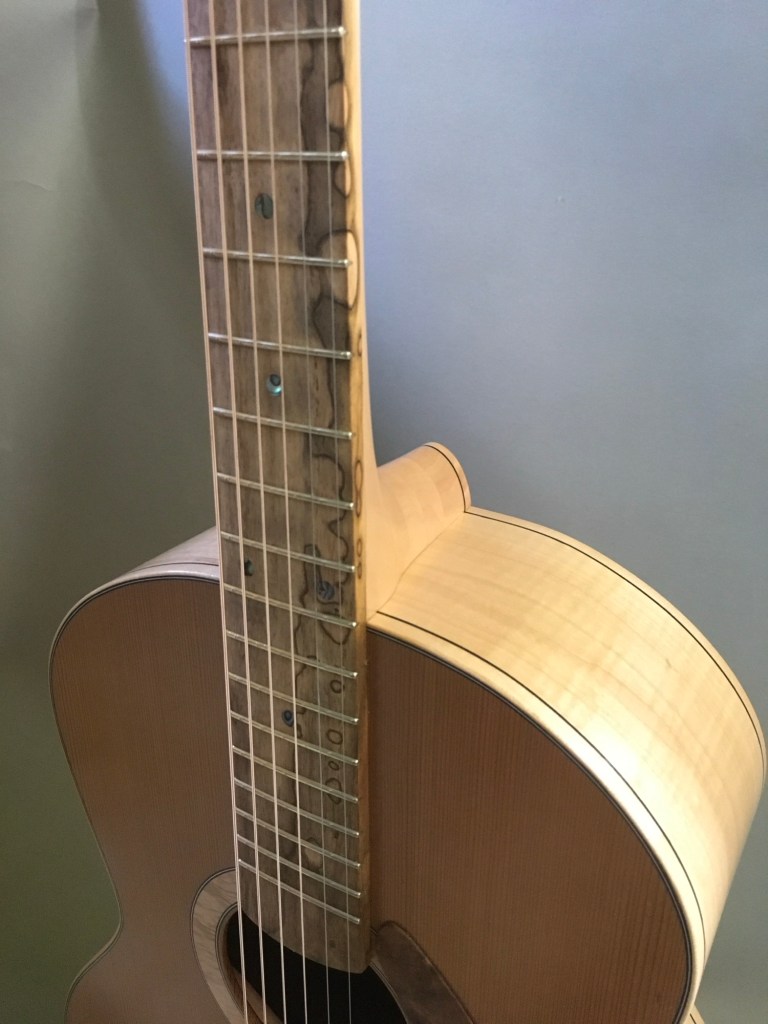
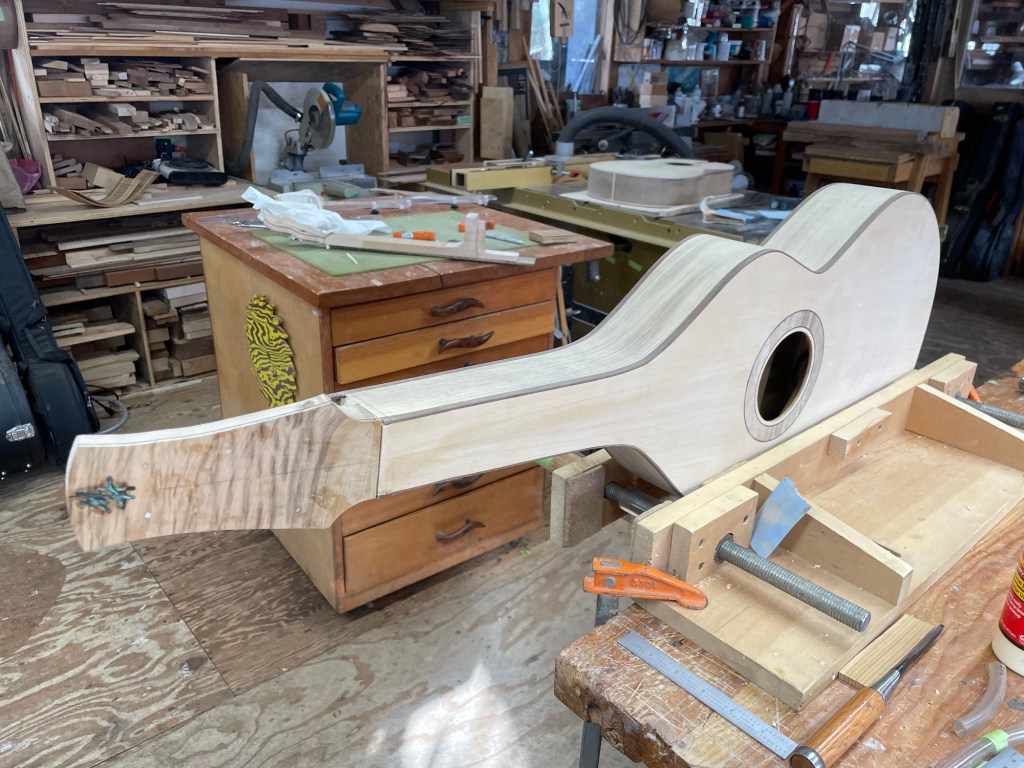
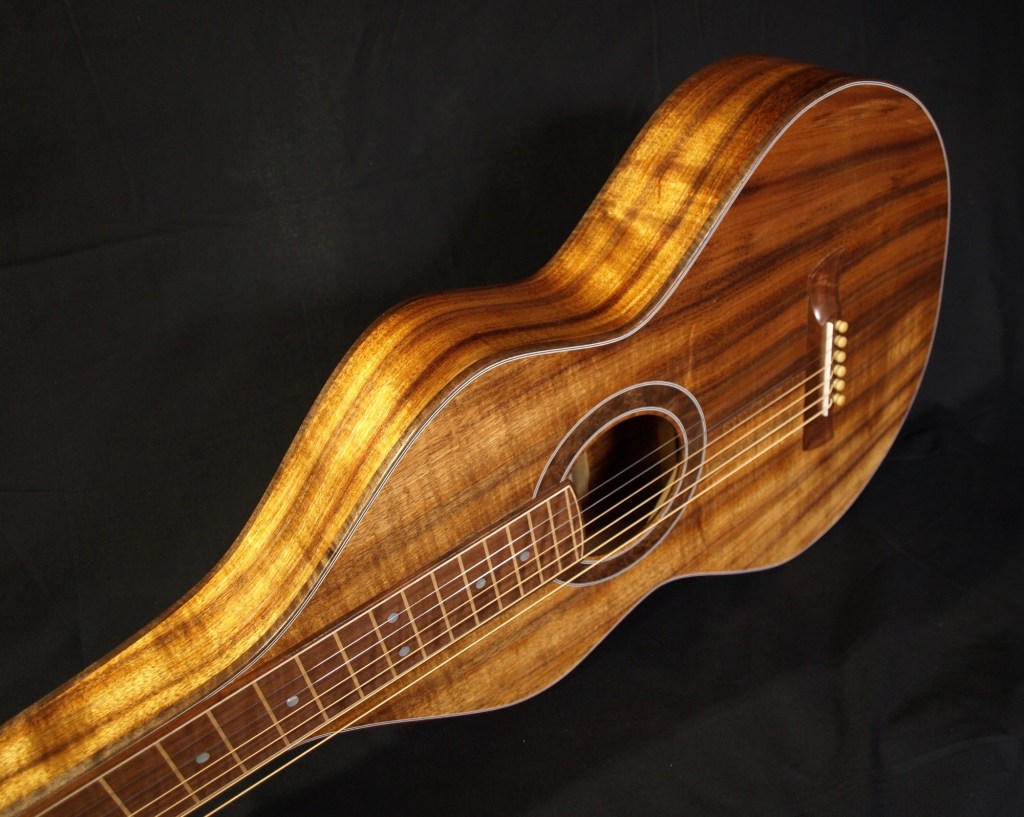
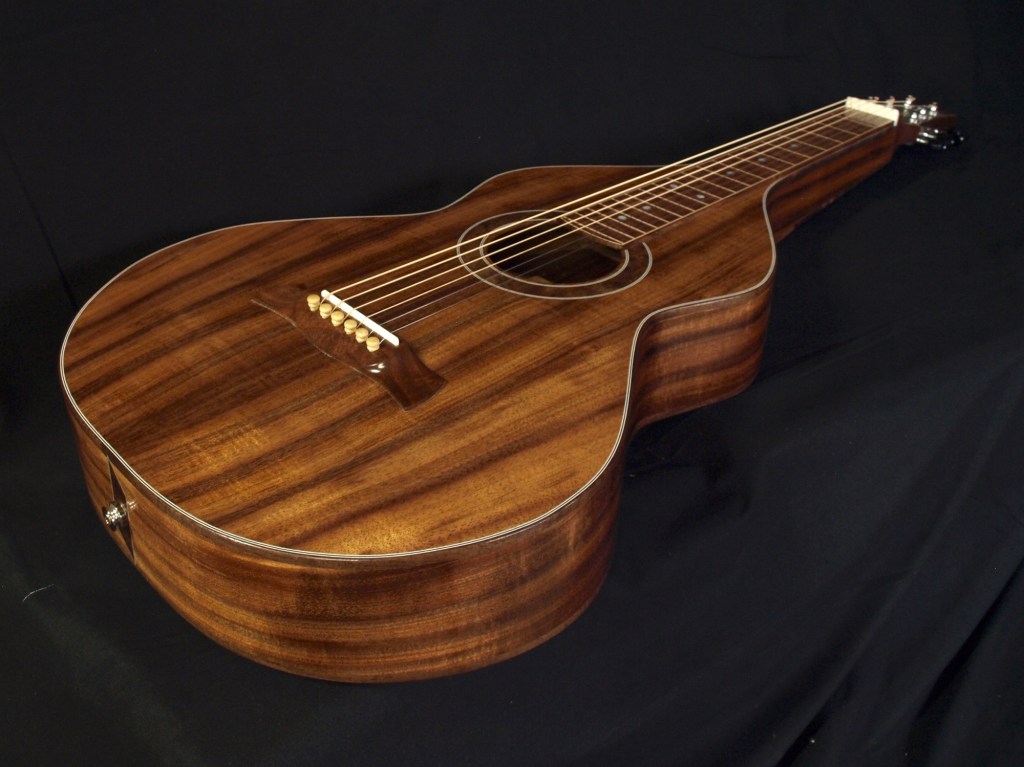
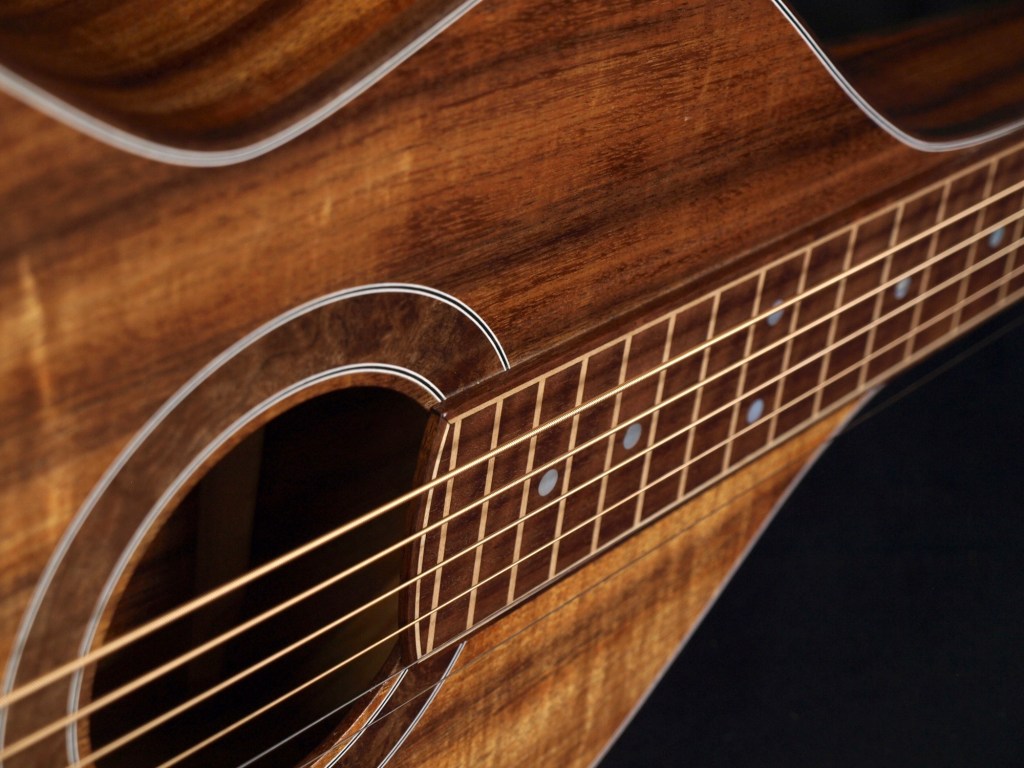
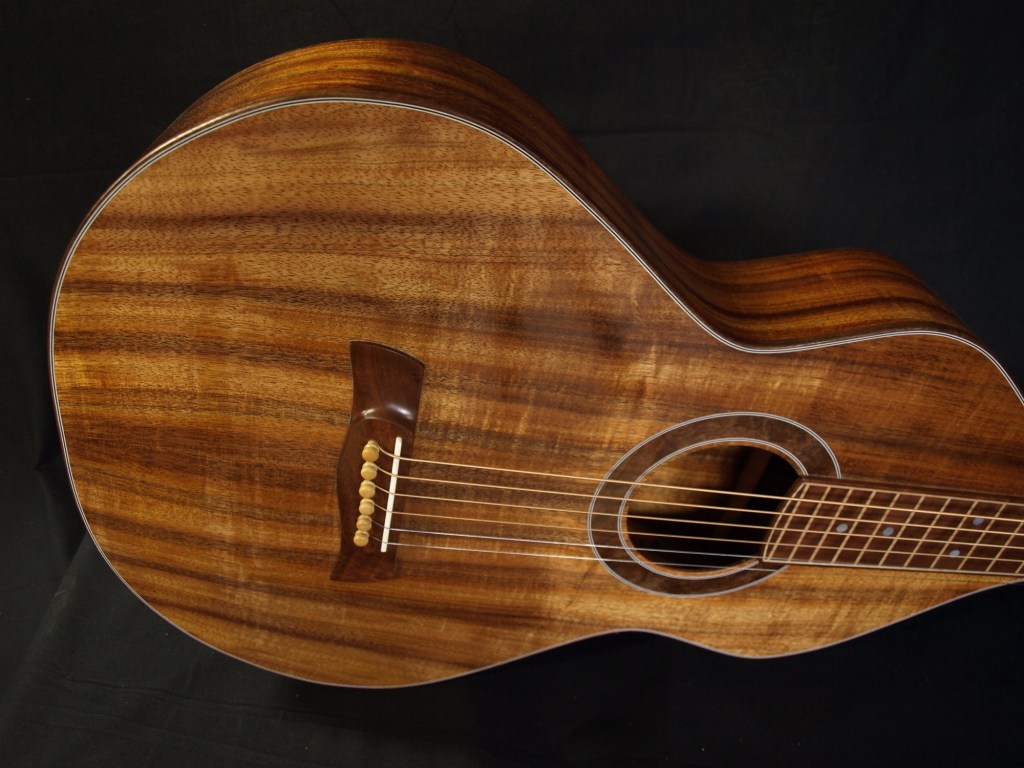
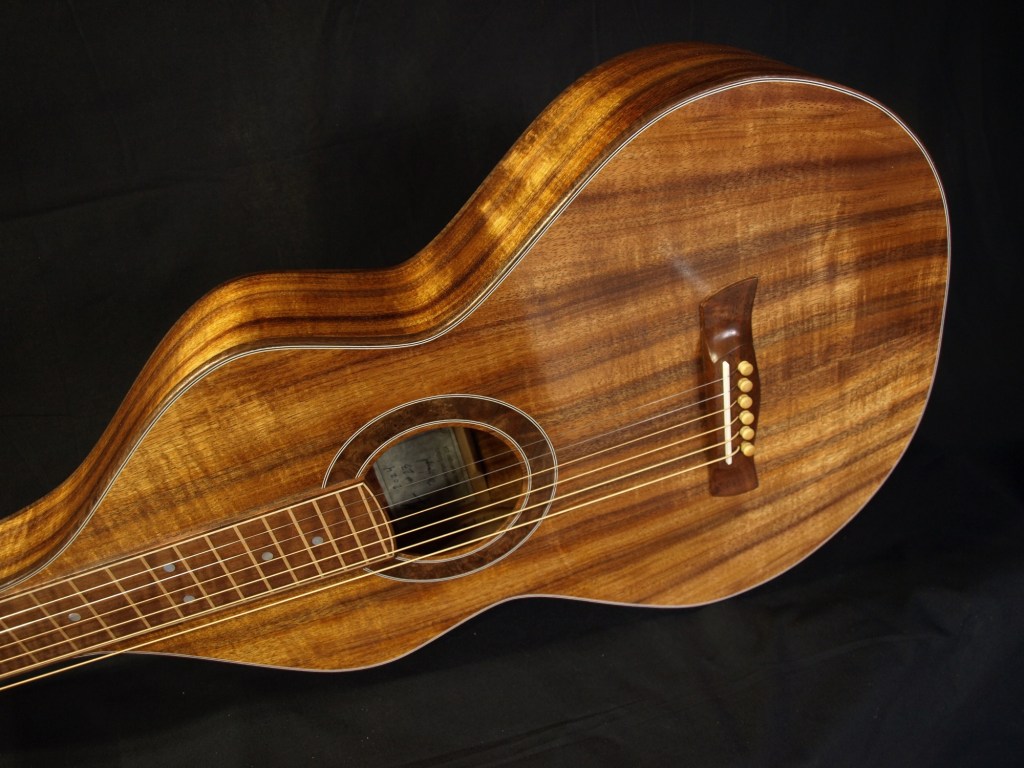
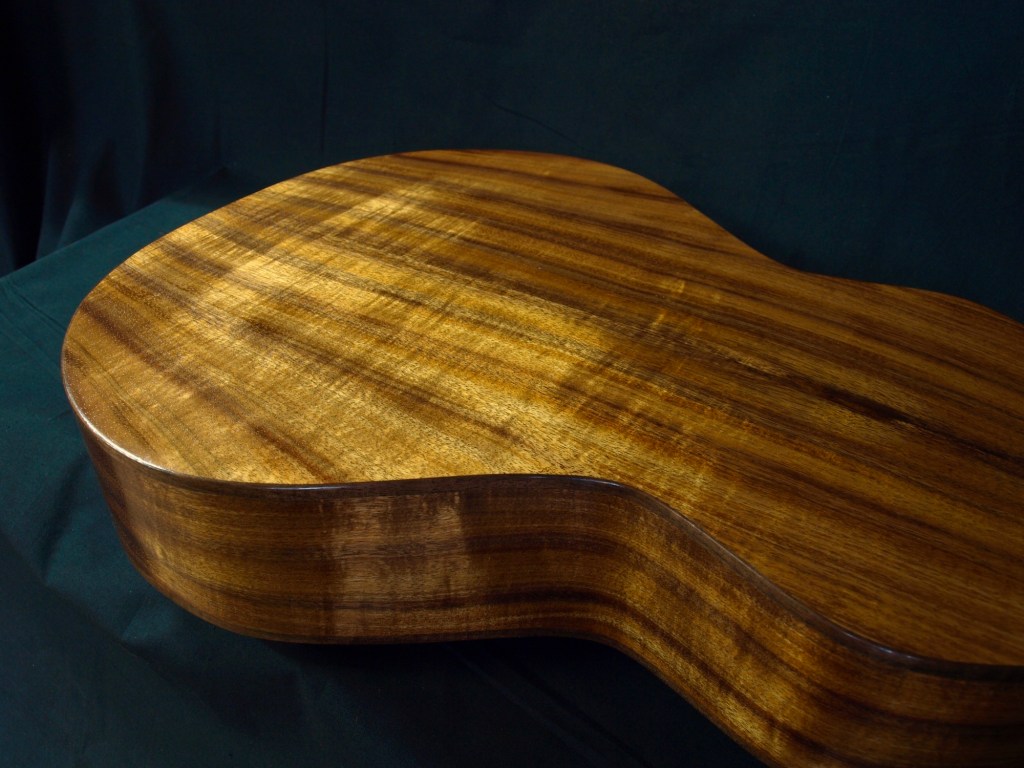
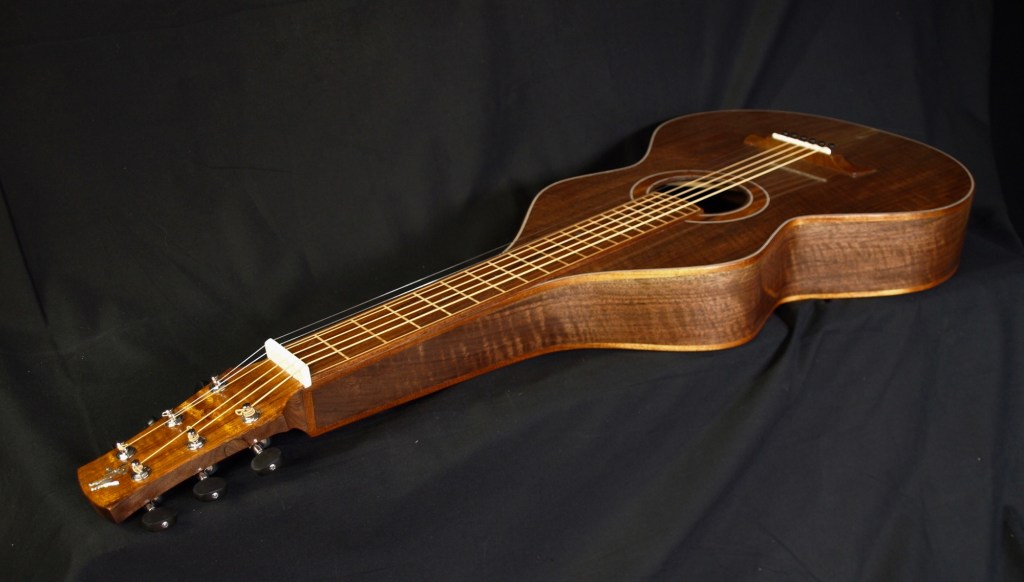
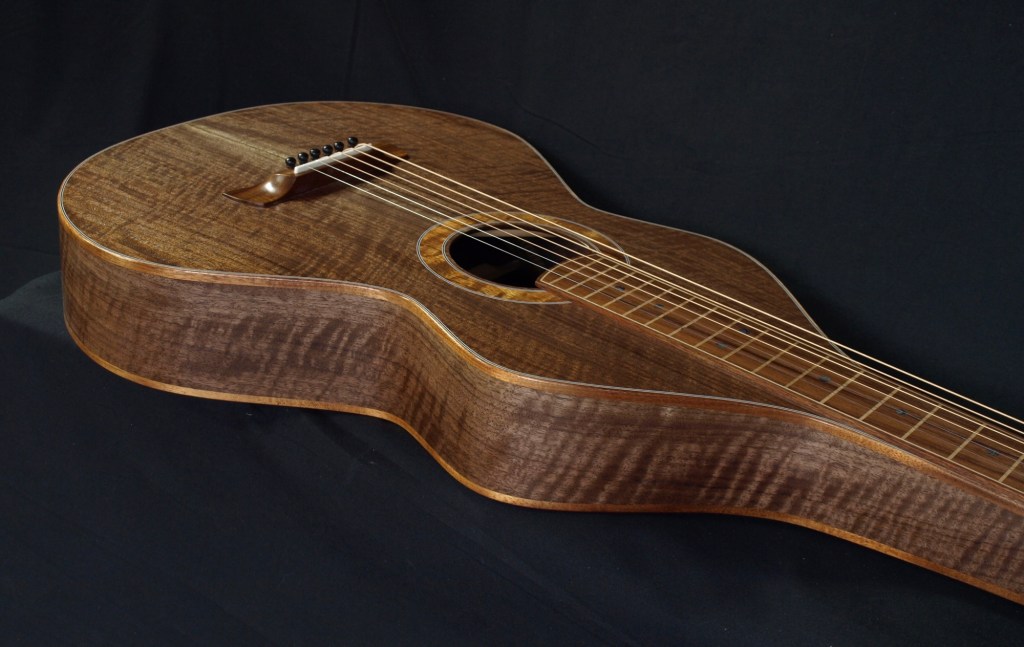
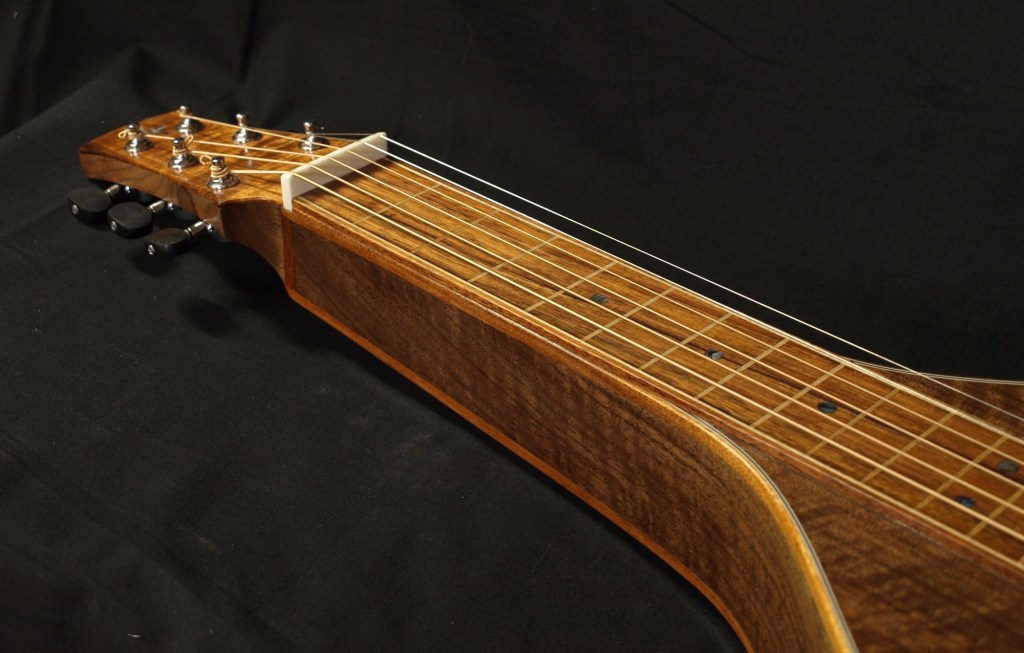
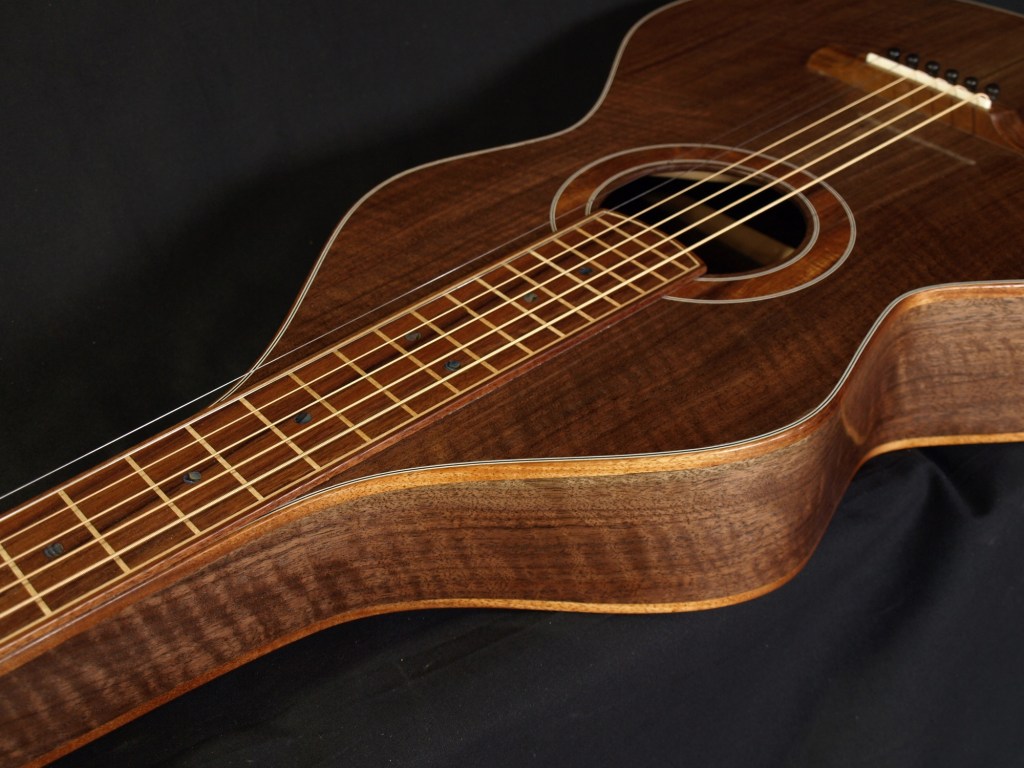
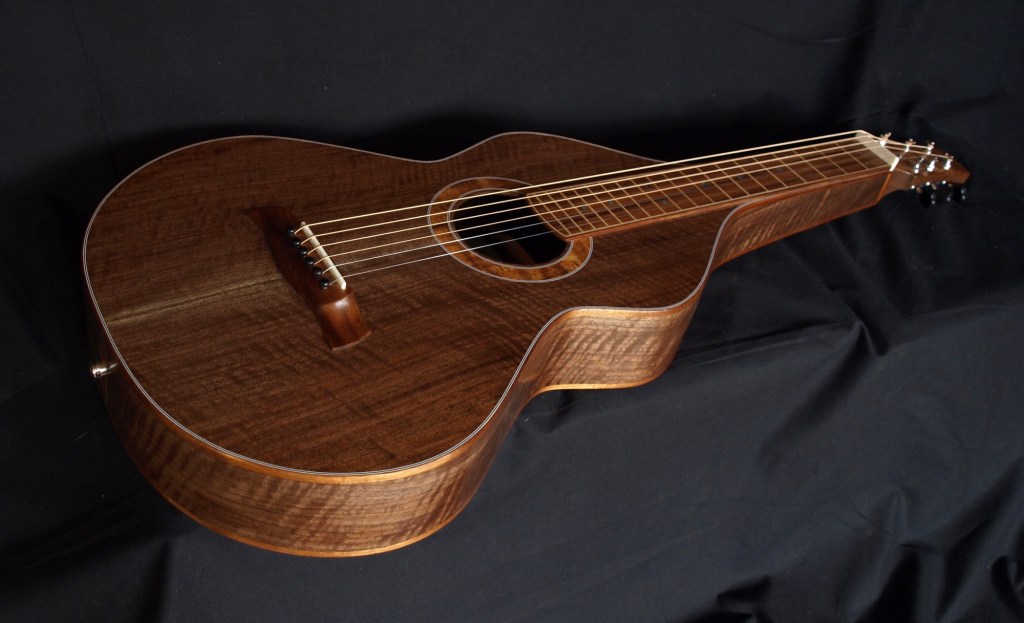
#24 Myrtle Wood & Port Orford Cedar Weissenborn

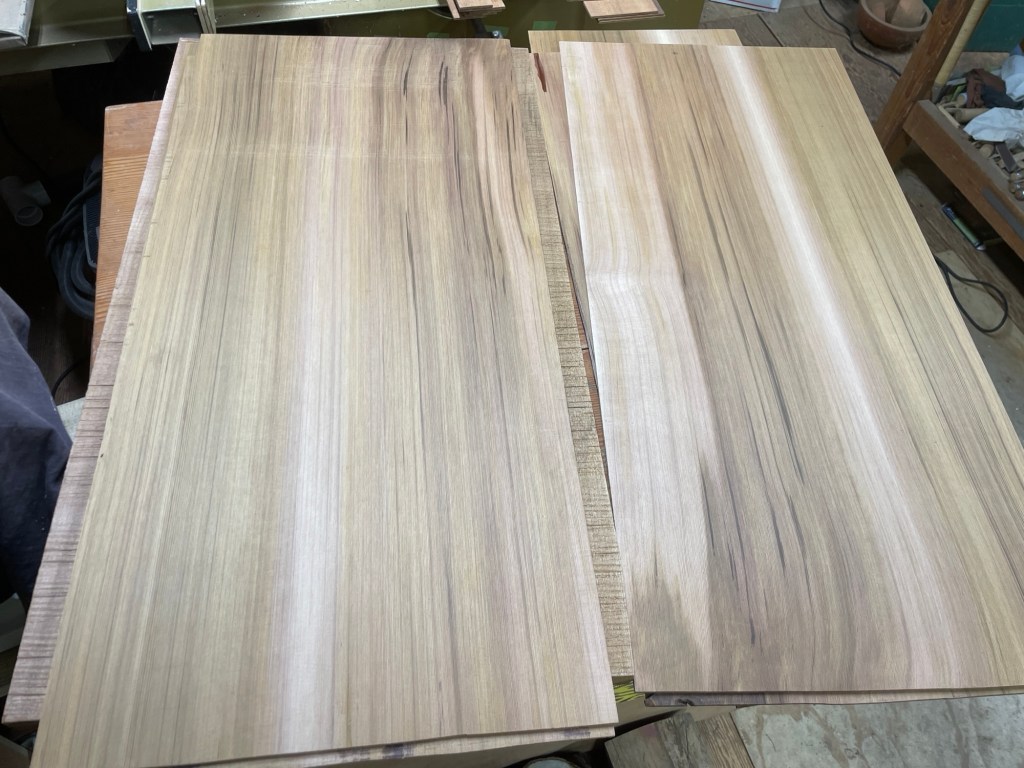
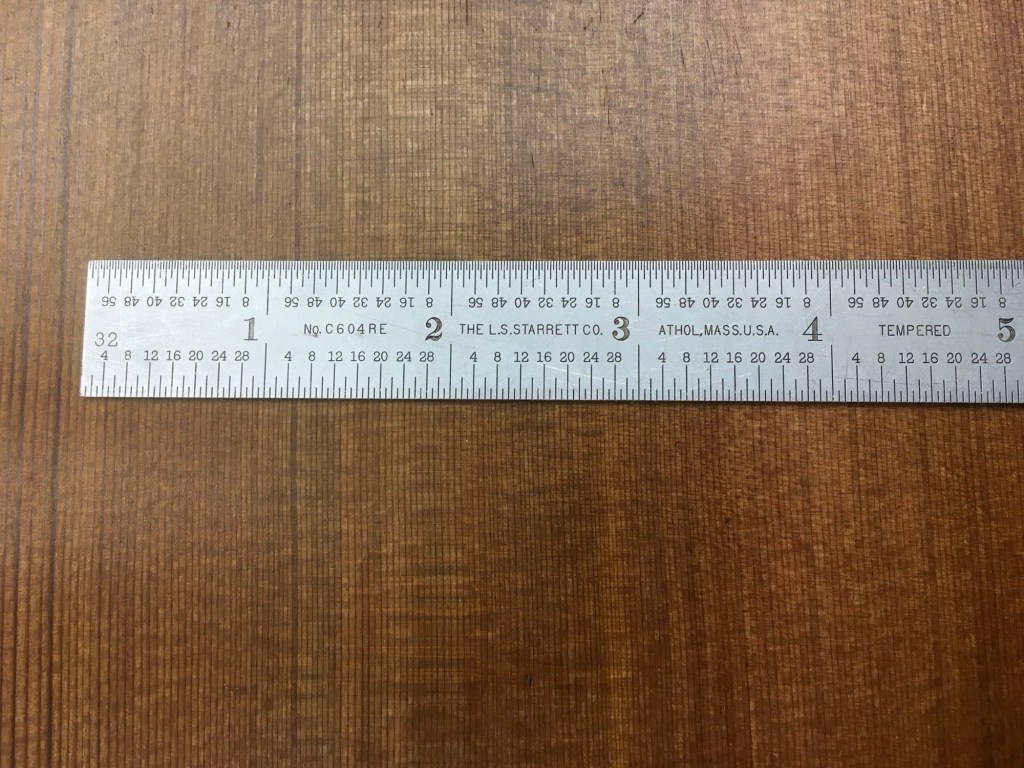
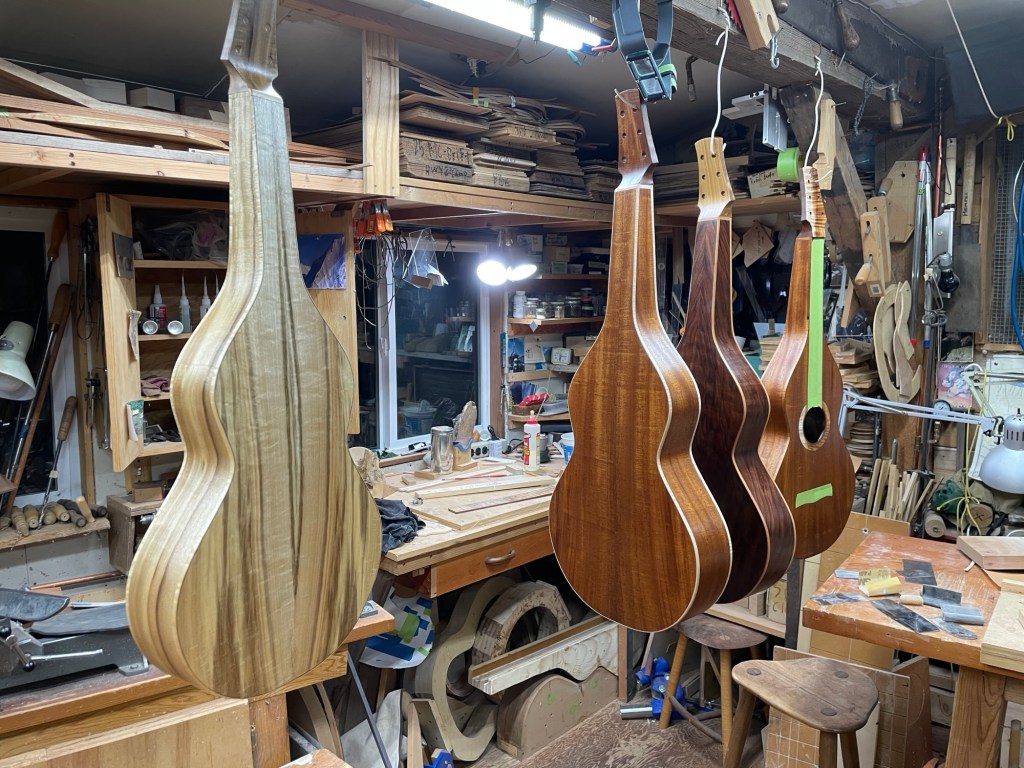
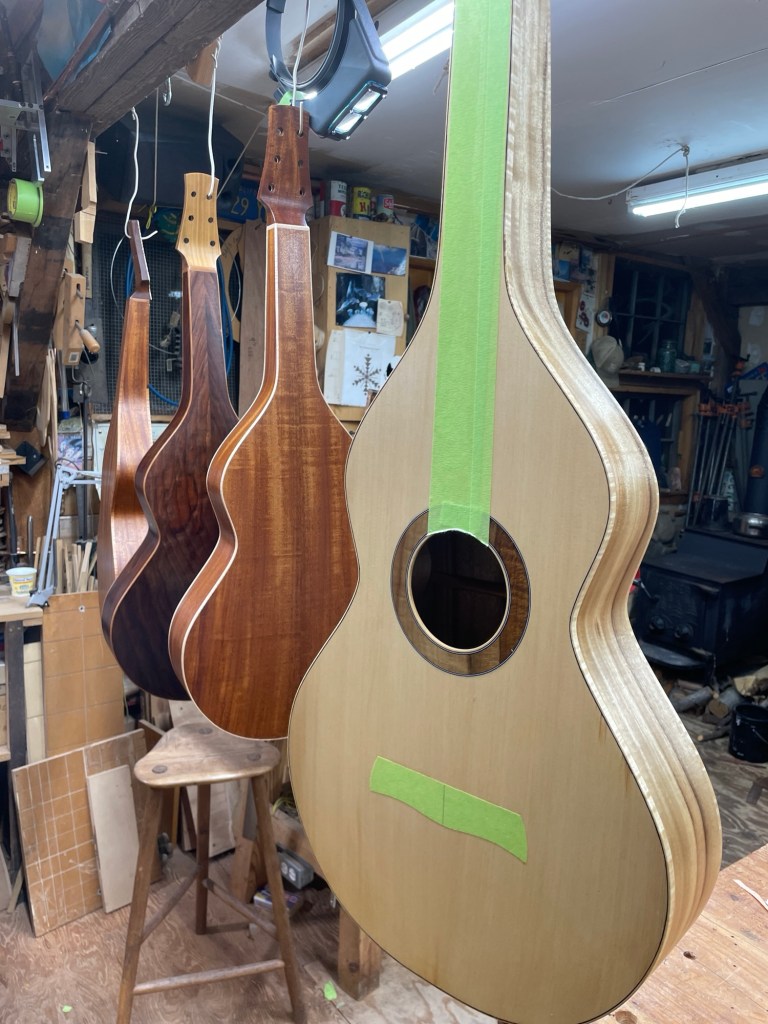
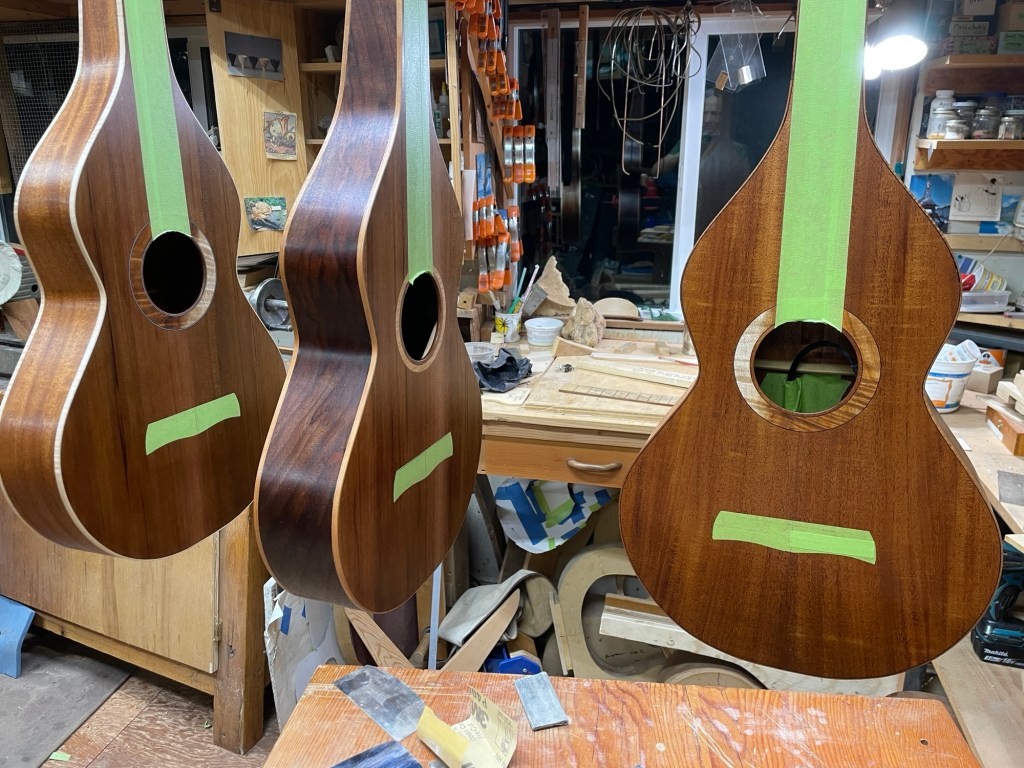
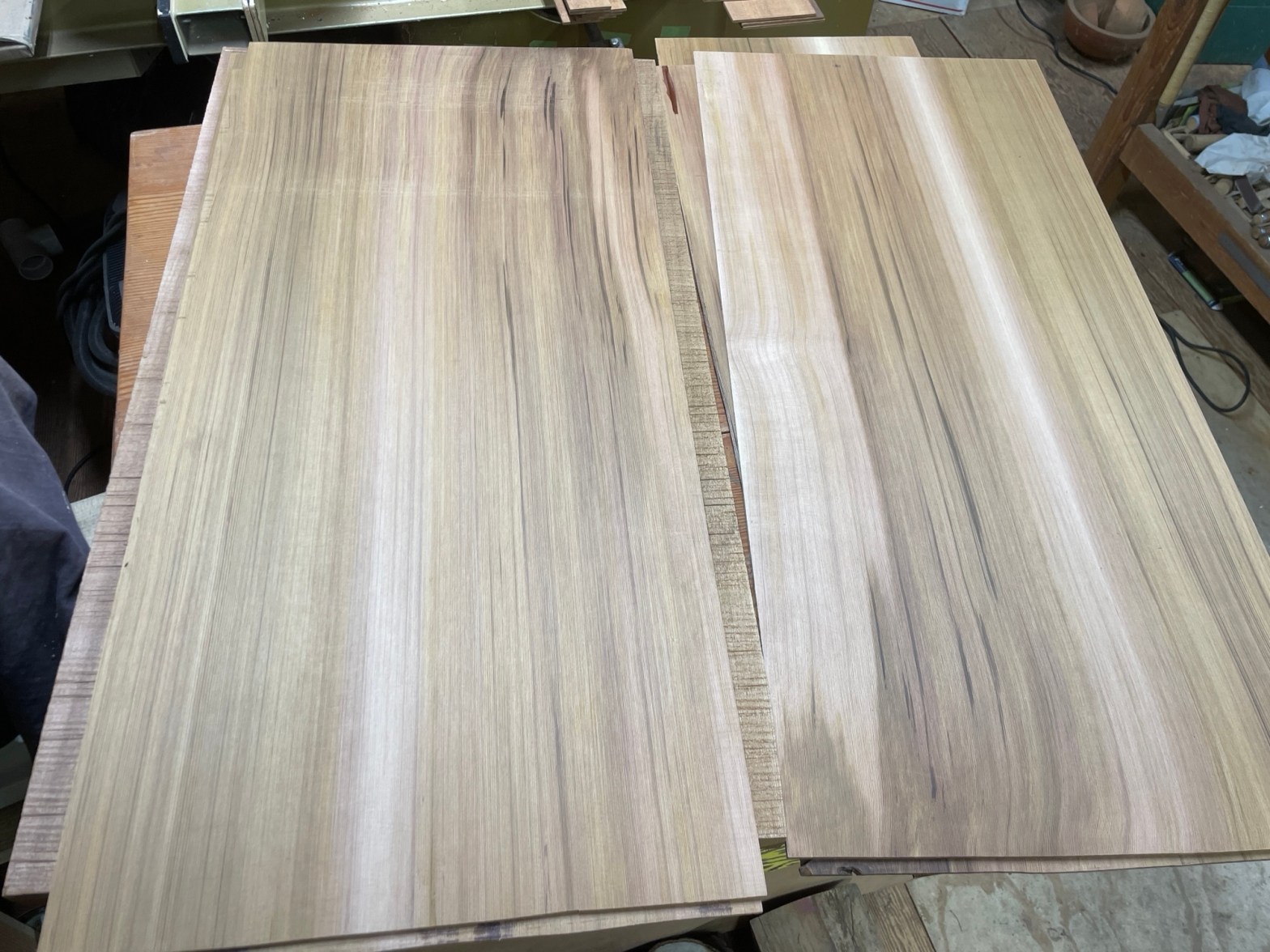
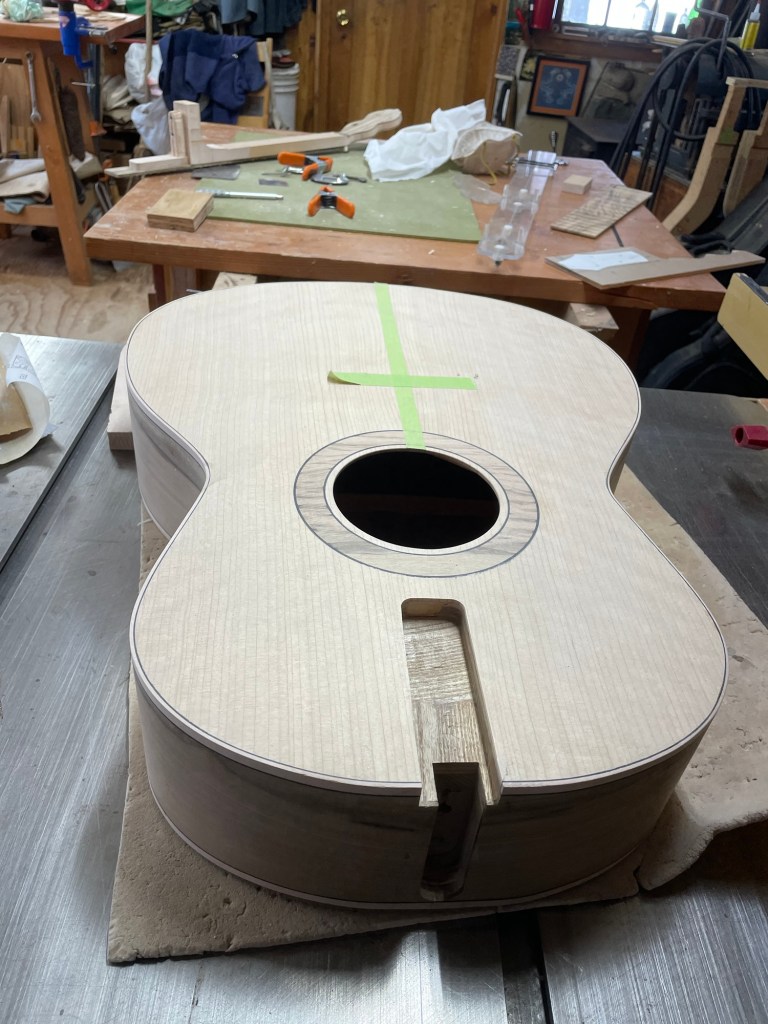
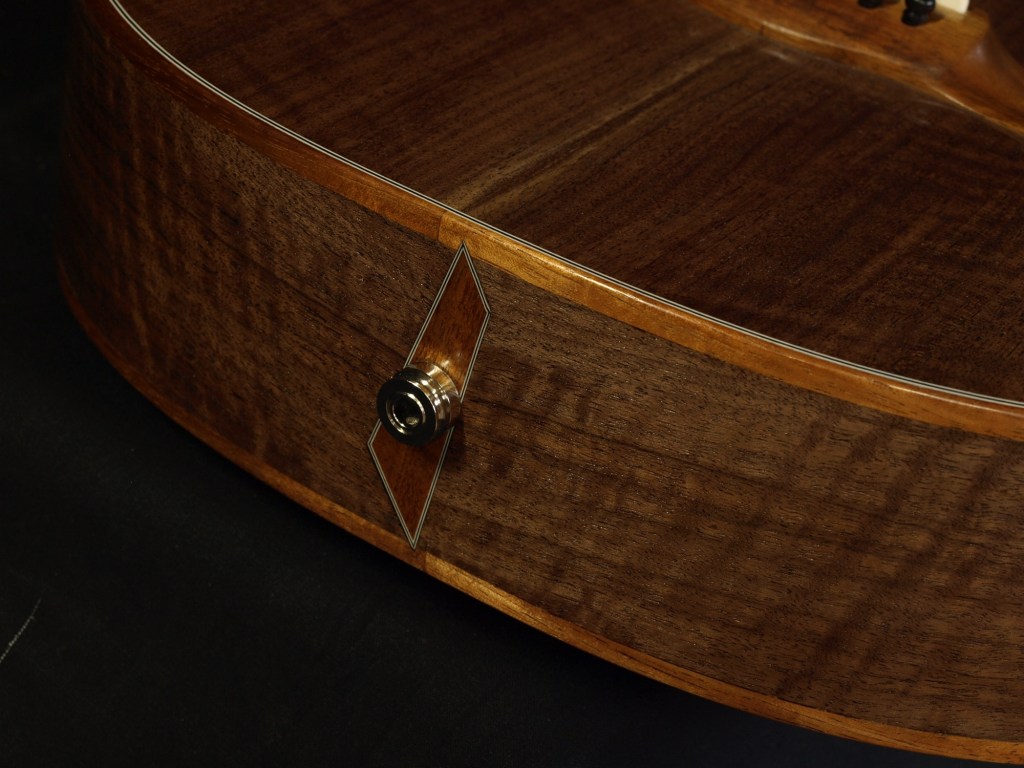
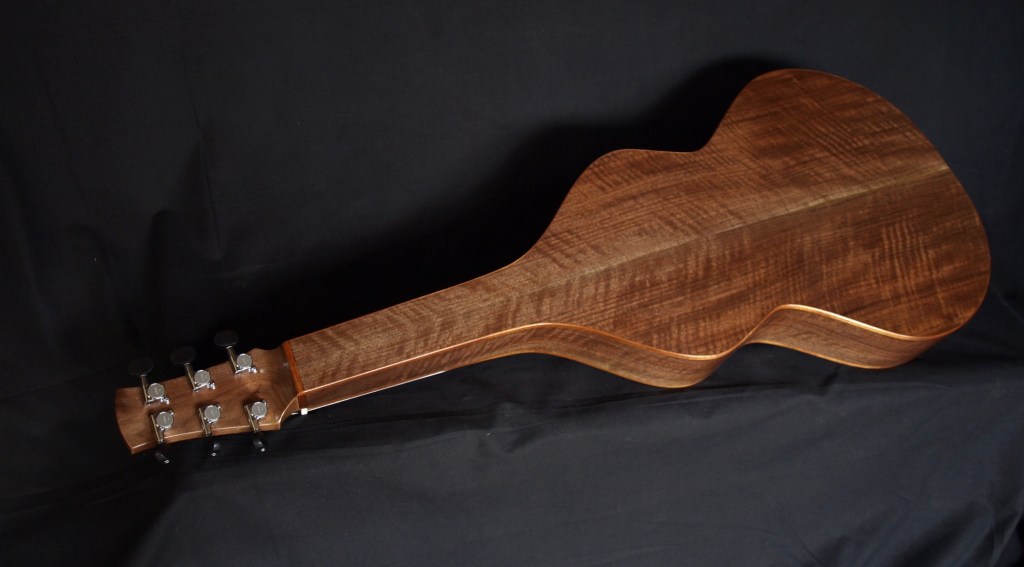
These guitars have been done for a little while now, but I just got around to taking pics and posting them. They’re both made with Oregon myrtlewood back and sides and Port Orford cedar tops. Both great tone woods, from southern Oregon, where those trees are native. Above is a Weissenborn type. More info on it on the ‘Available’ page, or contact me if you’re interested.

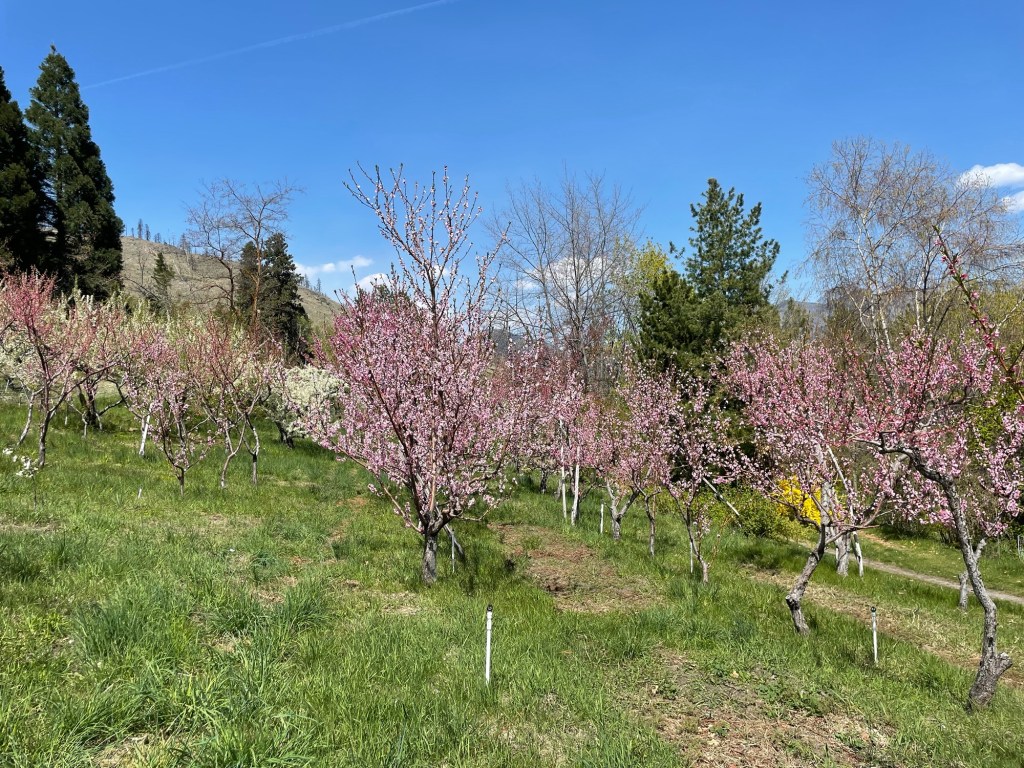
Bloom Time in the Orchard
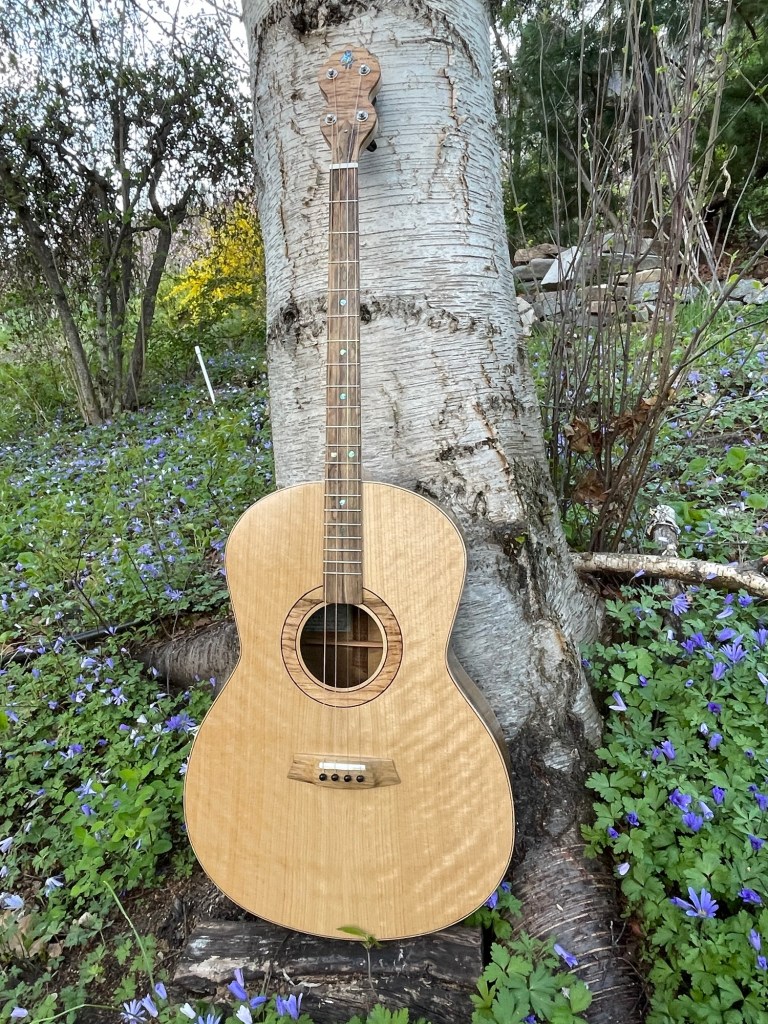
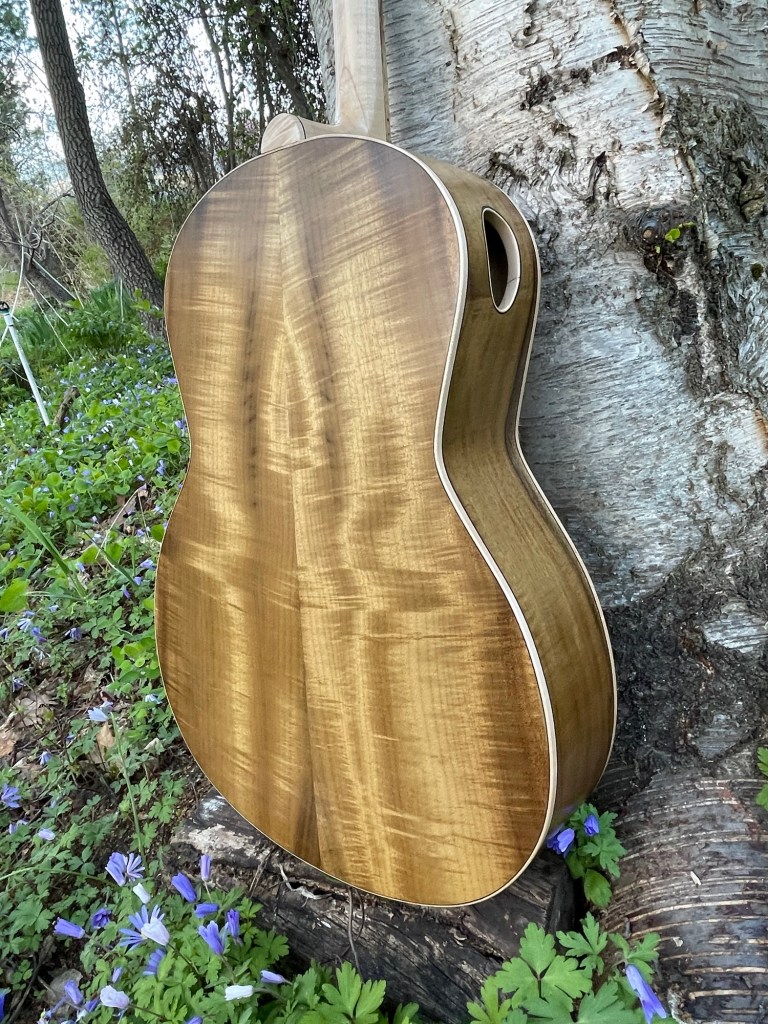
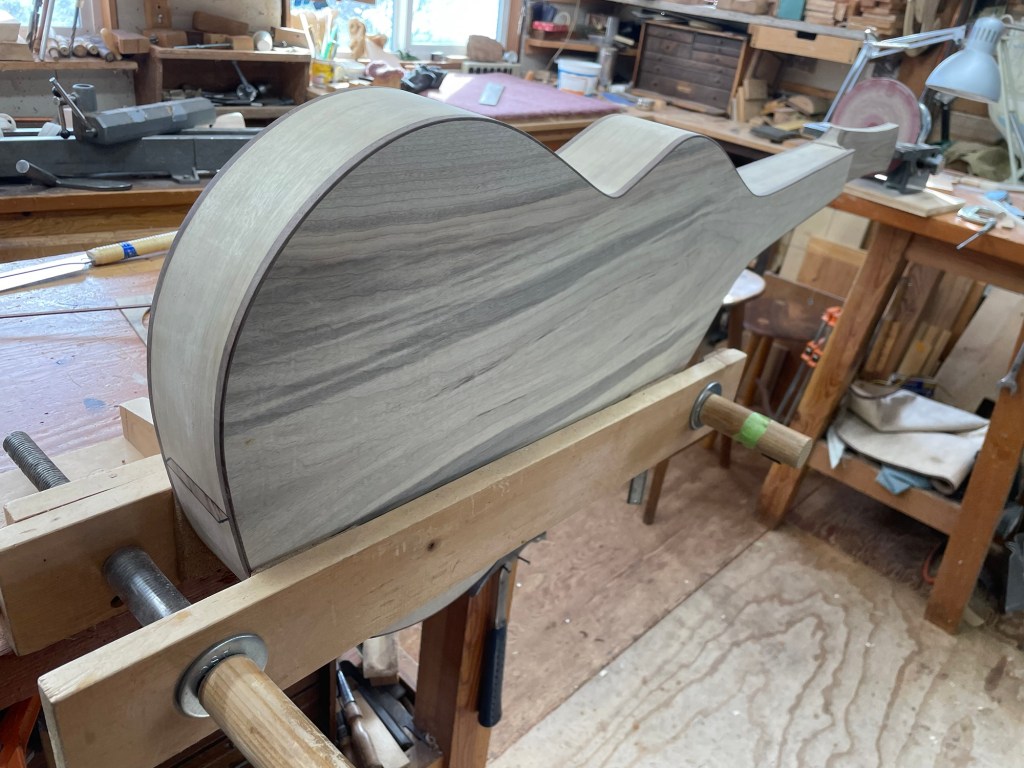
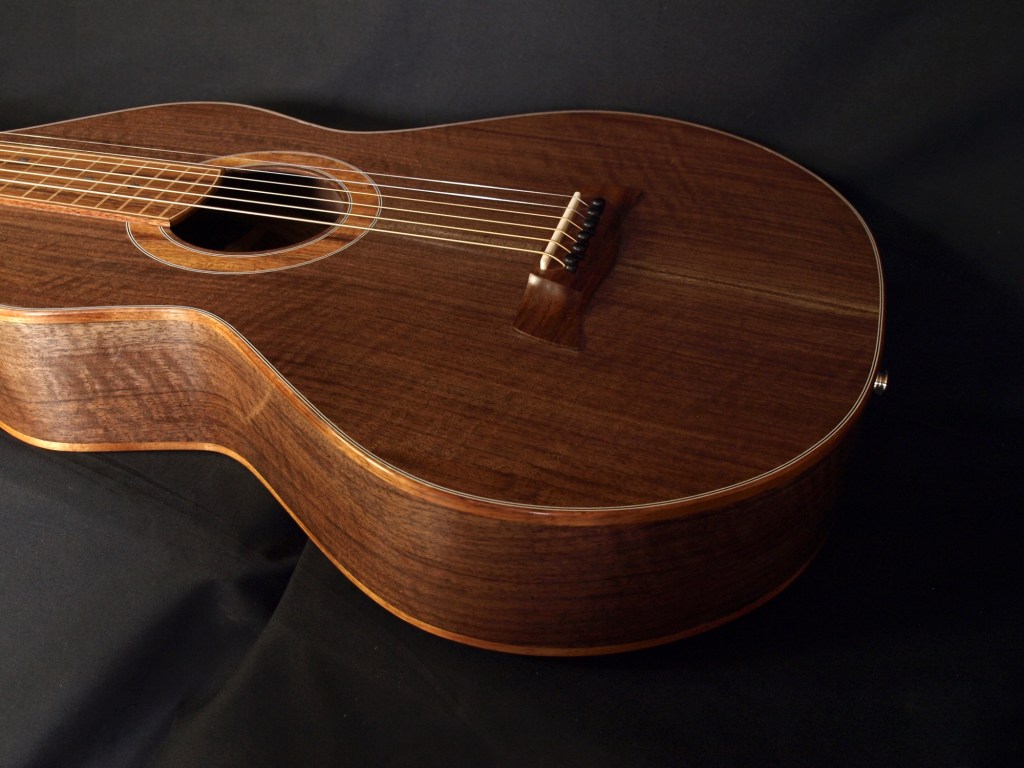
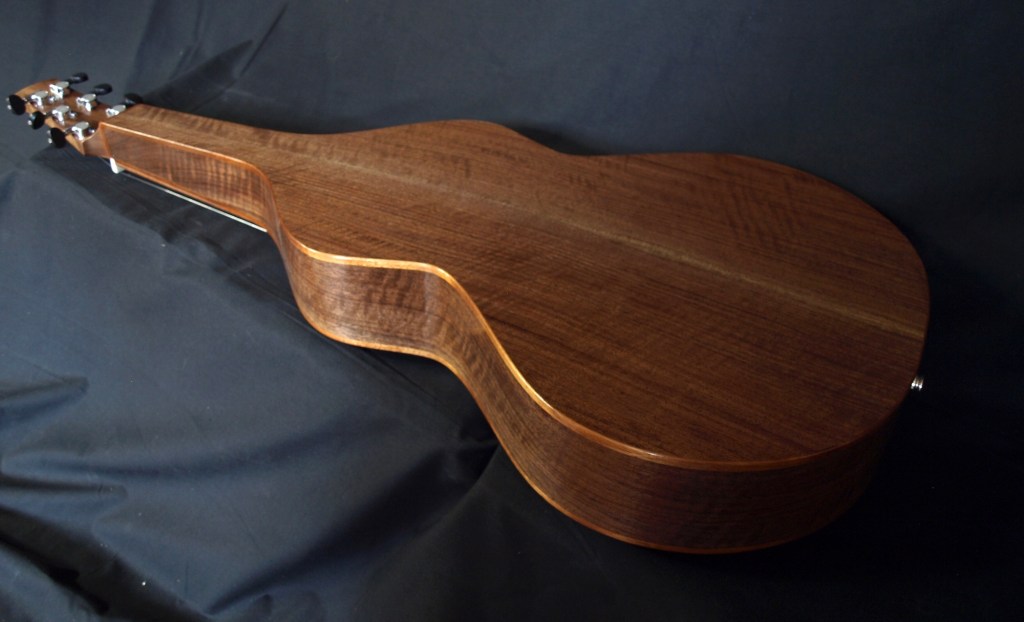
#25 Myrtlewood & Port Orford Cedar Plectrum Guitar

The above is a plectrum guitar, a near sibling to the tenor guitar, it’s a four string conceived in the 1920’s to give banjo players an easy way to transition to guitars without having to learn new fingerings. This was at a time just before amplified instruments were born, and banjos were very popular. The plectrum banjo was intended as a rhythmic accompaniment in popular music then. The plectrum guitar didn’t take off, the Martin Guitar Company made just over 200 of them, back in the late ’20’s, early 30’s (please correct me if that number is way off), so not many made. Why did I make one? I’ve made a plectrum banjo because I wanted a banjo without the fifth string, which I love playing, so I thought I’d make a similar guitar. The body size on this is basically the same dimensions as a 000 size Martin, the scale length is 26 3/16″.

Laminated Guitar Sides:

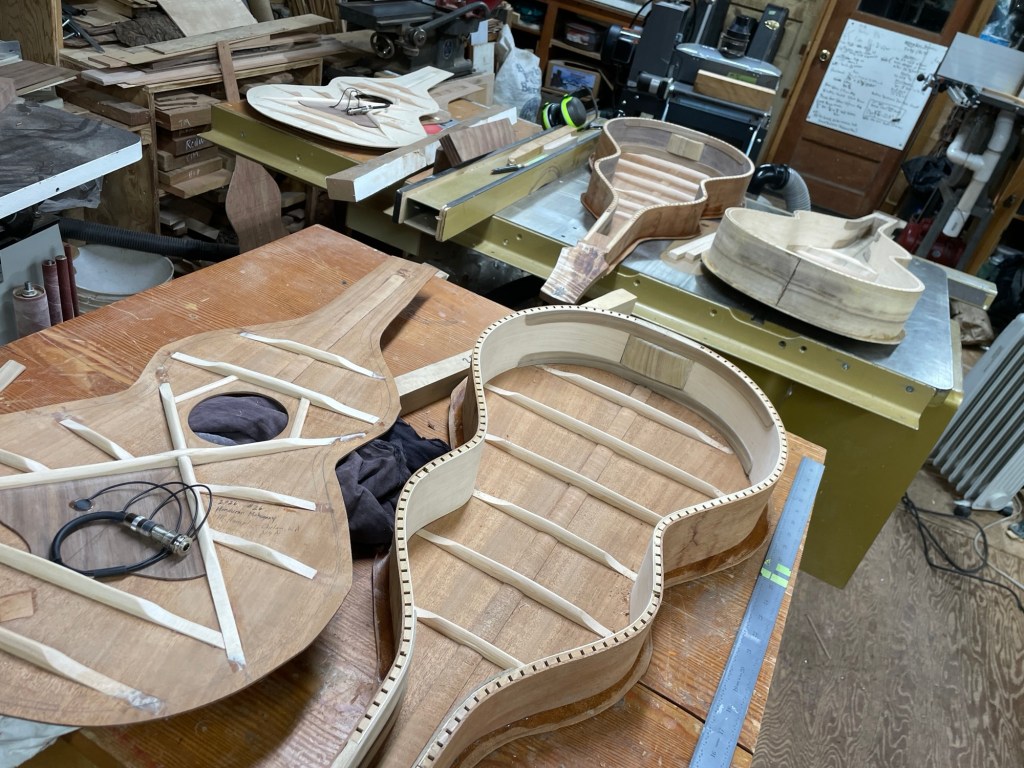
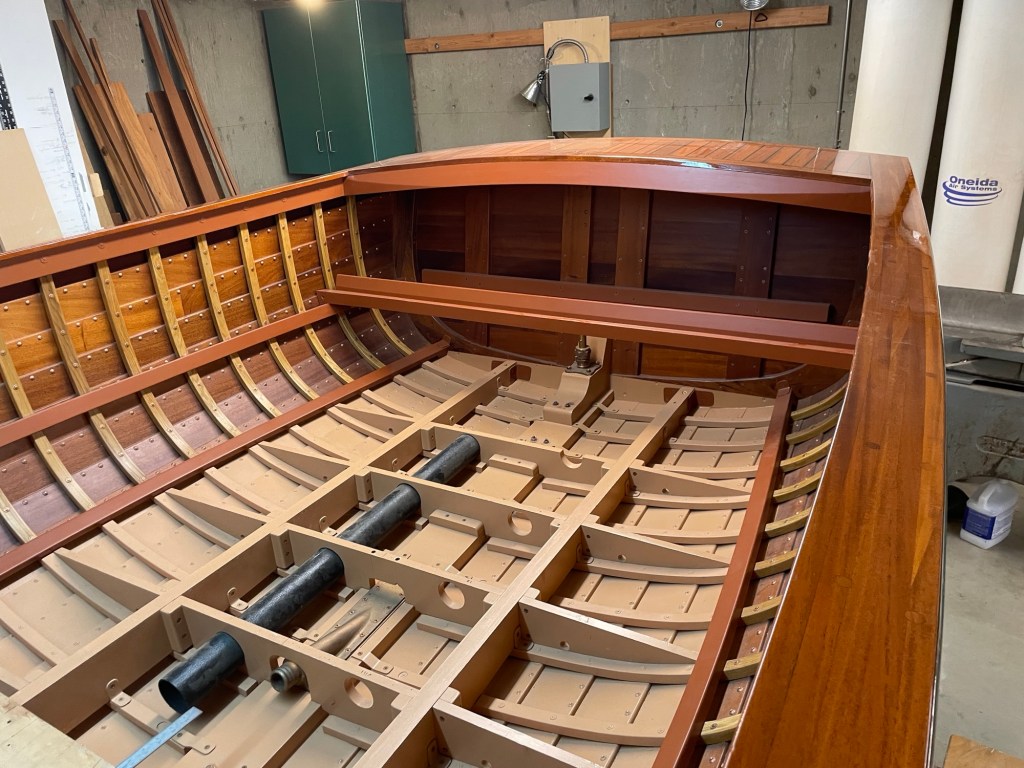
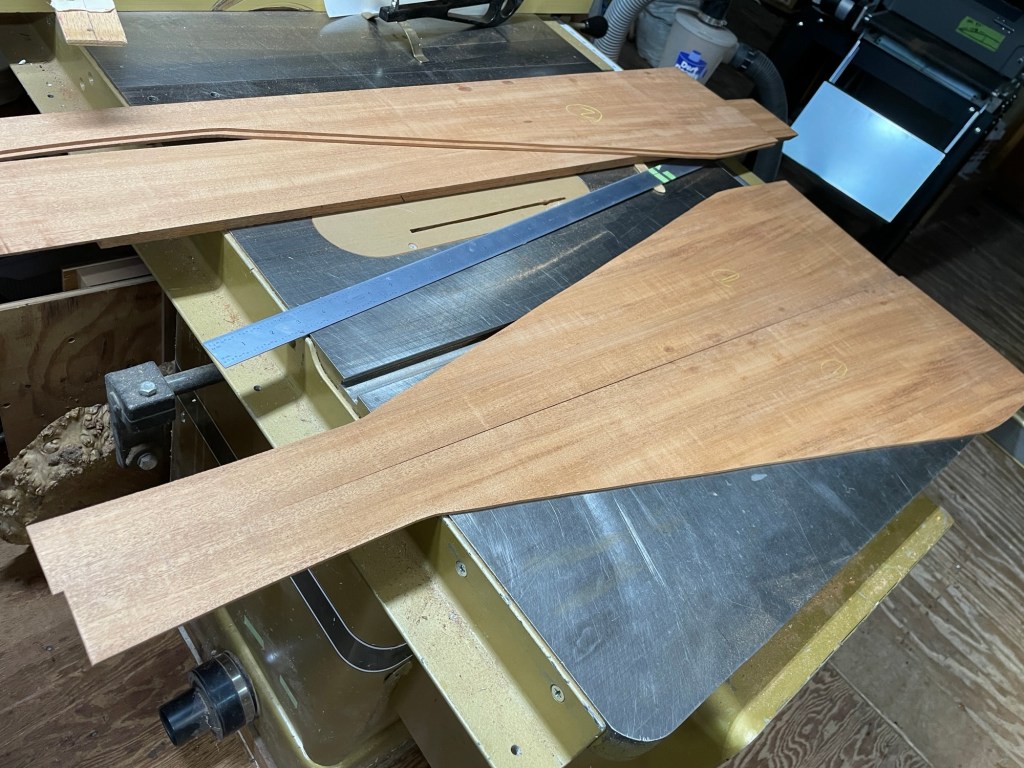
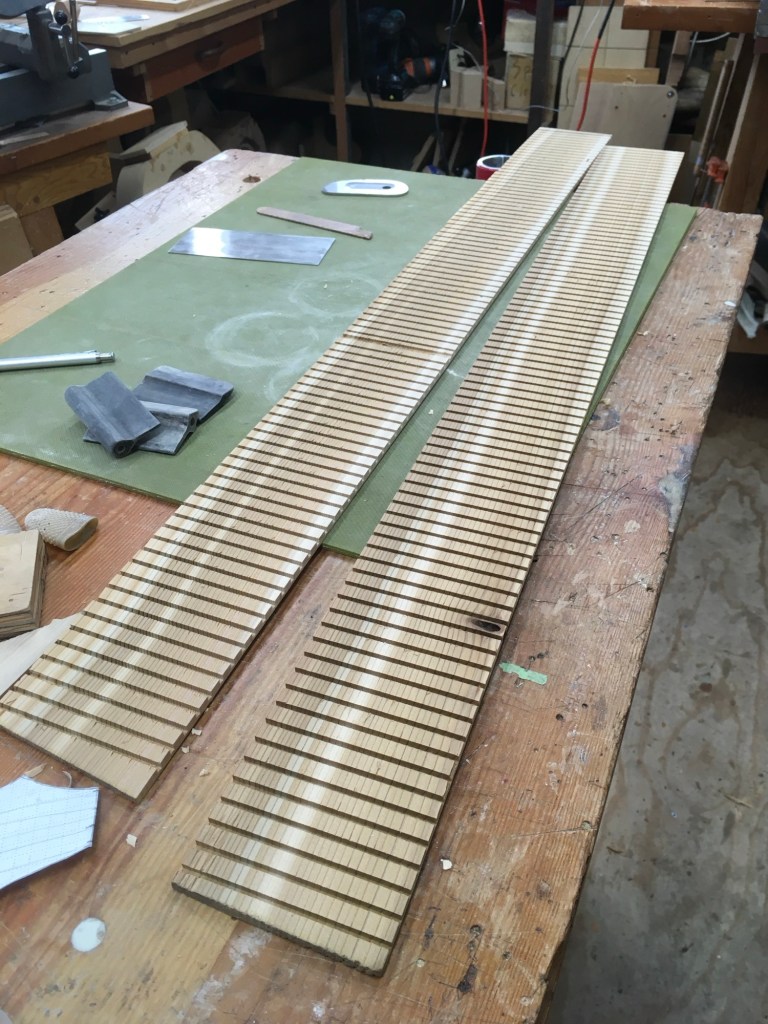
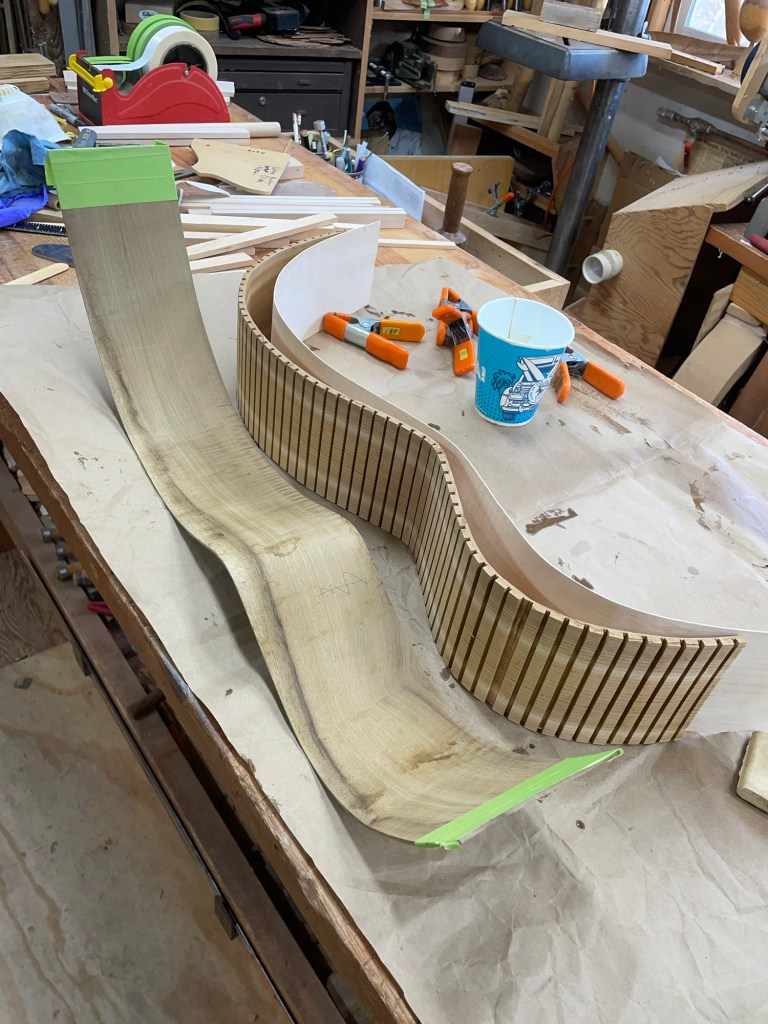
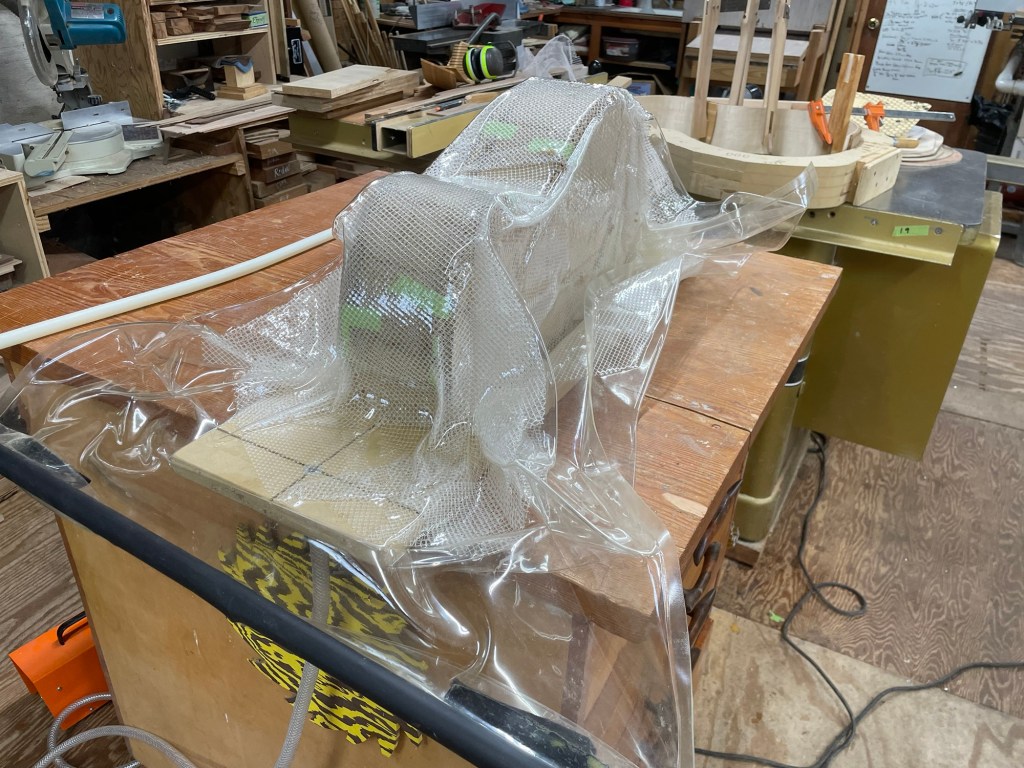
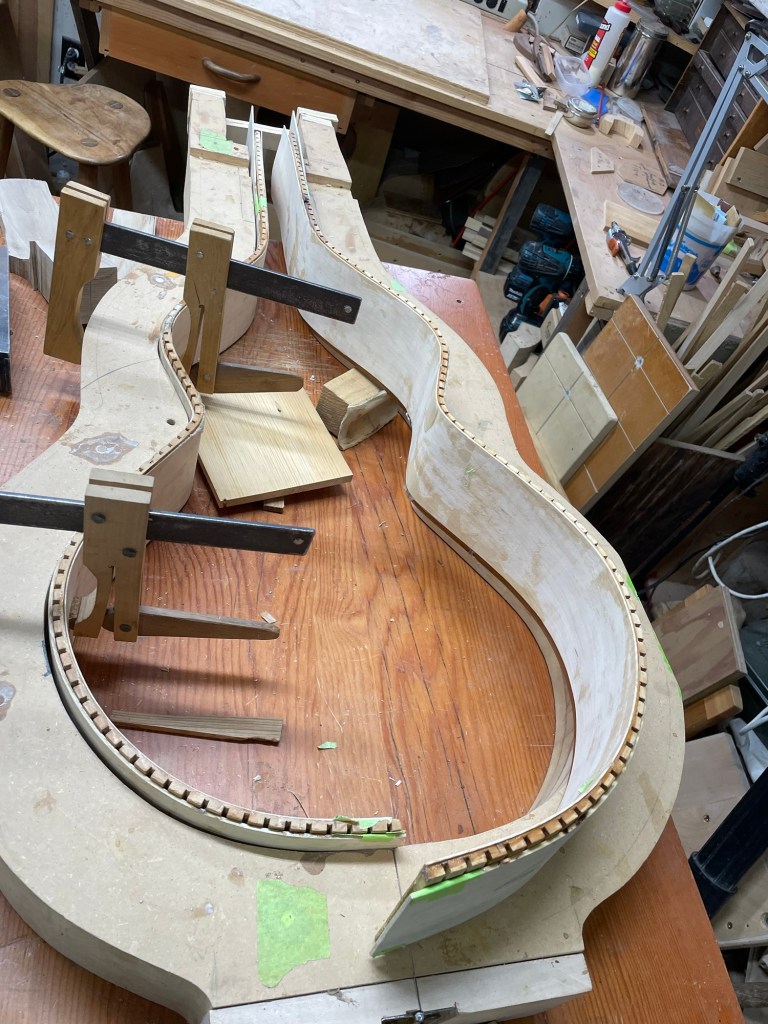
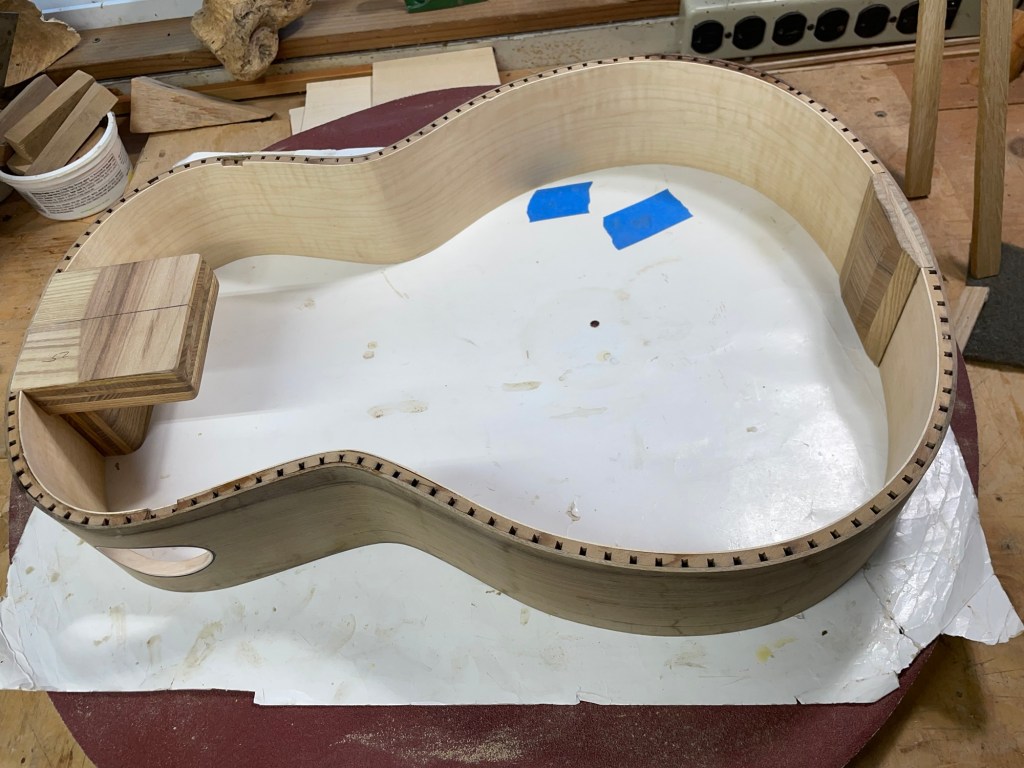
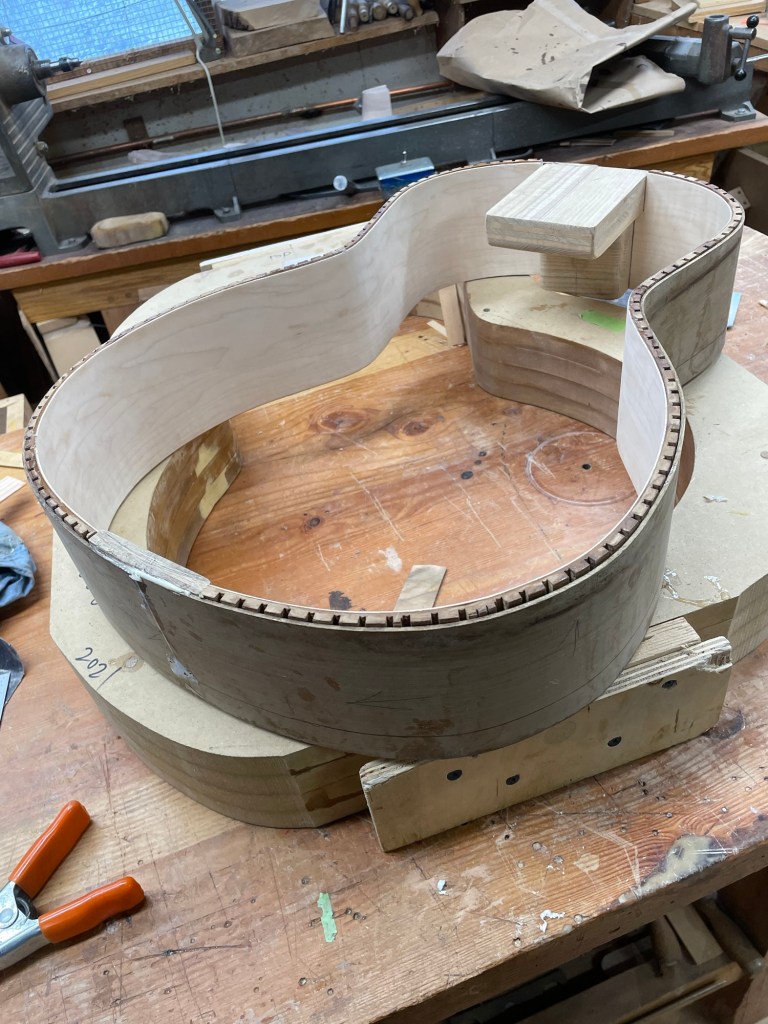
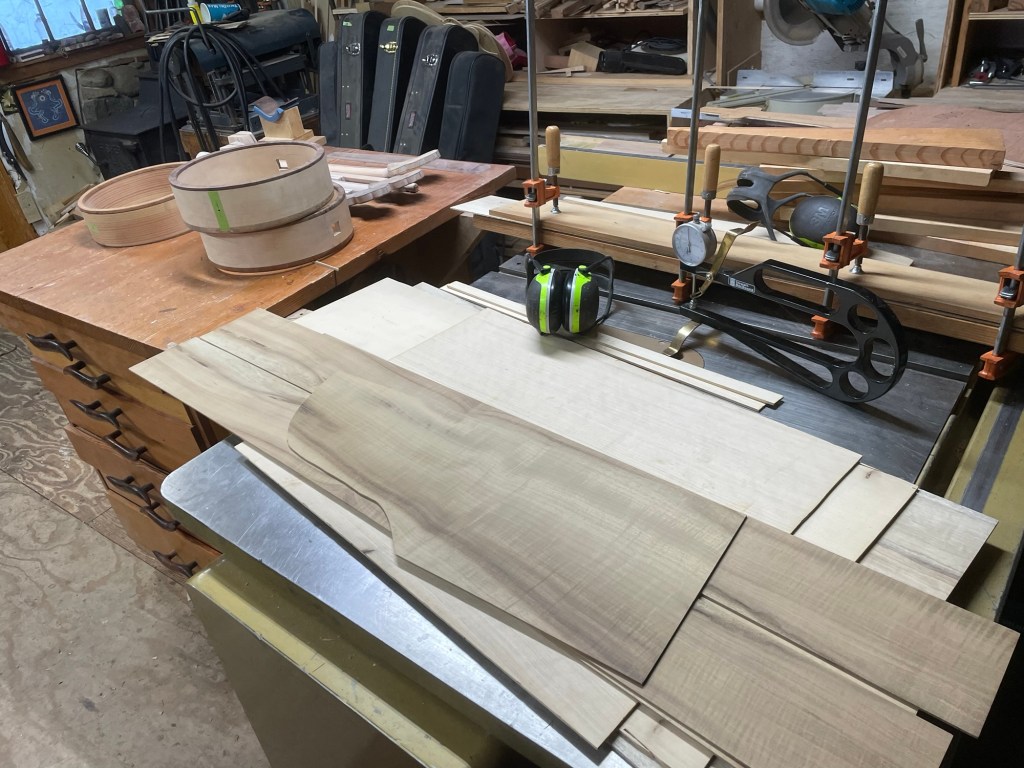
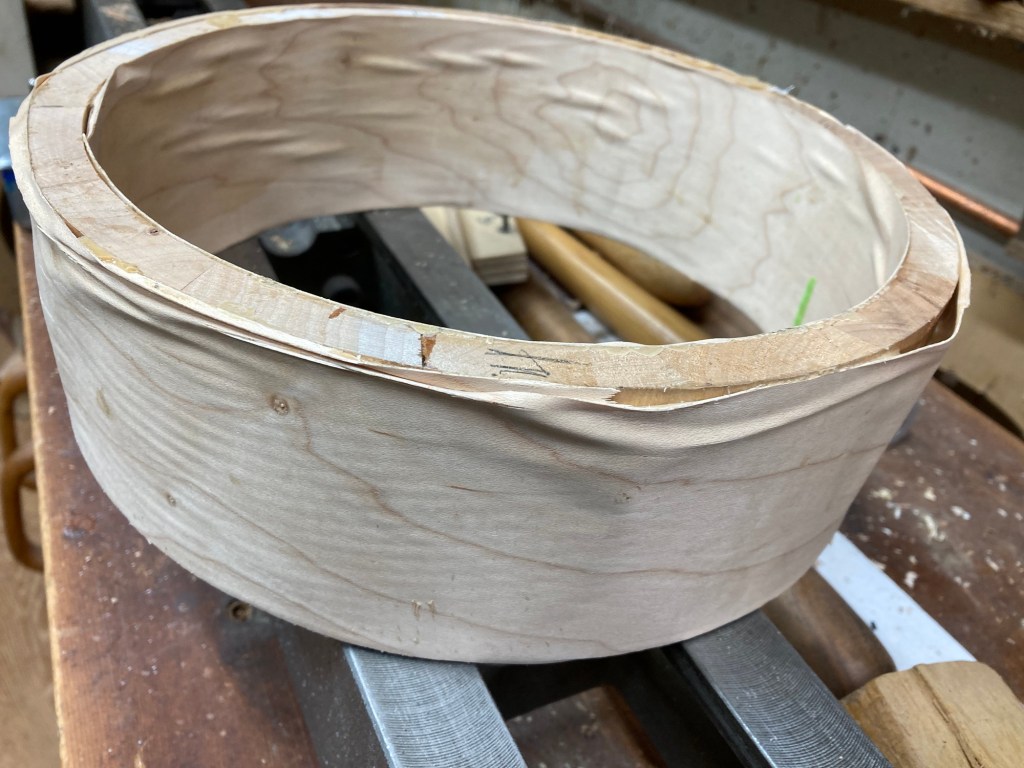
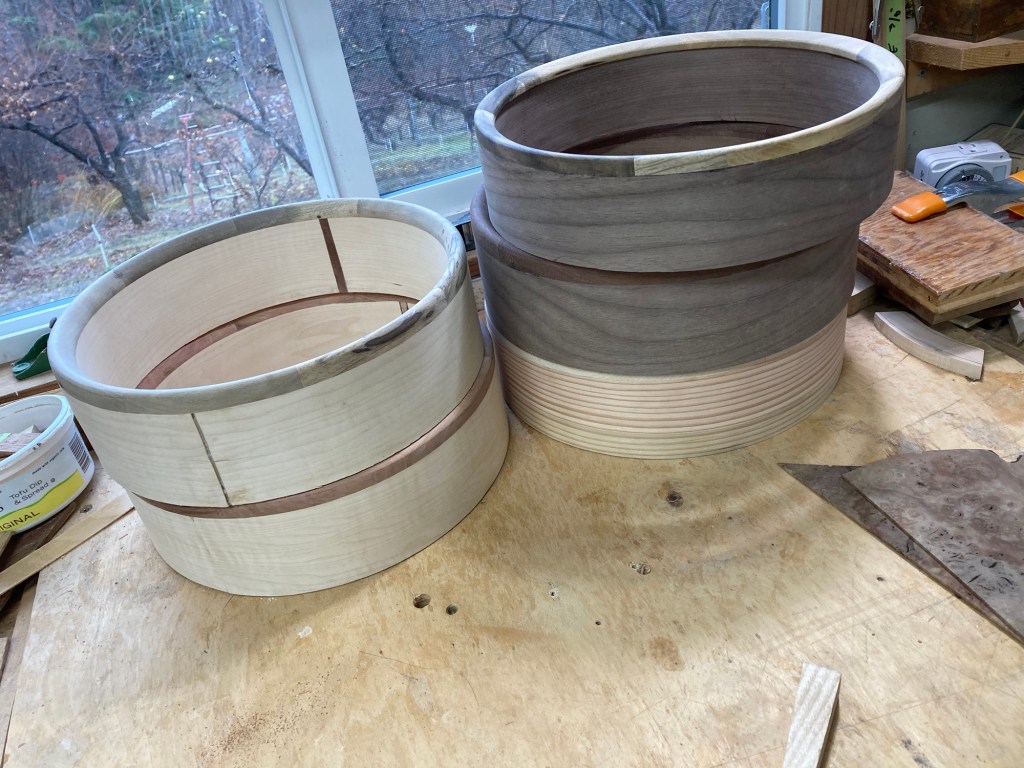
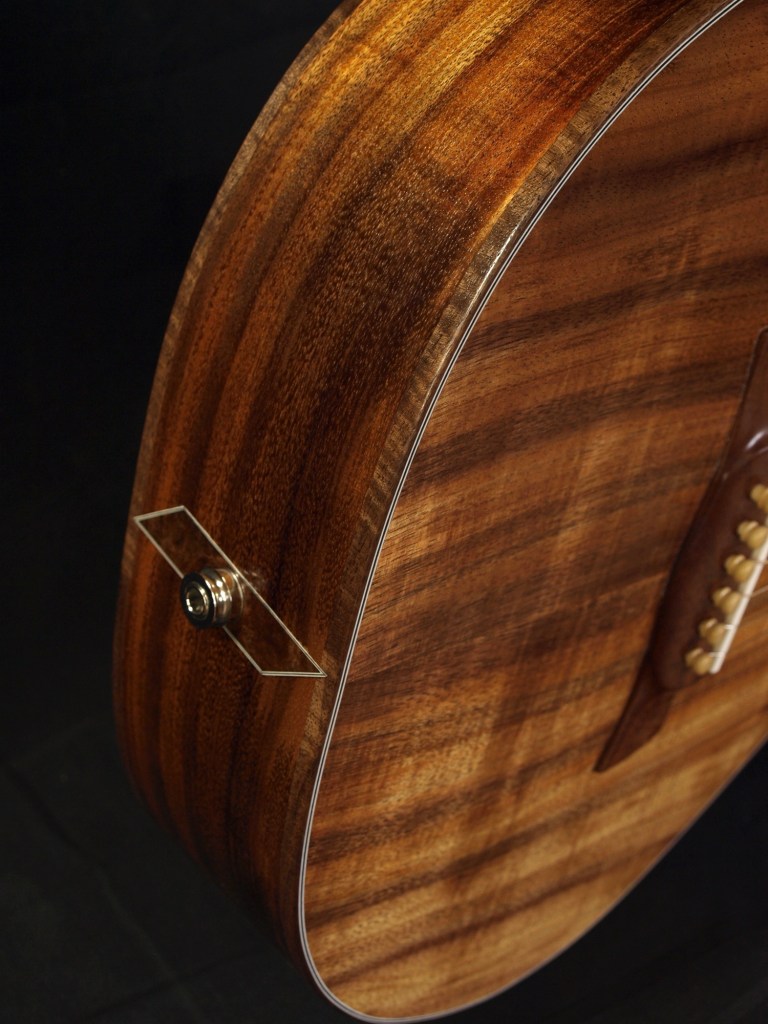
Here’s a few images of how I put the laminated sides together, both of these guitars are built this way. The Myrtle sides you see are same thickness they would be if they weren’t built this way, approximately 2mm or so. Then a 1/4″ layer of kerfed cedar next to the myrtle wood sides.

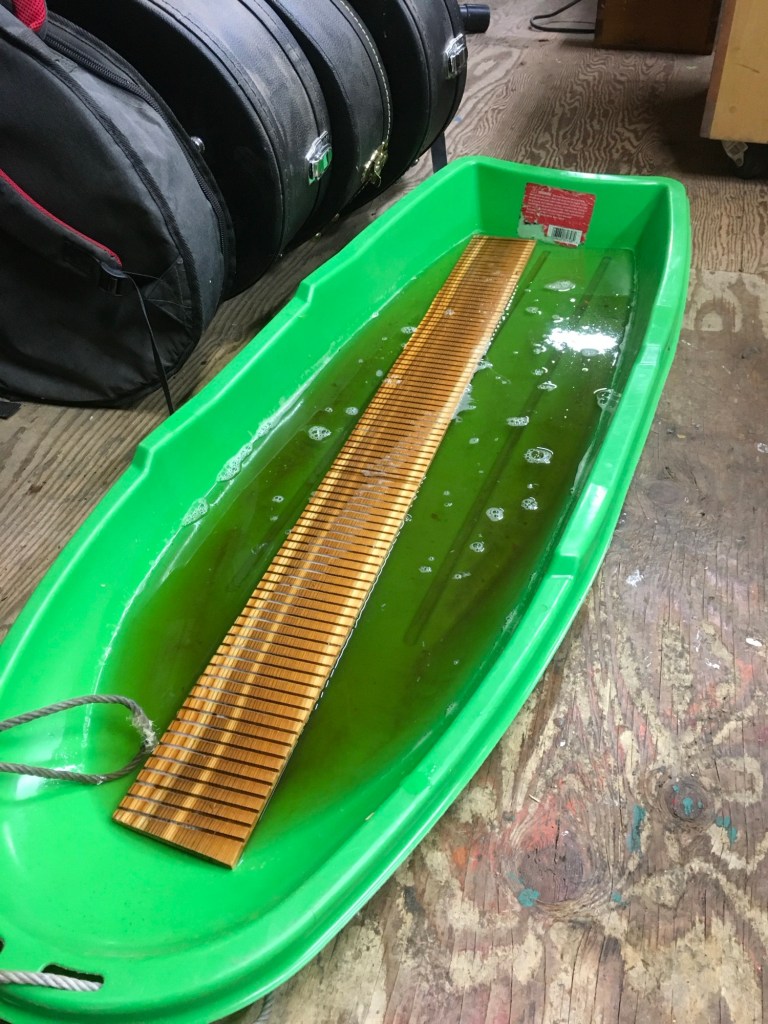
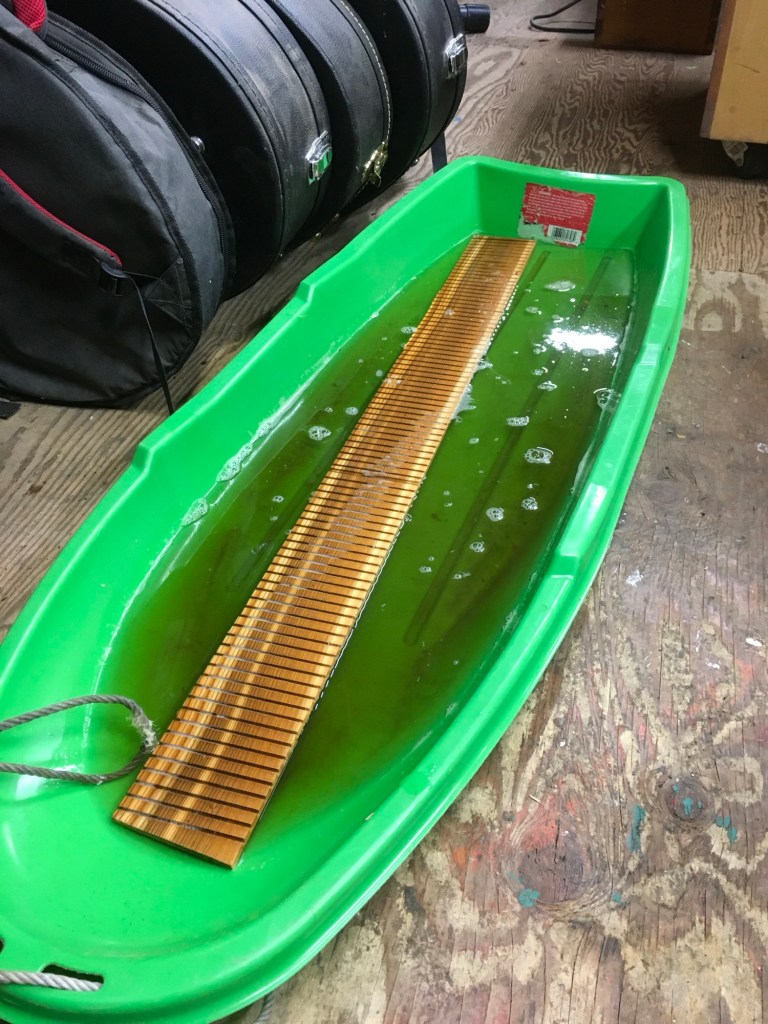
I soak the cedar for a little while in warm water, it isn’t the easiest wood to bend, hence the kerfs and the soak. I bend them on my mold with heat the same as the sides.

I use two pieces of veneer on what will be the inside to cover the cedar.

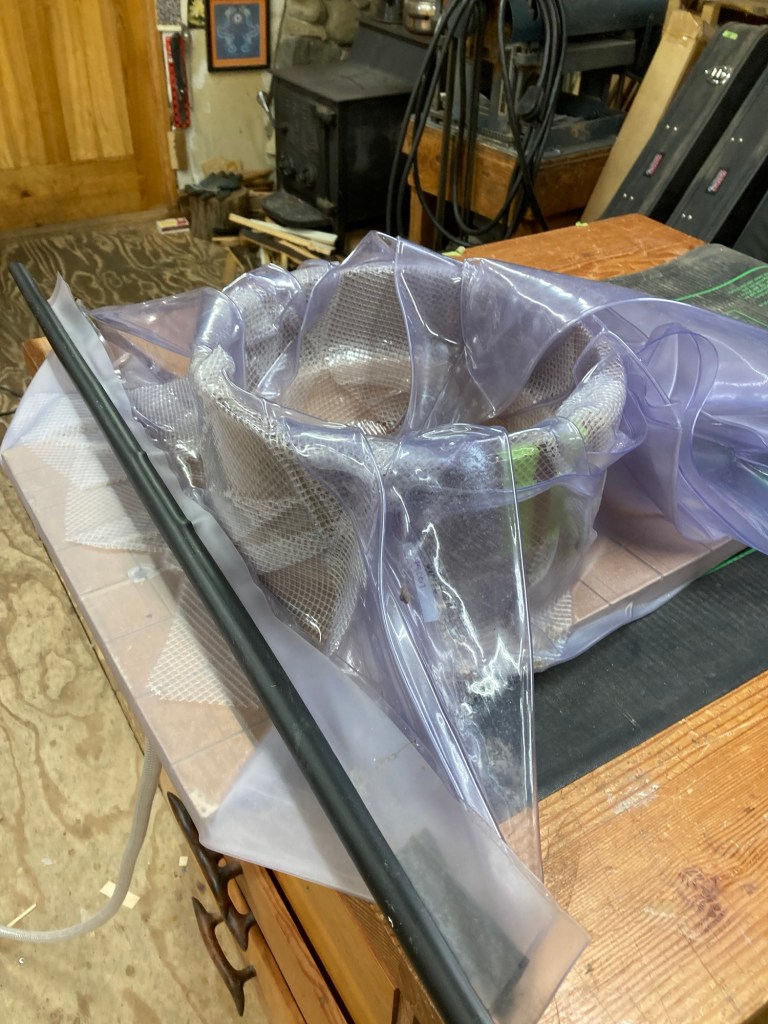
Then all the pieces get vacuum laminated on a form, I use epoxy mostly for this.

This sides are vey rigid after laminating and quite strong.

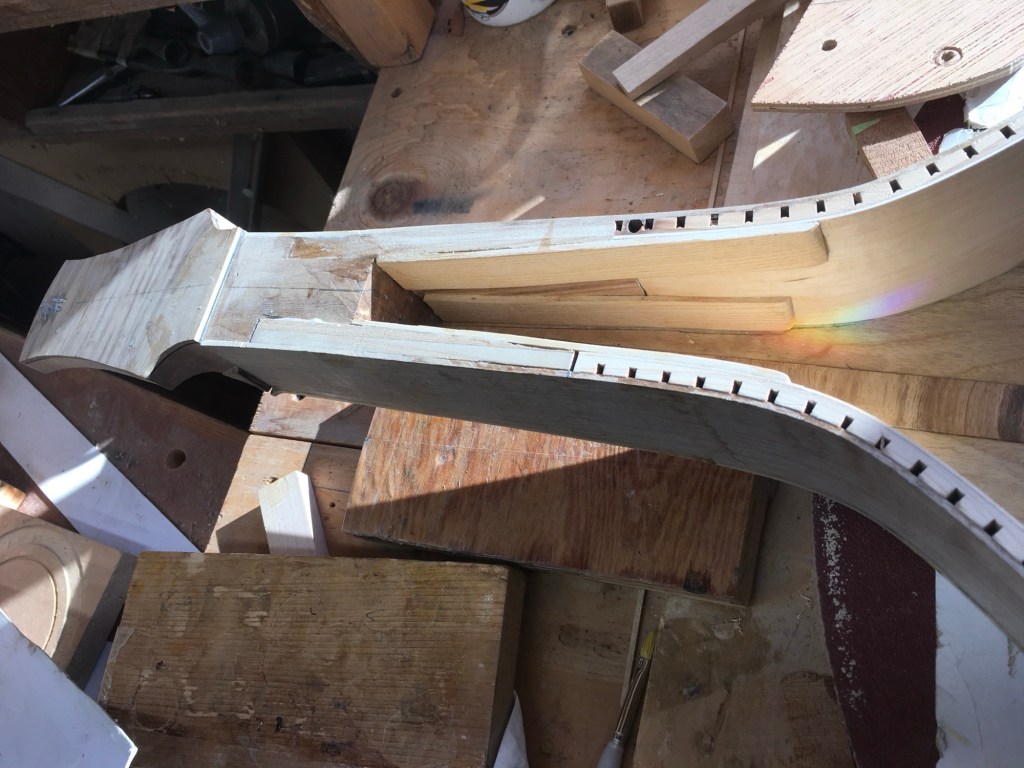
I put tape on the myrtle sides where the head and tail block will go, I like attaching them to the sides rather than the laminations. The tape facilitates removing the cedar from the myrtle. The sides are thick enough to not need a lining to glue the top and back to the ribs.

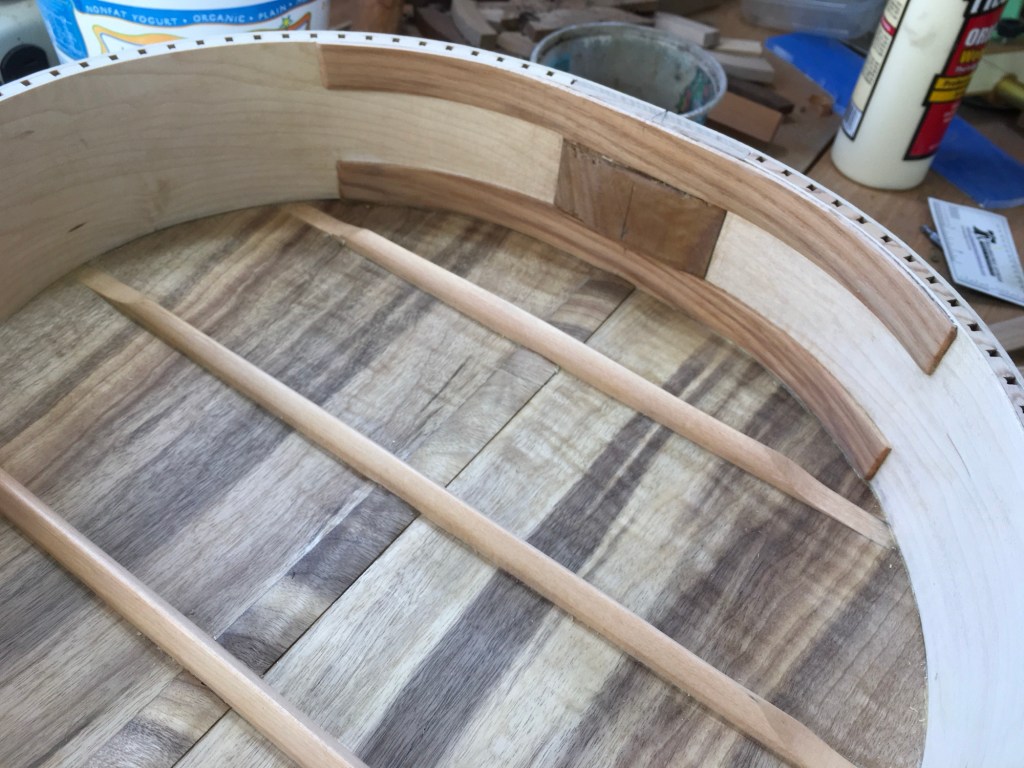
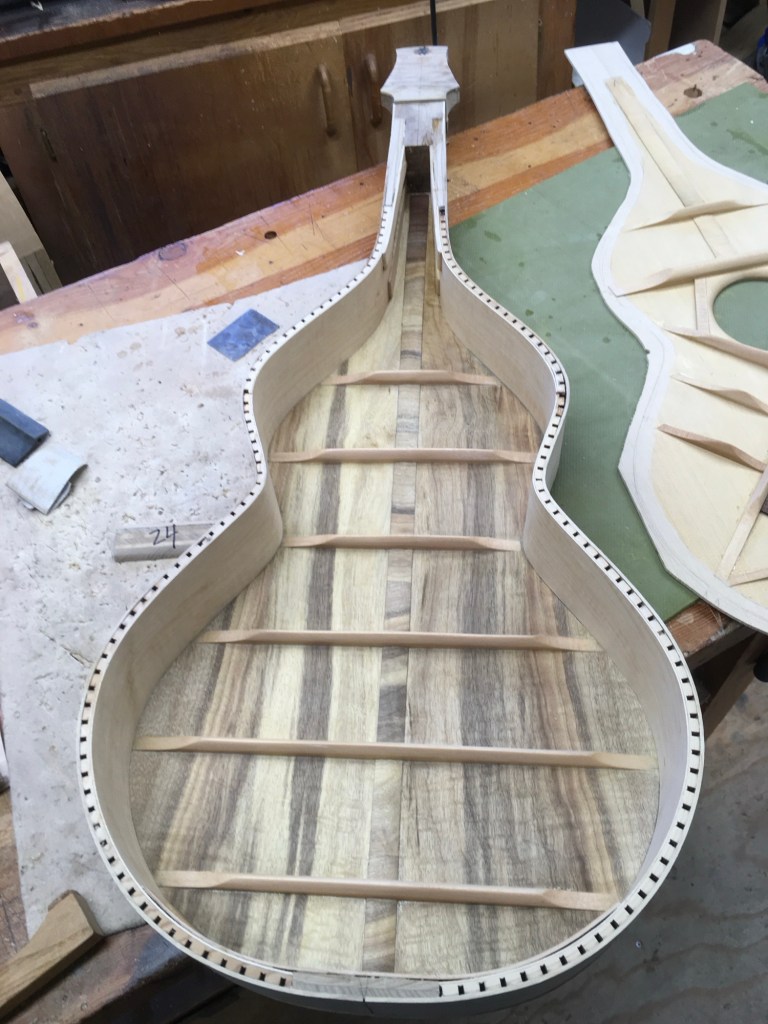
These are some shots of the added reinforcements on the tail and head blocks on the Weissenborn. The laminated sides and these reinforcements made for strong and rigid sides.

More Blooms

Persimmon 2

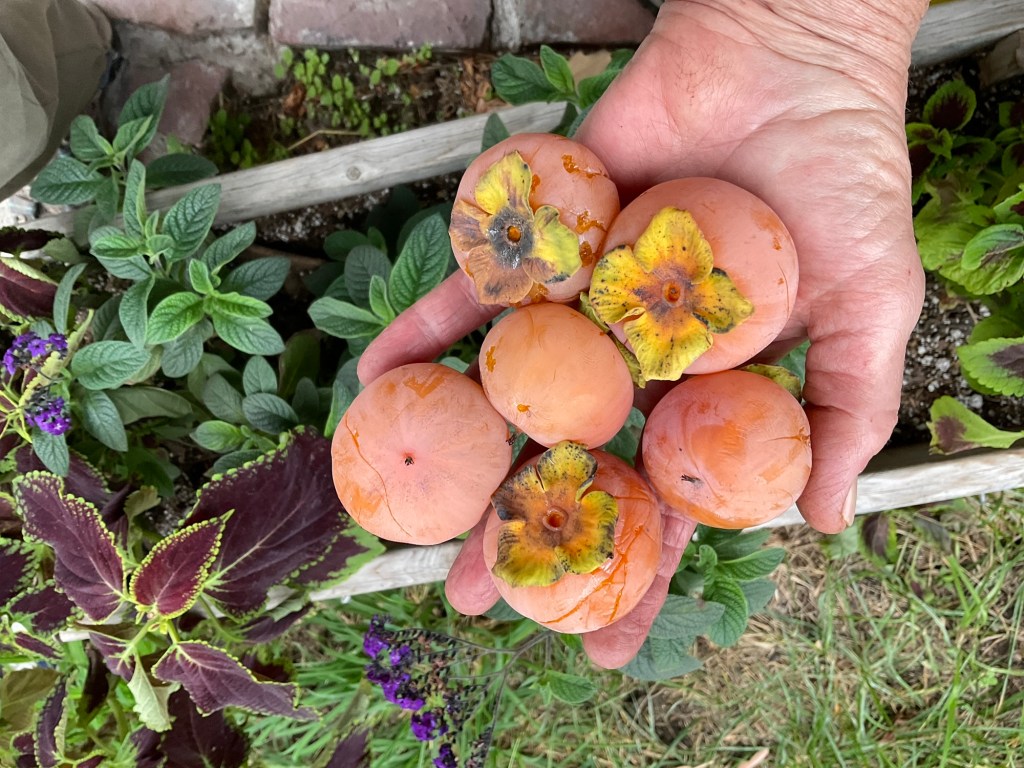
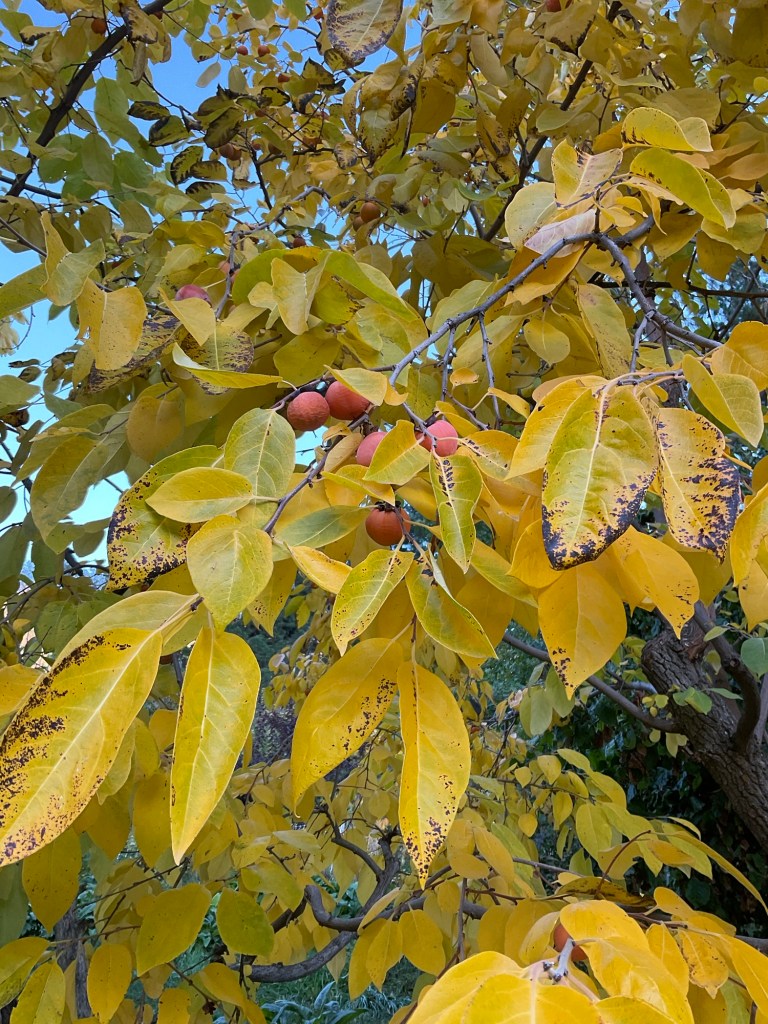
American Persimmons

There are many adequate domestic woods to serve as finger/fret boards, as I mentioned in the previous post. Hard & long wearing, but maybe not the right color. Vacuum dyeing is an option, and any color could be used, royal blue or fire engine red..? I’m interested, but haven’t committed or invested in those capabilities. I’m not a traditionalist, a non black fret board works for me, but a dark fb does look good.

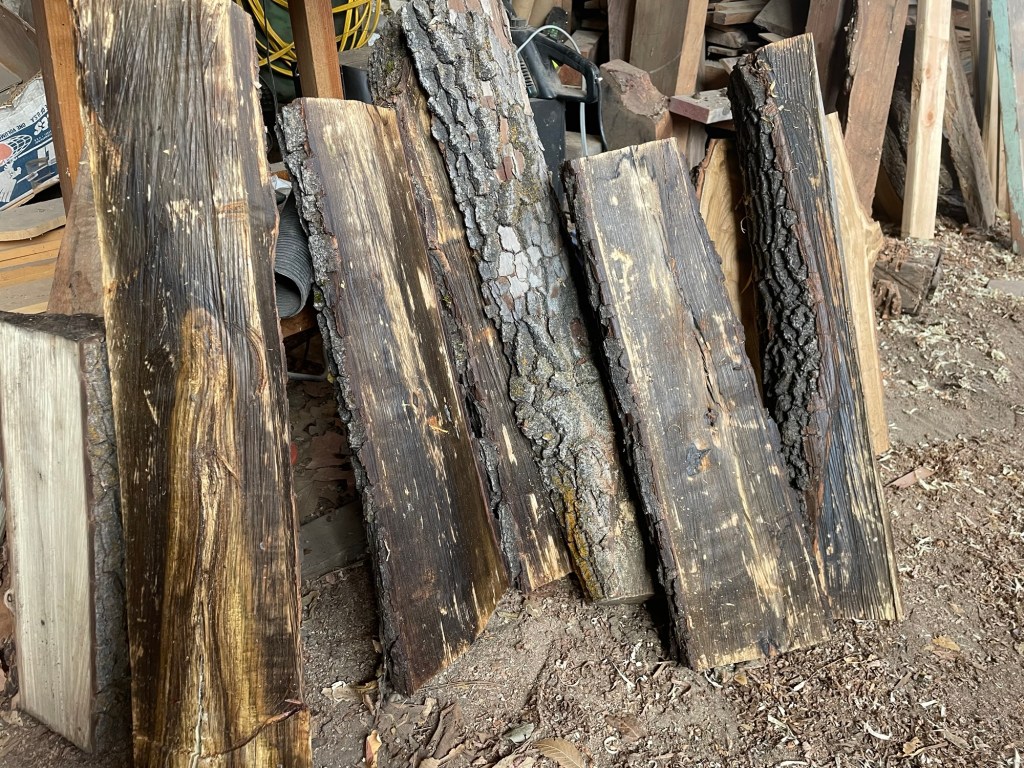
Persimmon Logs After a Summer’s Curing

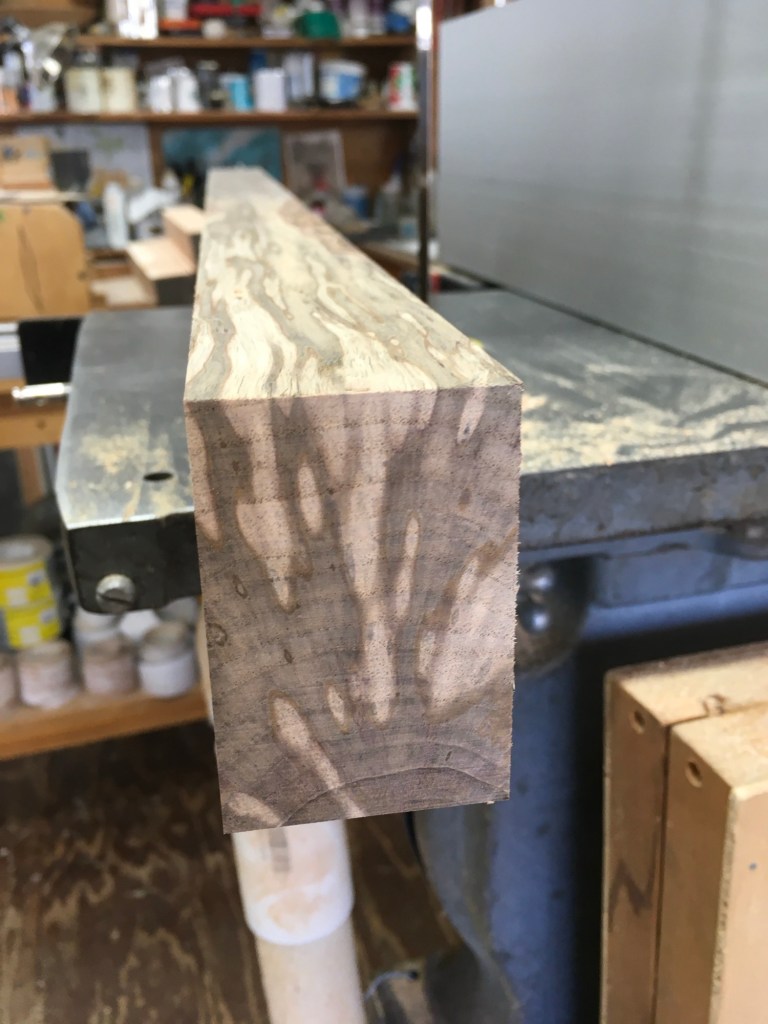
Persimmon is squirrelly wood, it twists and checks easily, and it isn’t rot resistant which isn’t important in this context, except for curing it. I usually rip the log with a chain saw after it’s cut, I follow the pith as much as possible, trying to eliminate some tension in the wood and minimize checking, as I do with most wood I harvest. I’ll paint the ends, and sometimes the whole cut face, with Anchorseal, a water based wax coating made for this purpose, to slow down the drying. If it dries too fast it will check profusely. Then I stack the half logs (logs is usually a overstatement, 10-12″ diameter is probably the biggest persimmon I’ve ever dealt with, but more often smaller) with stickers between in a place out of direct sunlight, and sometimes put a tarp or sheet metal over it to slow the drying as much as possible.

These Billets Were Squared Up After a Year of Drying

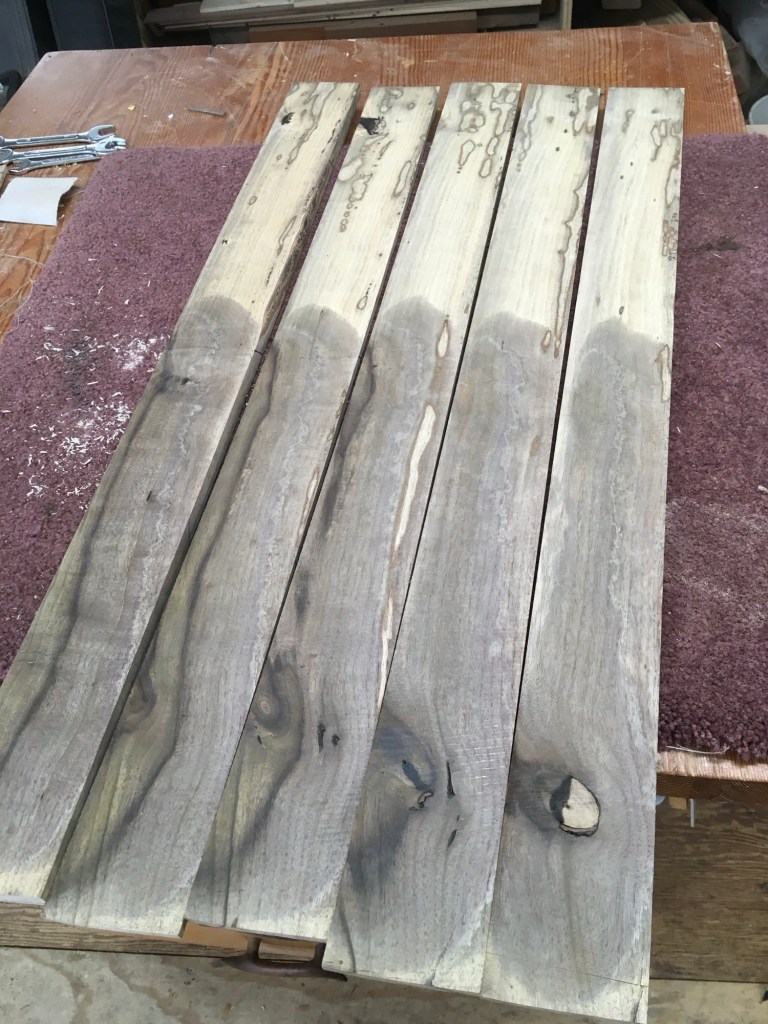
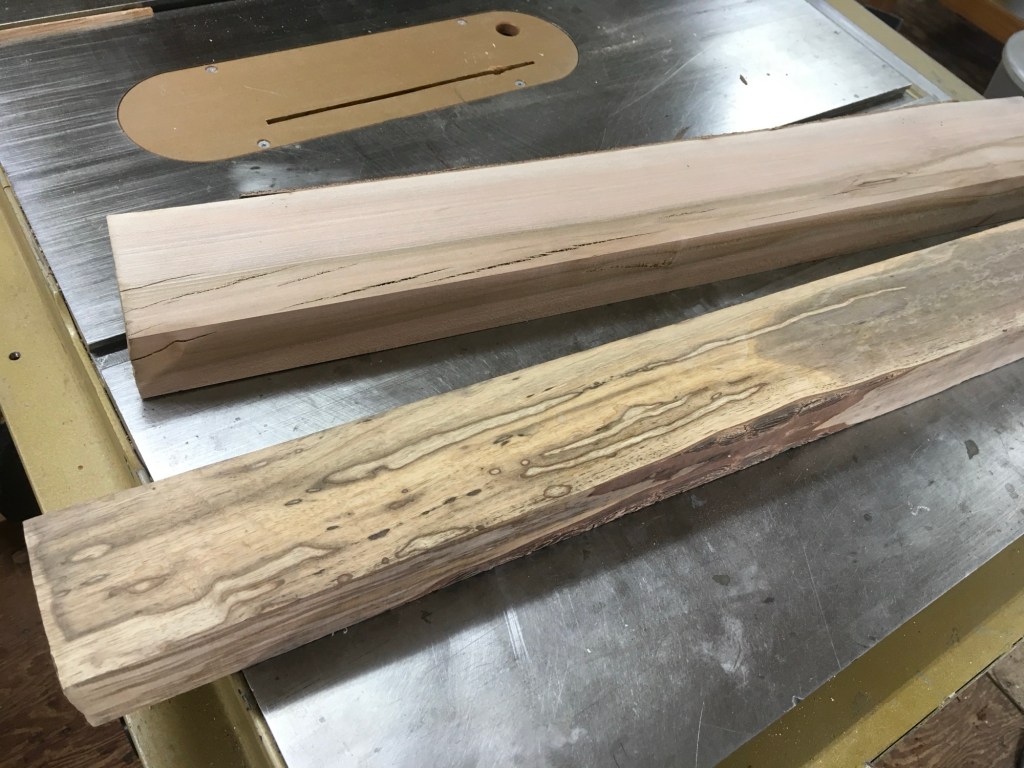
As mentioned above that Persimmon is not rot resistant, if the drying is slowed too much, or covered without air flow, it could rot. It needs to dry, but not too fast, and the drying slowed, but not too much. Our place is in eastern Washington state, hot & dry Summers, my main obstacle is keeping it from drying too fast. The wood is white when cut, with a little dark wood, older and close to the pith but not much, depending on the tree. But after a year or two being waxed and under cover it begins its decomposition process, turning some grey and various colorings, but it dries enough to halt that process before it rots the wood. In my experience, the pre-spalt is just that, pre. The wood is still hard and very usable.

Some of the Coloring That Happens While Drying (the bottom photo also has a piece of Dogwood next to the Persimmon)

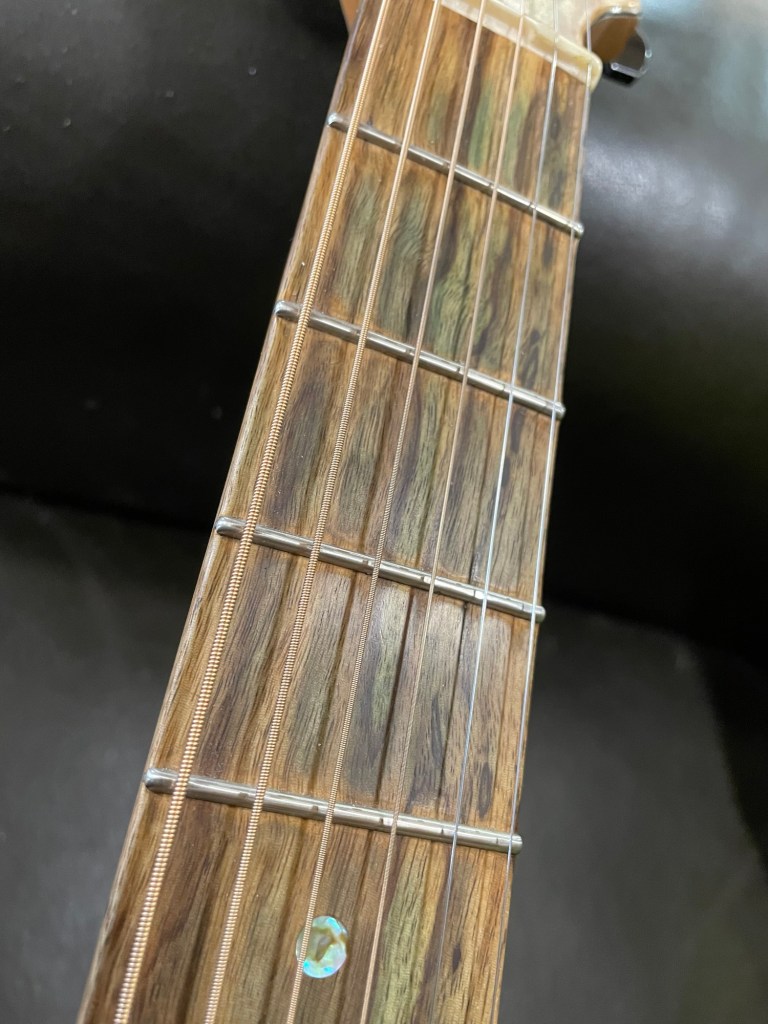
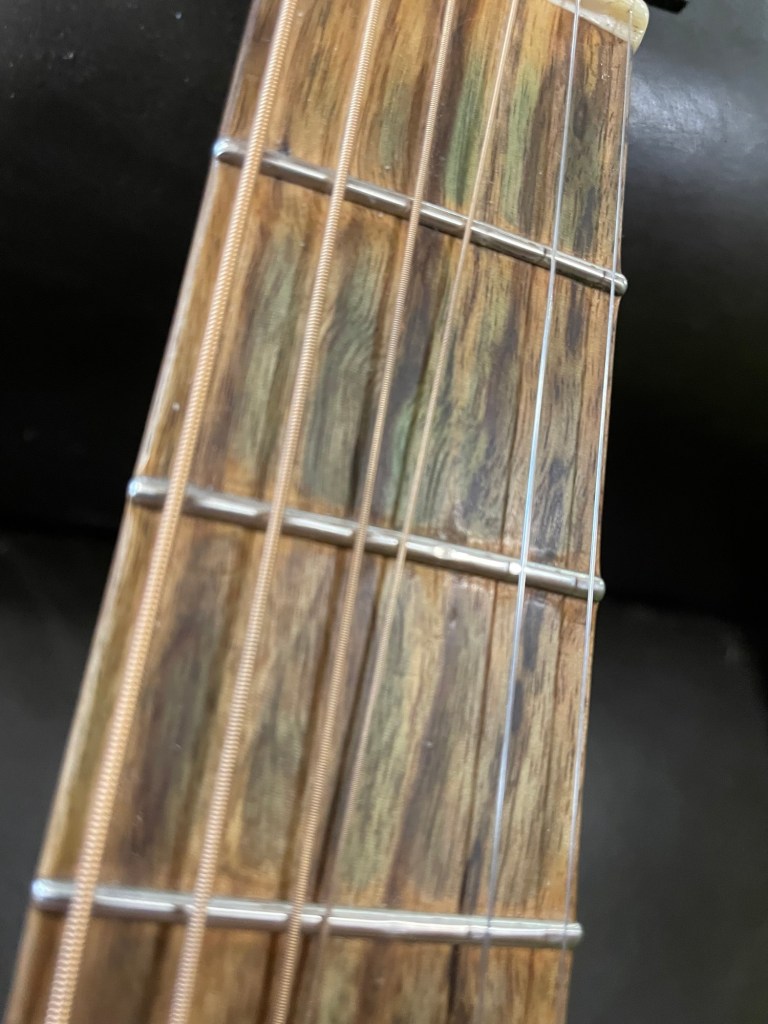
I’ve had good luck using this wood for fretboards, once it’s cured, it is stable and has shown a great resistance to wear. I discovered a few years ago that pisgahbanjos use it for fretboards on some of their banjos, I’m guessing that it’s a native tree in their woods. I think there’s more then a few tree/shrubs with wood that would well for this purpose, it’s not easy to find them that are big enough and not too branchy or not straight enough. I always mill it so I can quarter saw the fingerboards.

A Couple of Pics of a Well Used Persimmon Fretboard, Finger Oils Seemed to Add a Little Green Color

I encourage everyone to look for alternatives to tropical woods for whatever you make. Keep in touch and let us know what you come up with.

Persimmon 1

Persimmon Wood Fretboard

When I began making guitars about ten years ago, besides being very enthusiastic about it all, I was trying to figure out which local woods would work as replacements for traditionally used tropical woods. For most of the material used in guitars, i.e the back, sides, neck, bracing and soundboard, domestic woods work well, think maple, black walnut, spruce, etc. But for certain elements of stringed instruments that need dense, harder wood like fret/finger boards & bridges, the traditional material are woods like ebony, rosewood etc. All amazing woods, but not domestic (US domestic, that is). For my first few guitars I used rosewood (Indian I think) for the fretboards and bridges, some odd pieces I had in my wood piles. It worked well and had the ‘traditional’ look of a dark wood for fret or fingerboards.

Diospyros Virginiania

I love harvesting wood, I do it for firewood or building material and for woodworking as well. From the roadside, orchards, residential (with permission, of course) or the forest (permission there too), there’s wood all over the place. Not always worth stopping for, but sometimes it is, and often people are glad for someone to take it away. So for me finding and harvesting wood, it’s kind of like an itch that likes to be scratched occasionally.

Roadside Harvesting

Pardon my digression.. When I got into making stringed instruments I was trying to figure out which local or domestic woods would work well for fretboards. Some options I came up with locally are apple, black locust, yellowhorn (xanthoceros sorbifolium), plum, Douglas maple (aka Rocky Mountain maple), Pacific dogwood, and persimmon. Persimmon (Diospyros sp.) is a northern relative to the ebony tree, and is a genus of over 700 species of trees & shrubs. Though not native here where I live, but some were planted on a neighbors place years ago and then were cut down, I happened to be in the right place at the right time to acquire some. We also have trees that we planted and have cut down, adding to my small stash of it. The tree I’m writing about isn’t the persimmon you might see in a produce section, the Japanese persimmon (Diospyros Kaki), an excellent fruit, but what’s known as American persimmon (Diospyros Virginiana). It’s a smaller fruit, quite good as long as it’s ripe, very tannin-ie and astringent if eaten unripe. Our growing season is not always long enough to ripen them, but every few years we get to enjoy them.

Fresh Cut Persimmon ‘Logs’

I will continue in another post, I’ve probably gone on enough for now.

February 9, 2025

Red Cedar for laminated side soaking

I haven’t worked on the banjos since my last post, but have made good progress on two guitars. One a ‘Plectrum’ guitar and the other a Weissenborn acoustic lap steel. Both made from Myrtlewood and Port Orford Cedar.

Plectrum guitar with laminated sides

I’ve written about ‘laminated’ sides or ribs in a previous post, they’re stronger and the idea is when the soundboard is excited, the vibrations stay in the top rather then being absorbed by the sides, mostly. I’ve played guitars with and without ‘structured’ sides, and they most all sound good, but I do think it helps, and I do like strengthening the sides, they are vulnerable to bumps and a thin side can easily split. The extra robustness is especially helpful with the Weissenborns, there is a lot of string tension on them. (Structured and laminated are the same thing marketing..

Weissenborn with laminated or structured sides and reinforcement at the head block and tailblock. Makes for very solid ribs.

These are close to being done, will post pics when they are.

It’s been cold-ish the last few weeks, lows in the teens at night and beautiful clear days. Maybe a foot of snow on the ground, hope we get more before Winters over.

December 2024

Sleeping Orchard

I’m back in my shop and starting to get into a bit of a rhythm there. It was a busy farm season even though there wasn’t much soft fruit due to a January freeze (-10F). Garden vegetables, apples and various other fruits, nuts and honey carried us through the market season. I’m enjoying the Winter break.

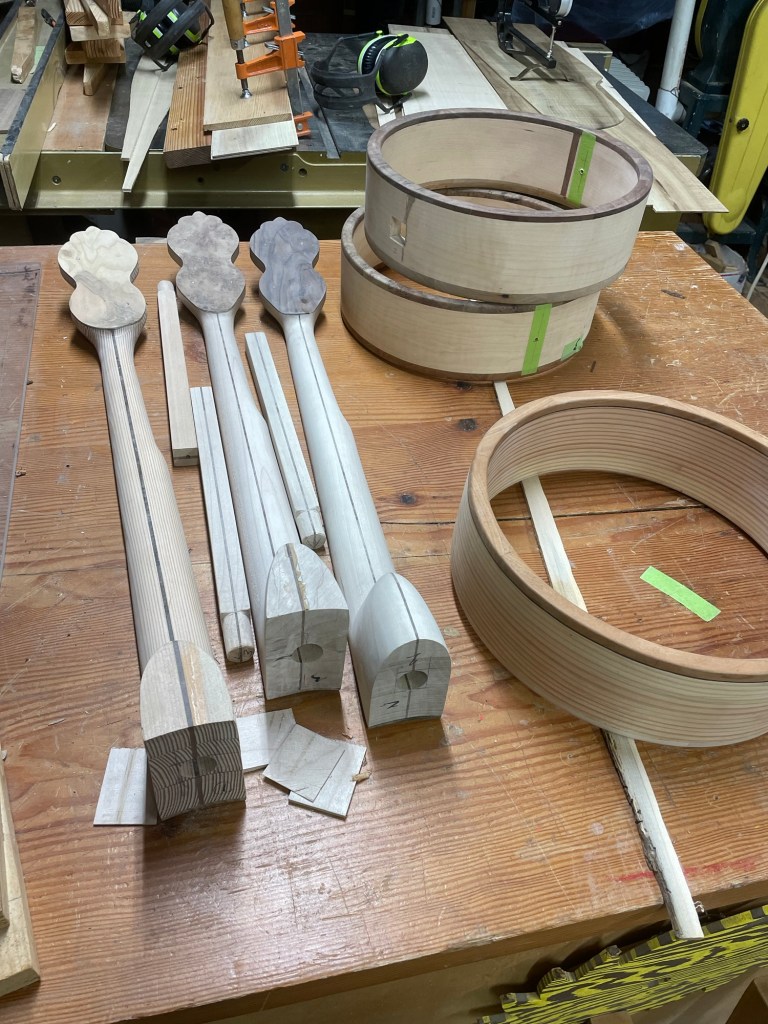
Still working on some banjos that I started last Spring, getting close to completing them. Two are made from local maple (bigleaf), and the other from Douglas fir. The fir rim will have a fir neck, and one maple and one English walnut neck on the maple rims. I’m very curious about how the fir banjo will sound, I’m sure someone has tried it already, but I’ve never seen one. (Actually, I haven’t seen many banjos..)

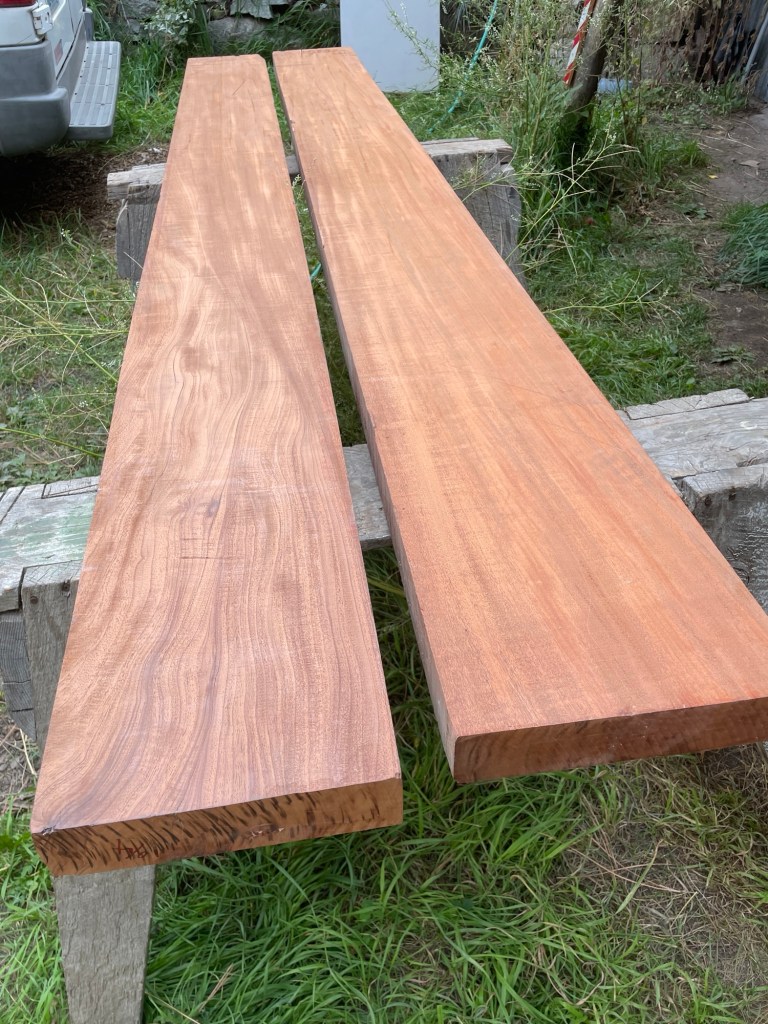
Also starting on a couple of guitars, one Weissenborn and the other a ‘plectrum’ guitar, which is a four string relative of a tenor guitar, but with a longer scale length. Both made with Myrtle back & sides and Port Orford cedar tops. I’m excited to be working with both of these woods, they both grow in a fairly limited range on the southern coast of Oregon and coastal northern California. The POC (Port Orford cedar) is harder than red cedar and has a rich resonant tone (and a strong, wonderful fragrance, at least to my nose). The Myrtle wood seems to be a bit denser than black walnut with quite a bit of various coloring and figure, a milder but distinct perfume, and an excellent tonewood. I’ve dabbled with both woods before and am looking forward to becoming more familiar with them.

More to come.. Happy Solstice and happy holidays to you all.

Peace

Banjo Making 5 – May 2024

Banjo Rim, Ready to Veneer, Still on the Lathe

It’s been a while I know.. busy on the farm. After the rims are turned and trued up it’s time to veneer the outside and inside. I’ve experimented with regular veneer, which is pretty thin (about 1/24″, or 0.024″, or 0.6 mm) which is a standard thickness, and found it to be too thin. It’s too easy to sand through and with my vacuum clamping setup it pulled the veneer, see next photo. I’m definitely not fluent in veneering, so I do have a lot to learn and someone that knows what their doing wouldn’t have the same issues or problems I did, think of drums, a wood core with a beautiful veneered surface.

A Failed Attempt at Veneering a Rim with Thin Veneer using a Vacuum Bag

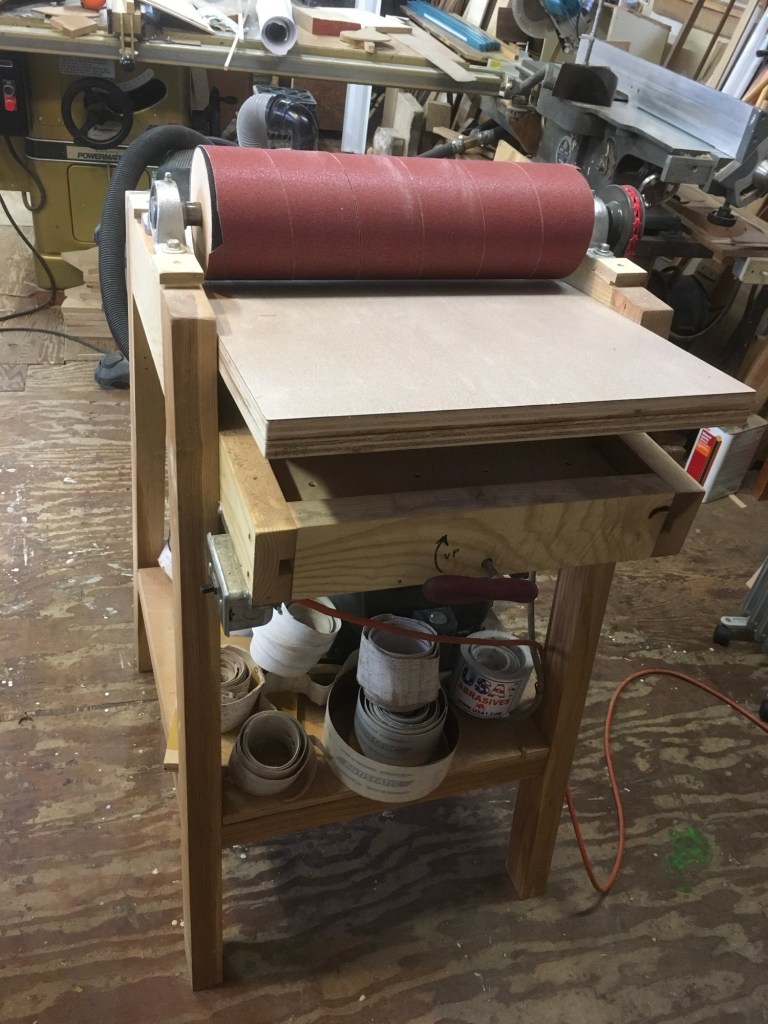
Thicker veneer is available, 1/24″ (0.042″, 1mm) and 1/16″ (0.063″, 1.5mm). Making it is also a option, it takes some time with the tools I have, resawing doesn’t take long, but sanding it does with my shop-made thickness sander. The advantage to making your own is that you have more options and are able to use local material, if you have access the wood. Either way the results are much improved with thicker material. I’ve laminated them using a vacuum pump and bag, and have had good results, but with hindsight I think using cauls and clamps might be as effective. Here’s what the setup looks like:

Vacuum Clamp Setup

There’s a rim under the one that’s being clamped to give the thick laminating bag space to completely reach the bottom of the rim. Without the lower rim, the bag doesn’t quite reach the bottom of the rim due to the thickness of the bag which doesn’t make a sharp corner at the intersection of the rim & platen, without contact with the bag there’s no clamping pressure there. I tape the veneer to the rim after applying glue to hold it in place while laminating. Cutting the veneer to an exact as length as possible to avoid any overlap where they meet. A not perfect meet on the outside will get covered with the neck heel, on the inside I’ve sometimes put sort of a tail graft to cover/highlight the seam.

Laminated Rims with Wood Tone Rims

This is where the rims are now, I did make wood tone rims on each of them (6) with different woods. Using the hardest woods I have: Persimmon, Jarra, Douglas (or Rocky Mountain) Maple, Apple and Plum. Next step is to put a decorative trim on the rim, then on to making the necks.

New Guitars & Banjos – Spring ’24

Koa & Black Walnut Hawaiian Guitar

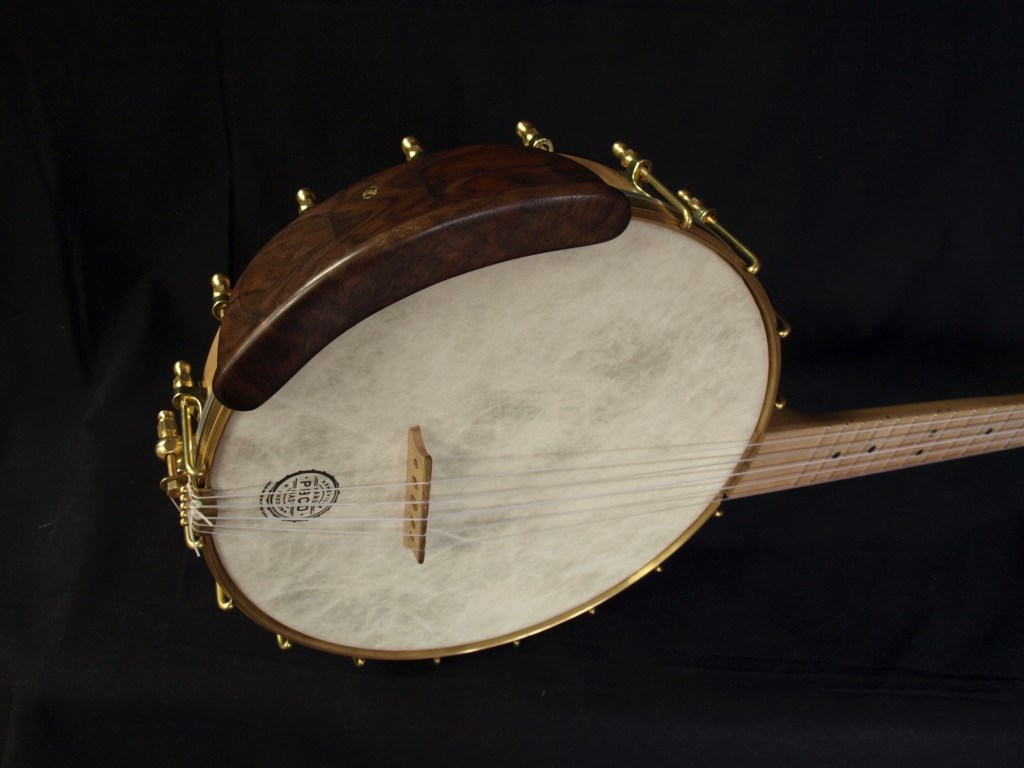
My Winters work are a couple of Weissenborn or Hawaiian type slide guitars, and a couple of open back banjos. One of the guitars top, back & sides are made from koa wood, with black walnut binding, fretboard, bridge and headstock veneer. The other is the opposite, black walnut body and koa trim and bridge & fretboard.


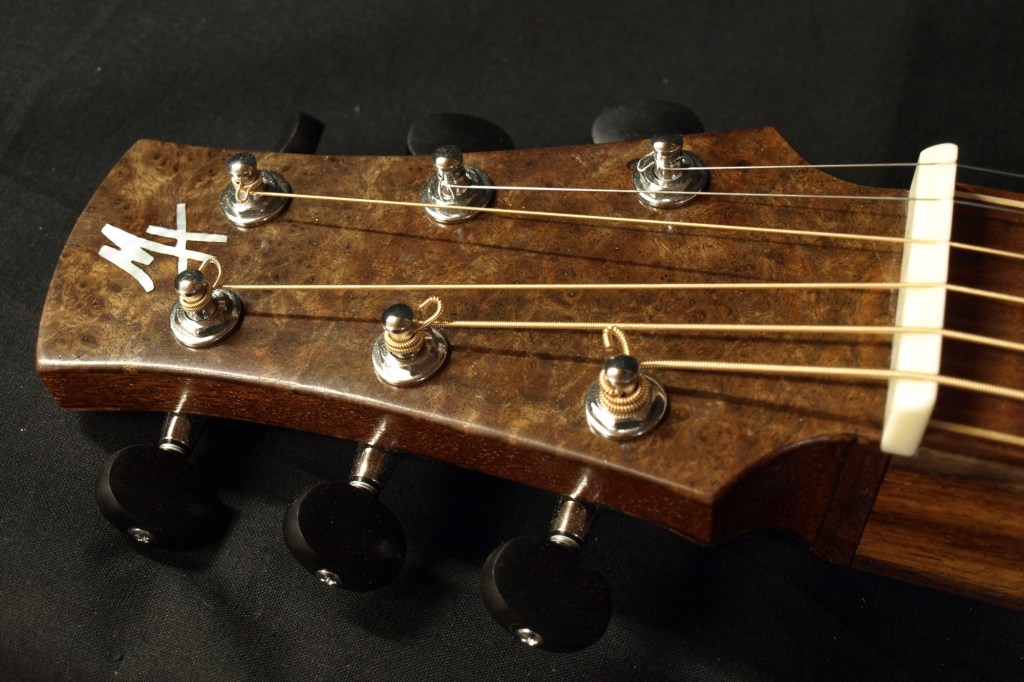
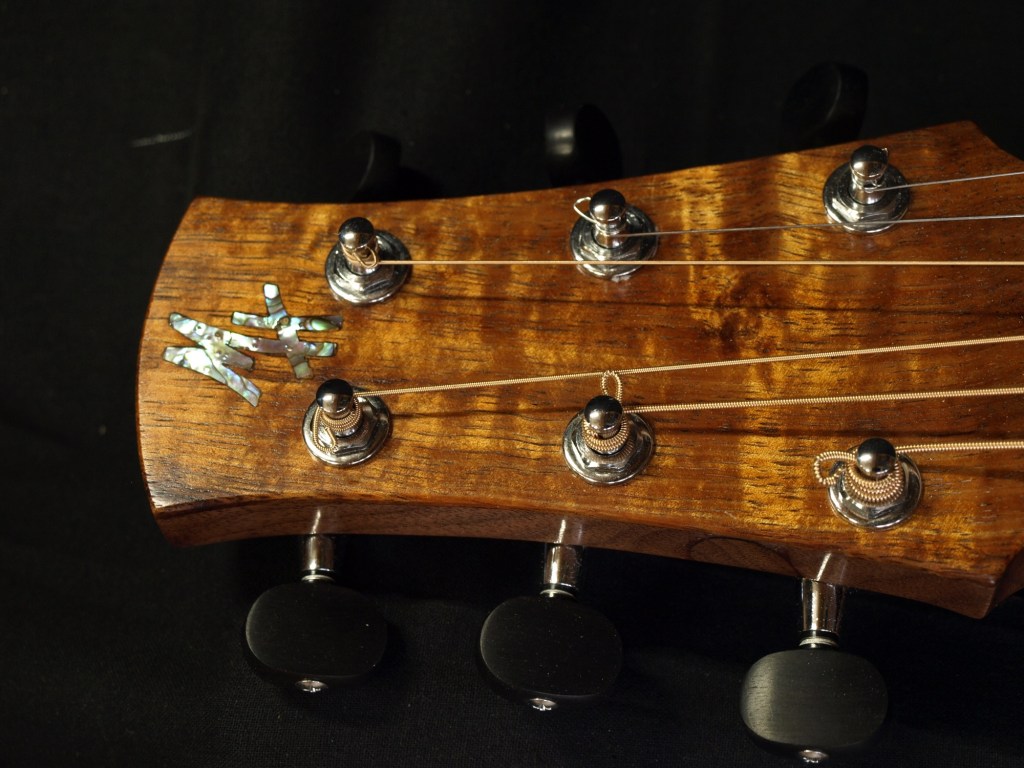
They both have Sitka Spruce bracing, chestnut lining, bone saddle & nut, Gotah tuners with ebony buttons and a K&K Pure Mini under bridge pickup. They both come with a hardshell case, and are available as of this writing. Something I’ve been wanting to do, and haven’t made the time for until now is to make a ‘logo’ inlay on the headstock. #23 inlay is white mother of pearl, #22 is Pau abalone, they also have said shell for fret markers. Definitely not perfect, but I am happy with them


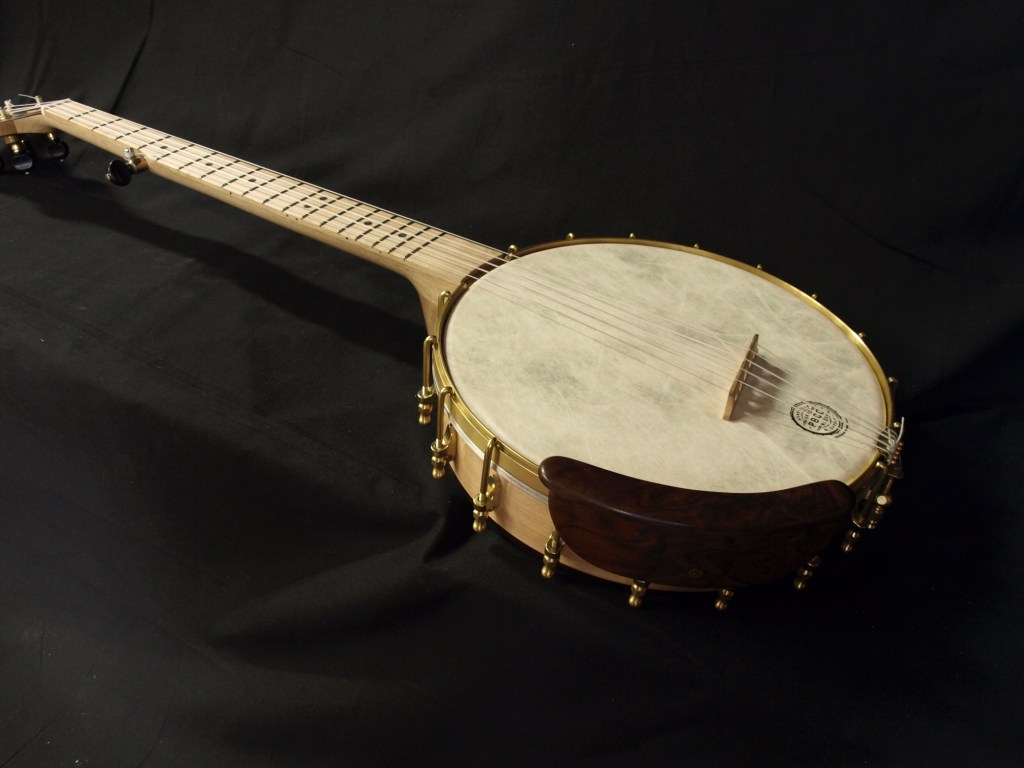
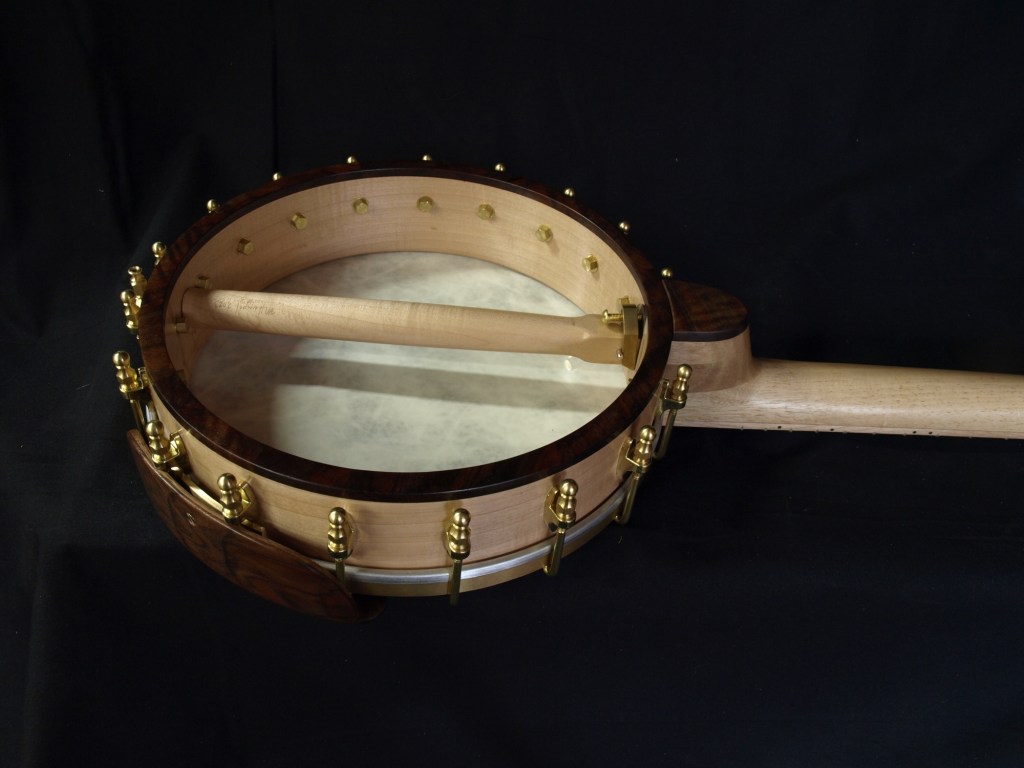
I also finished a couple of banjos last year (before I started on the rims noted in previous posts). They both have bent maple rims, with black walnut root trim and English walnut necks. Douglas or Rocky Mountain maple fretboards. One is a four string ‘plectrum’, and the other a five string. Both open back, the four string is mine, the five string is for sale. Check the ‘available’ page and/or email me.

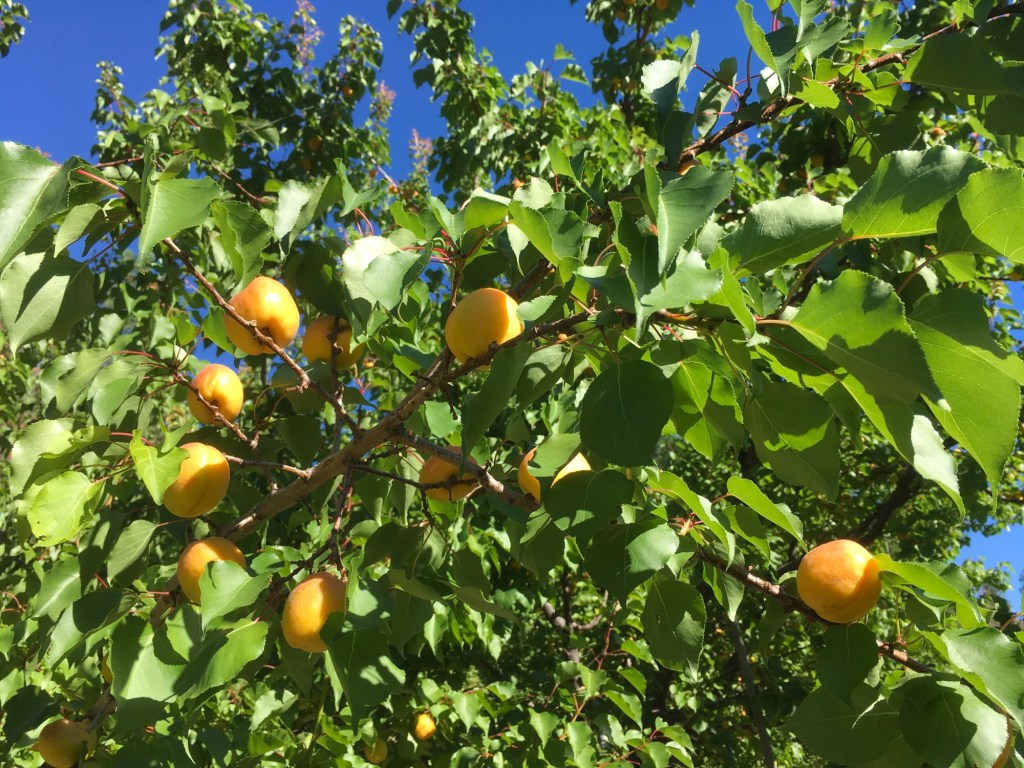
Apricots on our Farm

The reason I only get a few or a couple of instruments made each year is my real job. My wife Liz & I own and operate a small farm which consumes most all of our time from March through October and into November. Winter is when I get my shop time. We grow mostly tree fruit, cherries, plums, peaches, apples, pears, hardy kiwis, walnuts etc.. We do all the work ourselves and sell it at a farmers market in Seattle all Summer and Fall. http://grousemtfarm.wordpress.com if you’d care to check out our farm blog.

Banjo Adventures – 4

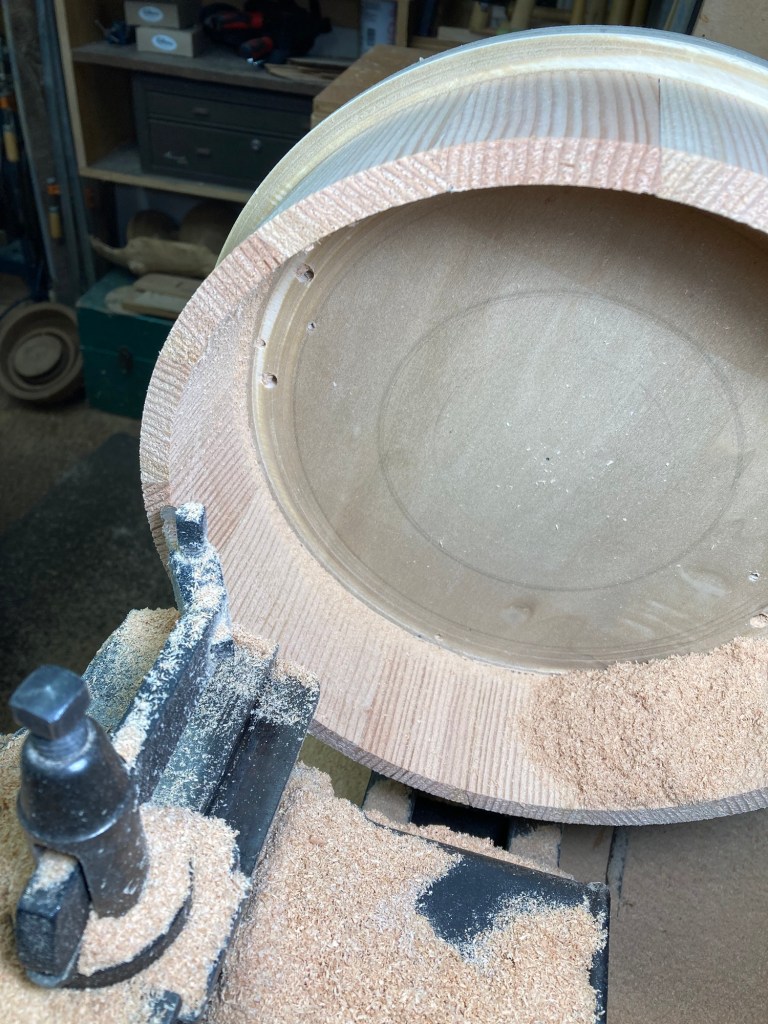
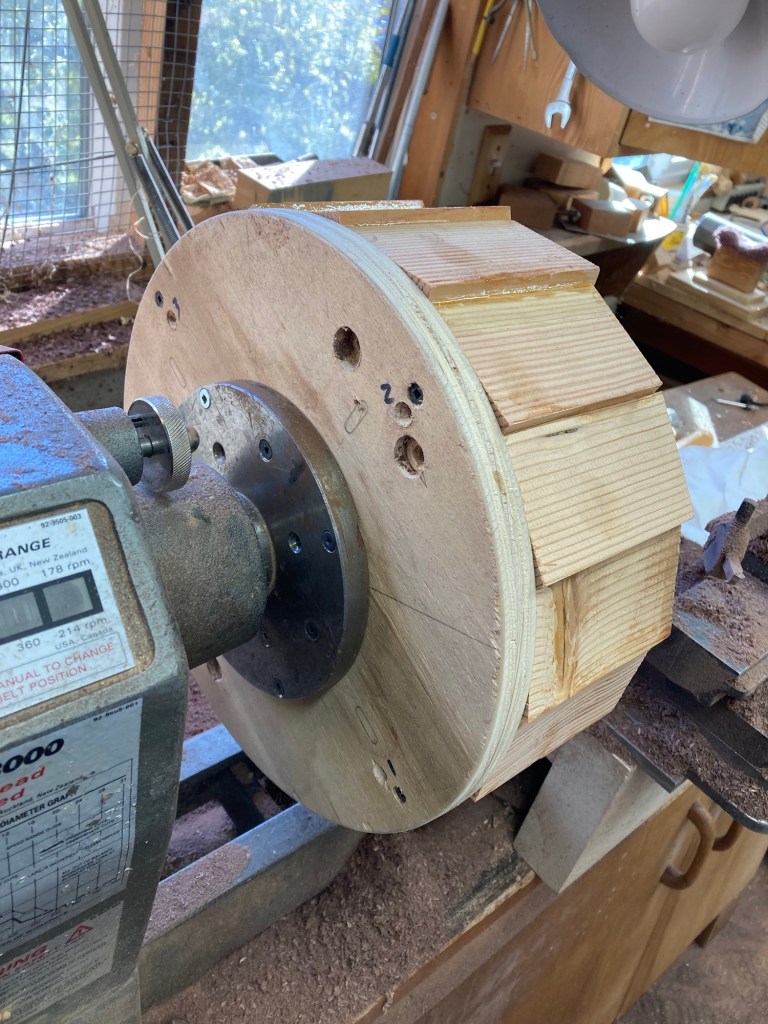
After the ‘barrels’ are cut they’re ready to turn on the lathe. My current method is to use 3/4″ plywood screwed to a lathe faceplate, using two pieces of plywood is probably a better way, more stable. I center the barrel on the plywood and drill four holes (or more) through the ply into the barrel. It’s important to number the holes and to remember to write the numbers on the work so it can be taken off and on and lined up to where it started, which happens several times.

‘Barrel screwed on a plywood plate on the lathe, ready to turn.

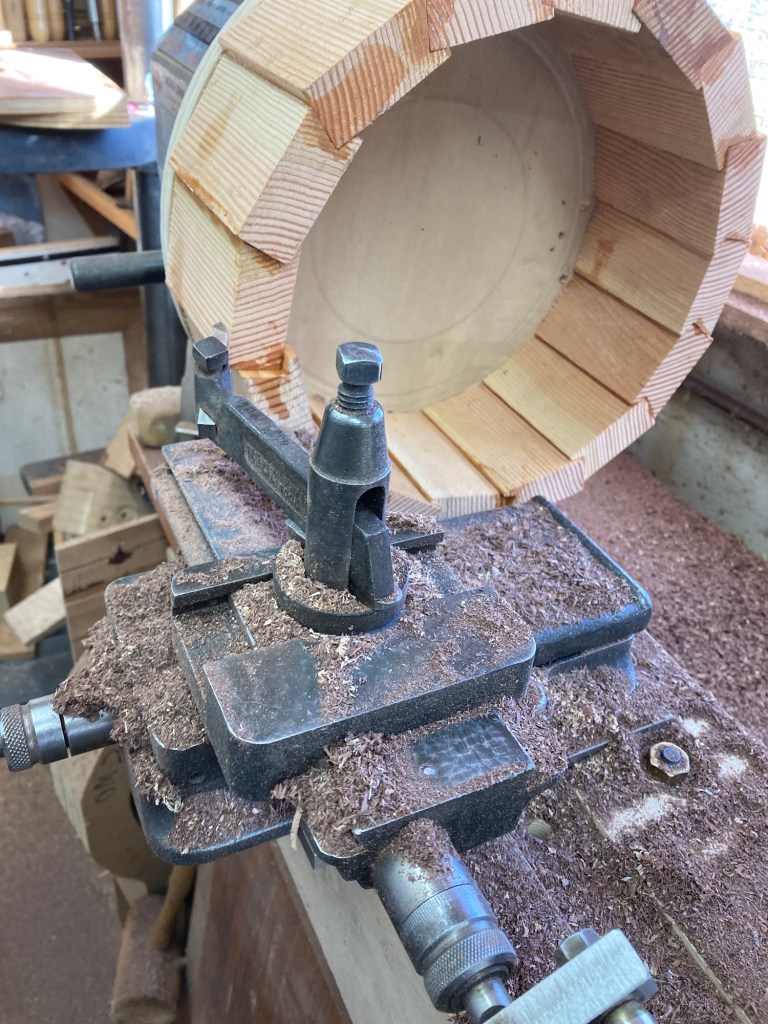
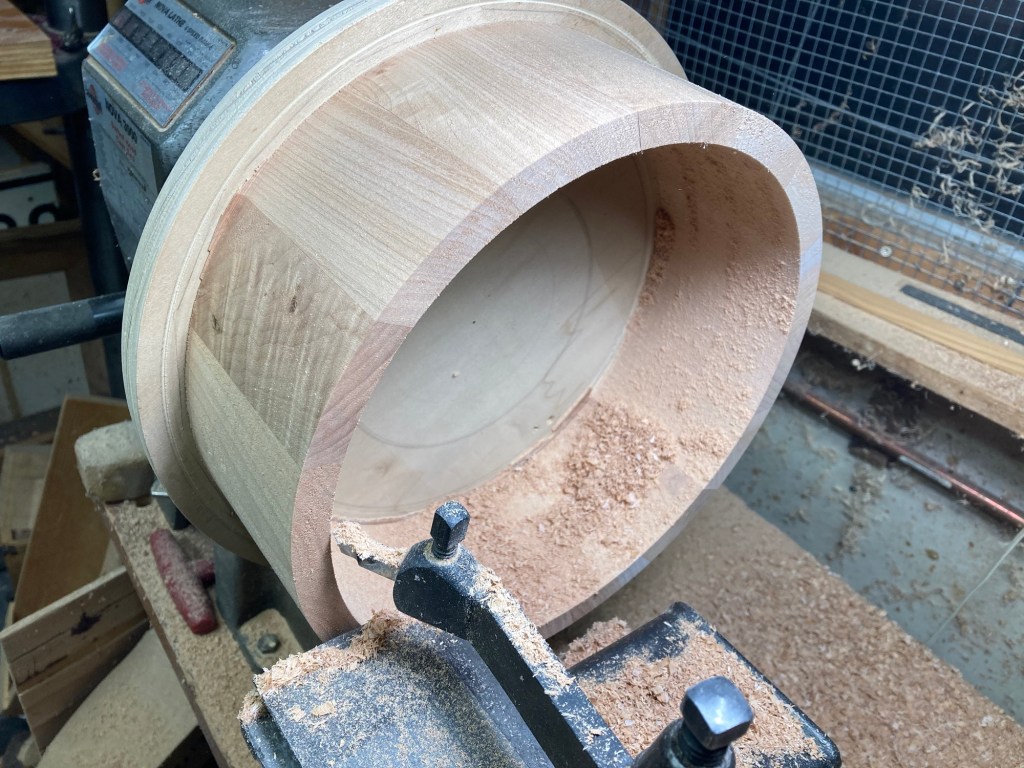
It’s pretty straightforward turning the cylinder, bowl turning methods apply. The first couple of banjos I made, when I got to attaching the necks to the rim I realized that if the rim isn’t a true 90 degree angle it throws off the geometry of your neck heel (angle), which is important for determining the string action, bridge height etc. I spent a lot of time, years ago, turning wood, mostly faceplate work, i.e. bowls, vases, hollow vessels & sculptural work which began on the lathe. One of the goals was to turn a fair curve, or an aesthetically pleasing form, something that didn’t need ornamentation of highly figured wood to succeed. So to need to turn a crisp 90 degree angle is a skill I don’t possess.. Practice, practice would get me there for sure, but my solution was to employ a slide table with a x-y axis.

X-Y Slide table, rigged up to my wood lathe.

I found the slide table on line for a decent price, I like that it’s an old, heavy tool from a metal lathe, solid. It was designed for a lathe with a 12″ swing, I made a wood base to bring it up and out a bit so it would work on my lathe which has a 16″ swing (8 inches from the bed to center on the spindle). It took a little adjustment so it would cut parallel to the lathe bed/spindle. Works great for inside & outside cuts.

Maple rim close to ready for veneering.

It amuses me that my wood turning goal now is to mimic a machine to get a true cylinder. I would never have guessed that back when I did a lot of lathe work.

Adventures in Banjo Making 3 – January 2024

My bent lamination rims are still a work in progress (as with most everything I’m making) but I’ve put them on the back burner for now in favor of exploring the ‘stave’ method I’ve been working on. Someone on the Banjo Hangout forum mentioned it and it reminded me of when I made standup paddle board paddles using this method: http://sawdustfactory.nfshost.com/paddles/ which worked great and used eight staves.

The ‘Stave’ method for a paddle shaft, showing two of eight staves

This makes for a very strong structure, and relatively easy to put together, with the notches helping to hold it together while glueing. For the paddles I glued two at a time, then the four sets of two to manage it. Eight pieces, six feet long all at once before the glue set seemed too much for me. The paddles worked great (I did fiberglass them as well) until they burned in a forest fire in 2021.

16 staves for banjo rims

I used a table saw to cut the notches for the paddles, a simple 45 degree v/cut. I wanted more staves for the banjo rims to have less flat surface to remove to get them to round. I opted for a router bit made for this purpose rather then fussing with the table saw. My rims use 16 staves, this is where I bought the bit: Woodline (no affiliation), there’s a few suppliers that carry these, probably most are equal in quality etc.

Glueing and clamping

I like this method for a few reasons, it utilizes long grain glueing, it’s relatively easy to put together and clamp (note the cool band clamps) and once the glue is set it’s very strong. The banjo rims are easier to make then the paddle shafts, they’re straight sided, the paddles are tapered from end to end, not that difficult, but another step. I use epoxy to glue the staves together, very strong, doesn’t add moisture to the mix, and fills gaps. Titebond would work well too.

Bandsaw jig for cutting the rims off the.. barrel..?

These are for 11″ rim banjos, I have a 14″ bandsaw with a riser block for resawing (12″ maximum cutting height), the rim & jig just fit under that limit, not sure what I’ll do if I make a 12″ rim. Works well, but definitely needs to be securely clamped to the jig. I did cut a rim on the tablesaw, using the fence as a guide, it worked but slightly stressful considering the potential for a mishap. The jig has a 1/4″ plywood base, so I put a scrap piece of the same under the barrel to keep it level while making the cut, as the blade wants to push the pot towards the saw table. It makes for a good 90 degree cut.

Ready for the lathe..

More to come..

Adventures in Banjo Making – 02

Cooked or steamed pieces initially clamped in a ‘inside form’, while still hot

For me, the first step was to figure out how to make a pot, or the body of the banjo. There are a few ways to make one, one is to bend long strips of wood into a hoop, and laminate them together. Another is to make a segmented ring with wedge shaped pieces, then stacked in a brick laid fashion and then turned to dimension. A different method uses staves notched together and formed into a cylinder, turned round and smooth and then veneered (or not) on the inside & out.
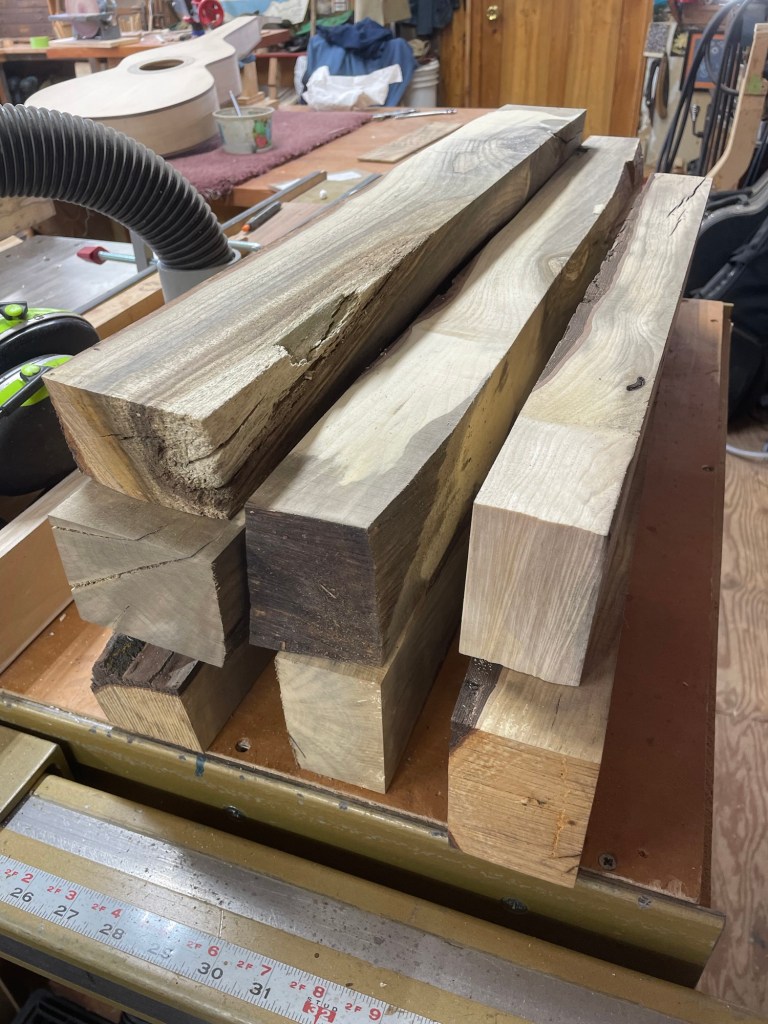
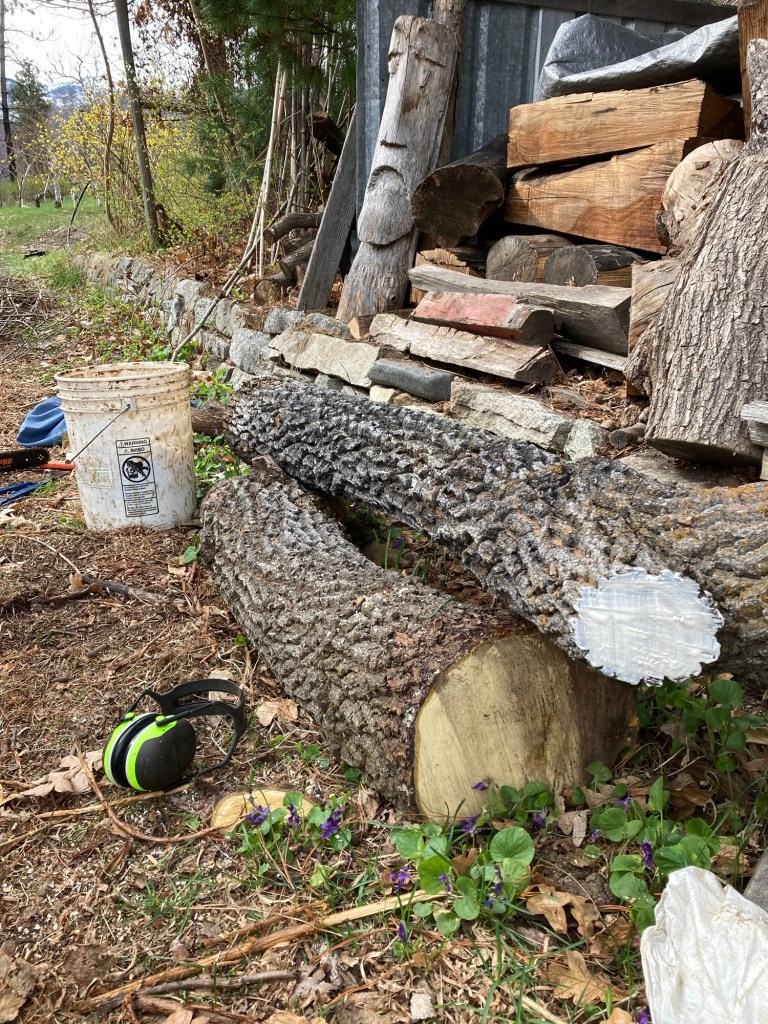
Notched staves

I’ve made three banjos using the long strips, for the first one I cooked the wood in a length of galvanized rain gutter for hours, then bent the pieces on a inside form as quickly as possible, they lose their elasticity pretty fast. Then moved to and clamped in an outside form to completely cool. I’ve had decent luck with this, as the banjos play and sound good, to my ears anyway. Not an easy method, I’m still working to get it just right. I started with 1/4″ thick boards, which need to be straight and defect free, and cut to exact lengths so the ends butt up to each other cleanly with no gaps.

Cooking the wood, not the most elegant, but effective (that’s a fire brick holding the wood down in the water)

I’ve decided that the 1/4″ is too thick, the wood cools too fast and it’s a workout to get all clamped before it stiffens up. I want to try using thinner boards and different method of joining the ends and hope to get to it later in the Winter, but for now I’ve been working to dial in the stave method, which I’ll go through in the next post.

A ‘outside form’ with three layers of 1/4″ maple plys