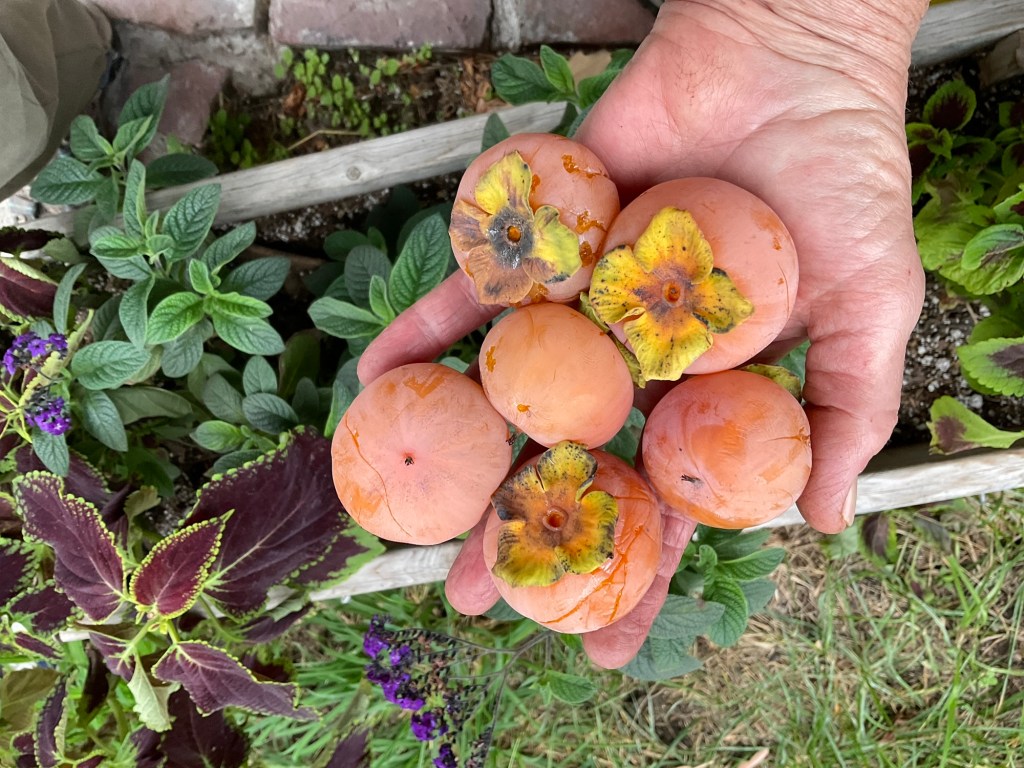
There are many adequate domestic woods to serve as finger/fret boards, as I mentioned in the previous post. Hard & long wearing, but maybe not the right color. Vacuum dyeing is an option, and any color could be used, royal blue or fire engine red..? I’m interested, but haven’t committed or invested in those capabilities. I’m not a traditionalist, a non black fret board works for me, but a dark fb does look good.
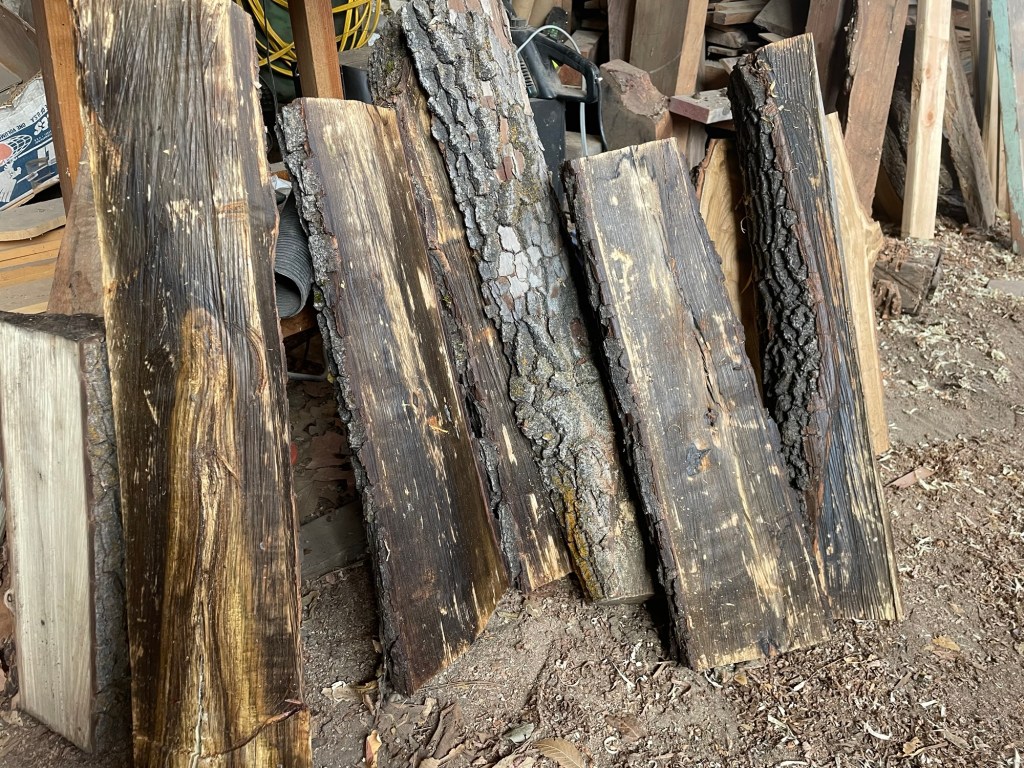
Persimmon is squirrelly wood, it twists and checks easily, and it isn’t rot resistant which isn’t important in this context, except for curing it. I usually rip the log with a chain saw after it’s cut, I follow the pith as much as possible, trying to eliminate some tension in the wood and minimize checking, as I do with most wood I harvest. I’ll paint the ends, and sometimes the whole cut face, with Anchorseal, a water based wax coating made for this purpose, to slow down the drying. If it dries too fast it will check profusely. Then I stack the half logs (logs is usually a overstatement, 10-12″ diameter is probably the biggest persimmon I’ve ever dealt with, but more often smaller) with stickers between in a place out of direct sunlight, and sometimes put a tarp or sheet metal over it to slow the drying as much as possible.
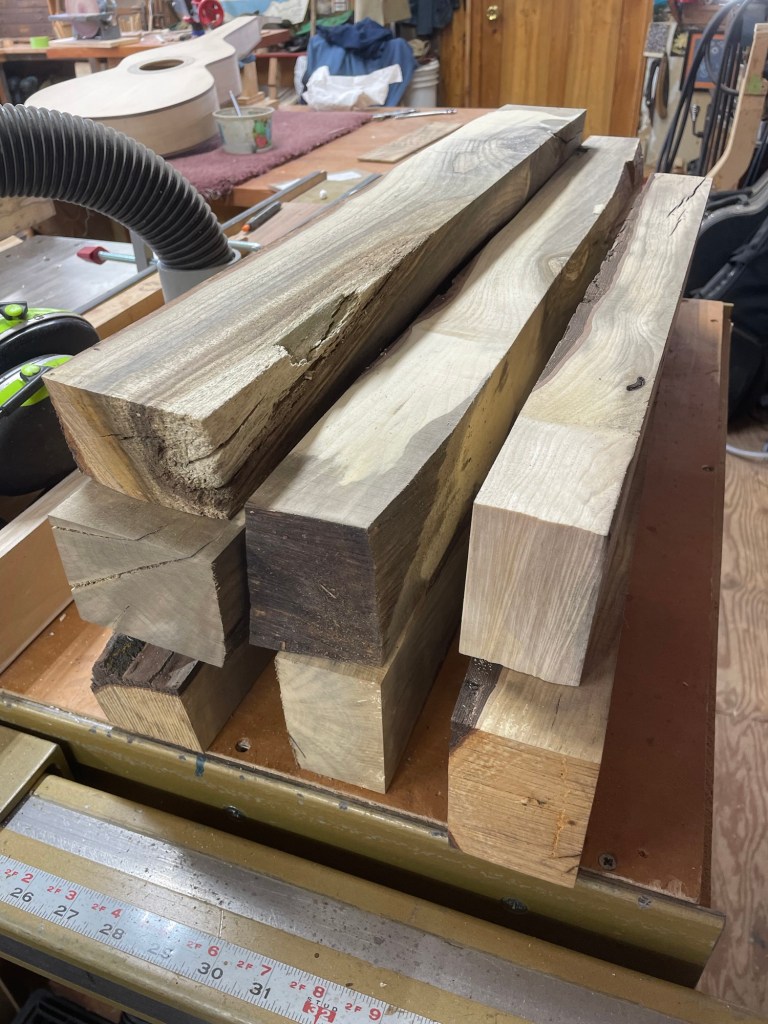
As mentioned above that Persimmon is not rot resistant, if the drying is slowed too much, or covered without air flow, it could rot. It needs to dry, but not too fast, and the drying slowed, but not too much. Our place is in eastern Washington state, hot & dry Summers, my main obstacle is keeping it from drying too fast. The wood is white when cut, with a little dark wood, older and close to the pith but not much, depending on the tree. But after a year or two being waxed and under cover it begins its decomposition process, turning some grey and various colorings, but it dries enough to halt that process before it rots the wood. In my experience, the pre-spalt is just that, pre. The wood is still hard and very usable.
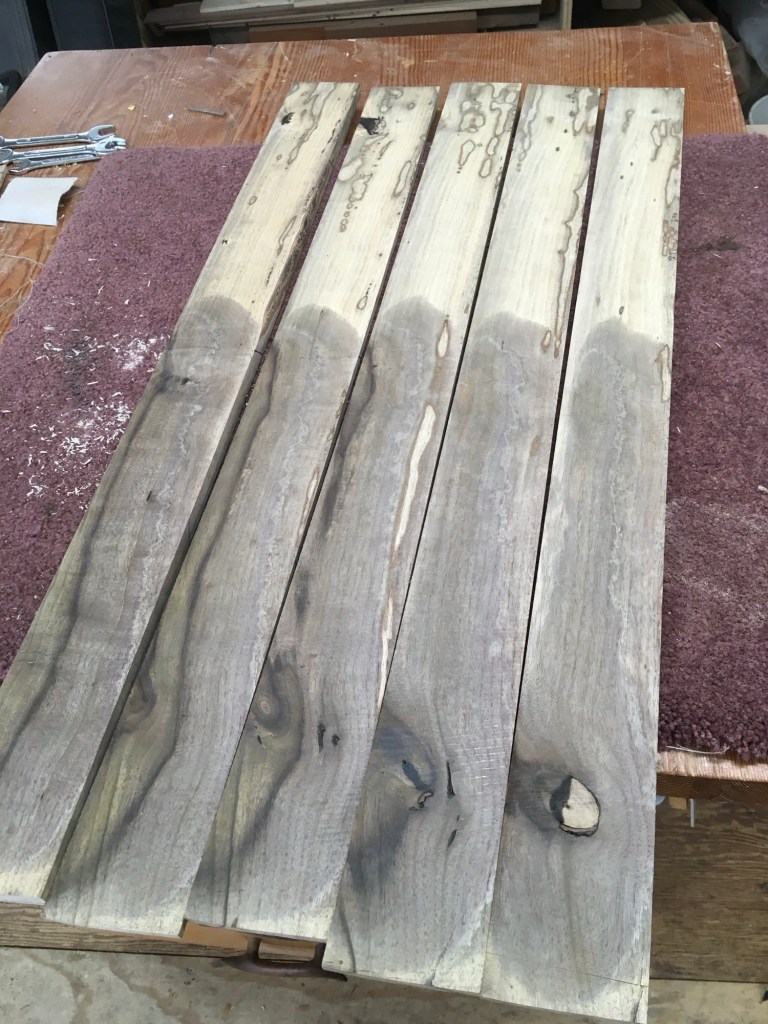
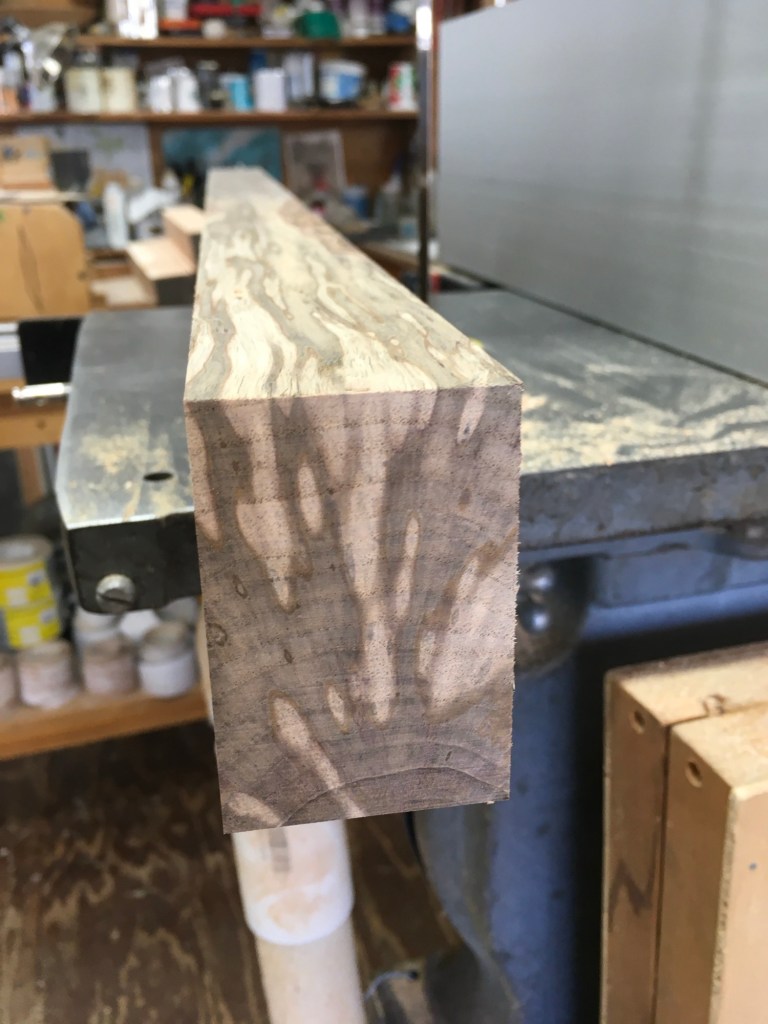
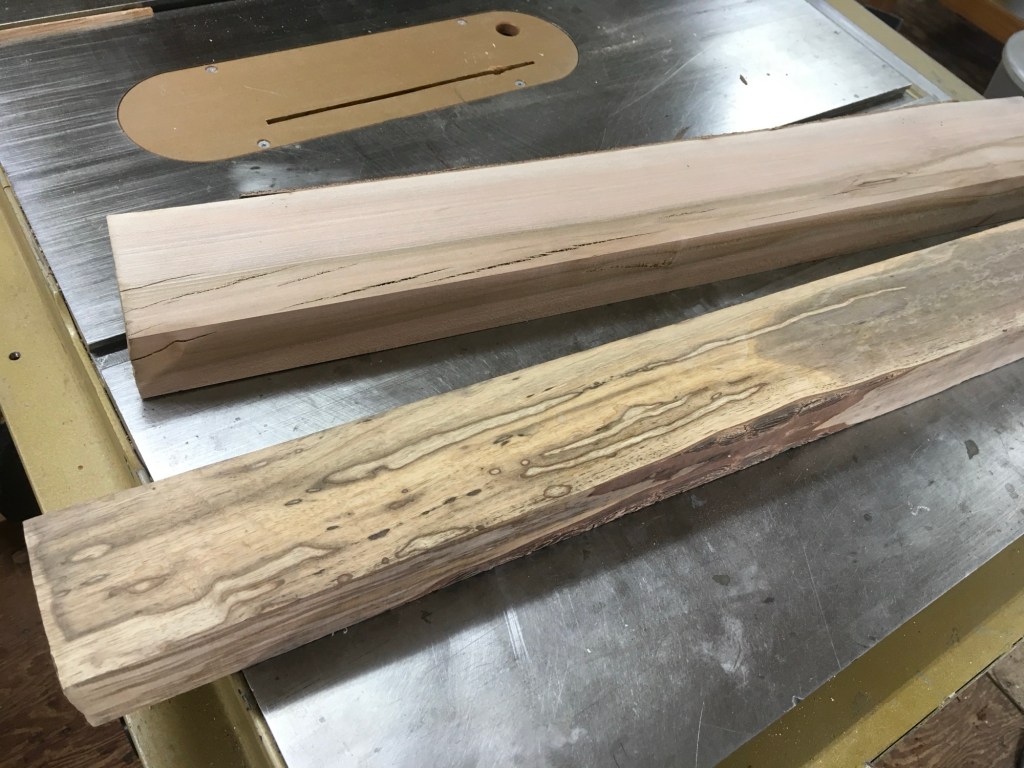
Some of the Coloring That Happens While Drying (the bottom photo also has a piece of Dogwood next to the Persimmon)
I’ve had good luck using this wood for fretboards, once it’s cured, it is stable and has shown a great resistance to wear. I discovered a few years ago that pisgahbanjos use it for fretboards on some of their banjos, I’m guessing that it’s a native tree in their woods. I think there’s more then a few tree/shrubs with wood that would well for this purpose, it’s not easy to find them that are big enough and not too branchy or not straight enough. I always mill it so I can quarter saw the fingerboards.
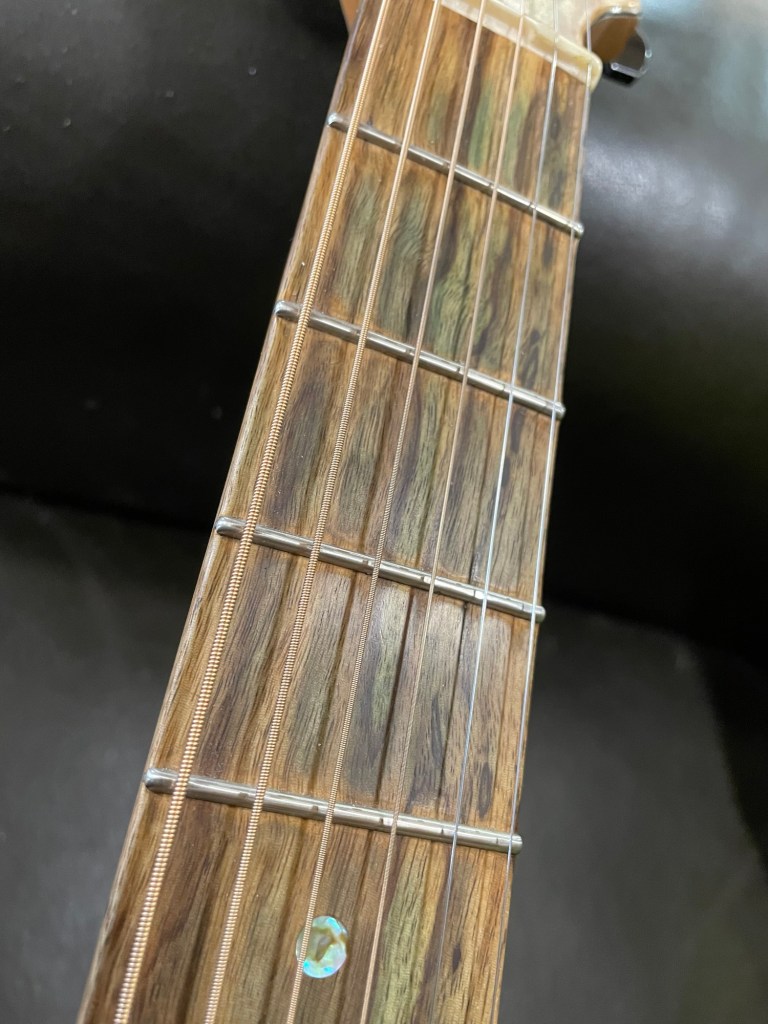
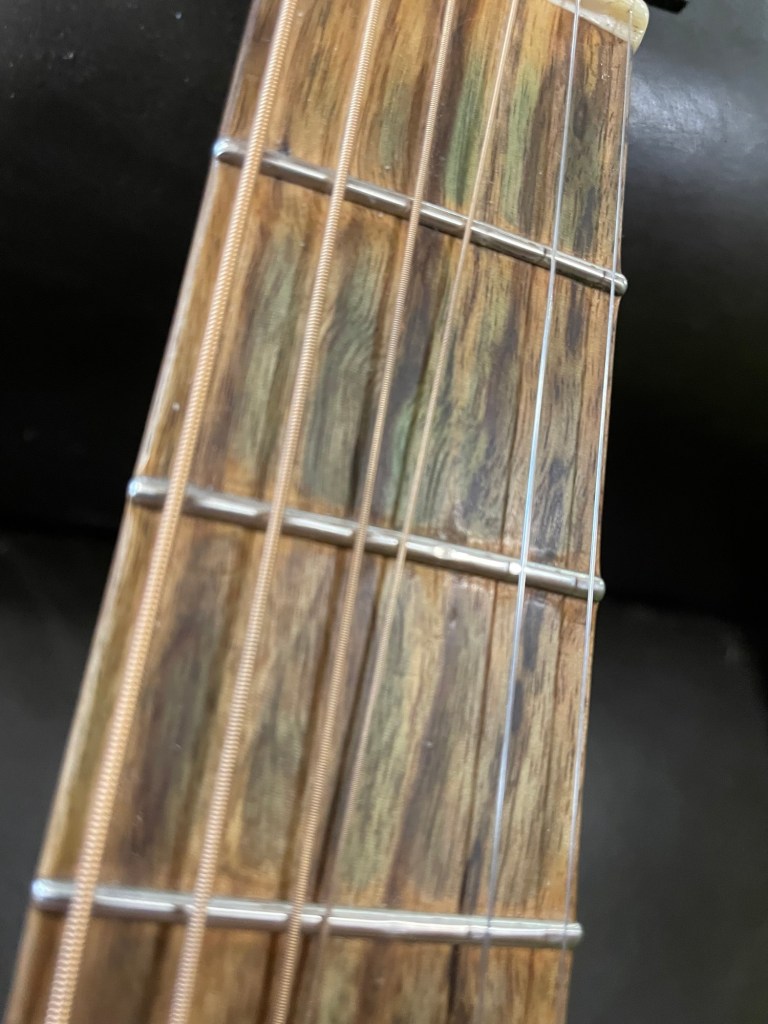
I encourage everyone to look for alternatives to tropical woods for whatever you make. Keep in touch and let us know what you come up with.
 Hampel Guitars