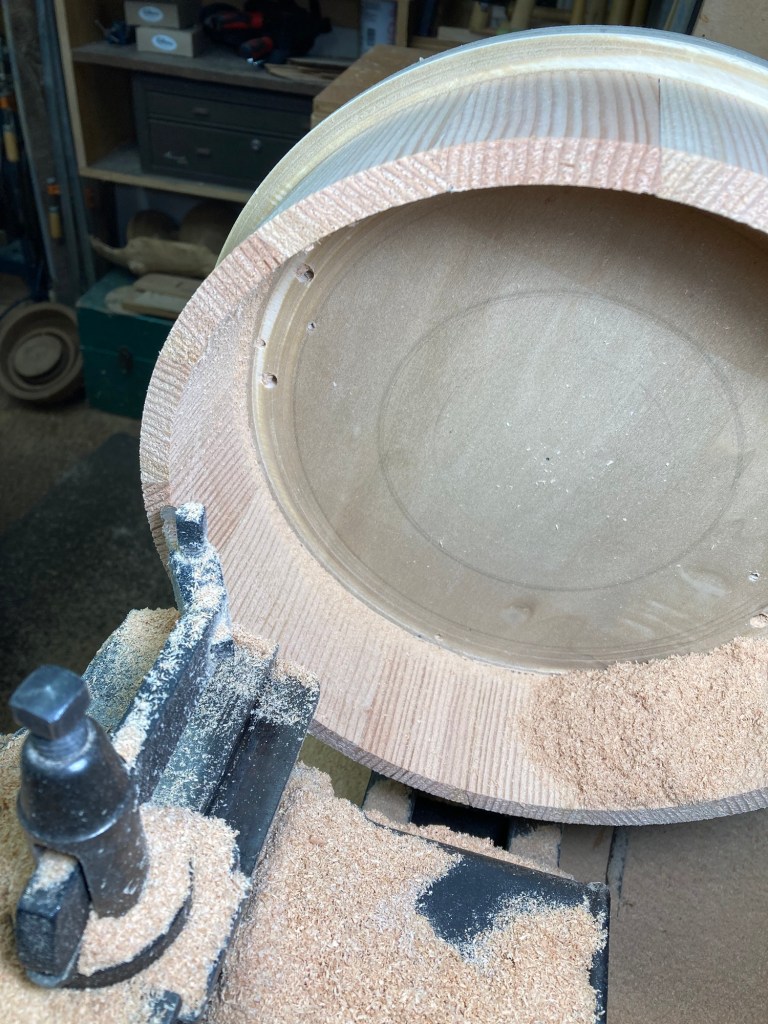
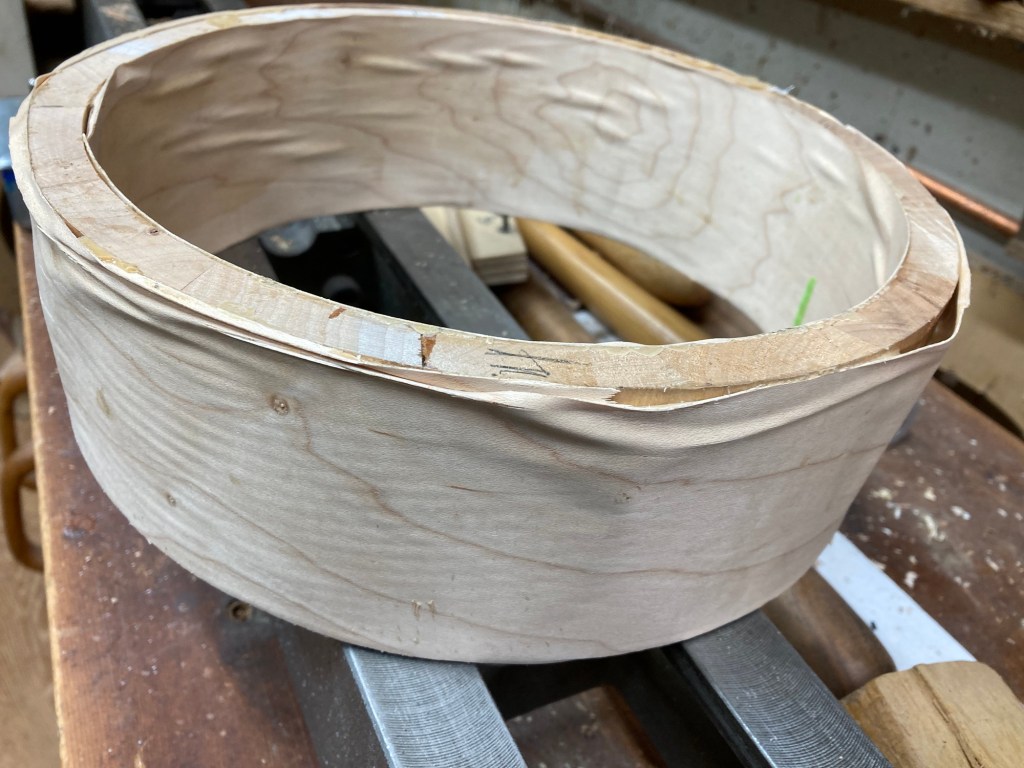
It’s been a while I know.. busy on the farm. After the rims are turned and trued up it’s time to veneer the outside and inside. I’ve experimented with regular veneer, which is pretty thin (about 1/24″, or 0.024″, or 0.6 mm) which is a standard thickness, and found it to be too thin. It’s too easy to sand through and with my vacuum clamping setup it pulled the veneer, see next photo. I’m definitely not fluent in veneering, so I do have a lot to learn and someone that knows what their doing wouldn’t have the same issues or problems I did, think of drums, a wood core with a beautiful veneered surface.
Thicker veneer is available, 1/24″ (0.042″, 1mm) and 1/16″ (0.063″, 1.5mm). Making it is also a option, it takes some time with the tools I have, resawing doesn’t take long, but sanding it does with my shop-made thickness sander. The advantage to making your own is that you have more options and are able to use local material, if you have access the wood. Either way the results are much improved with thicker material. I’ve laminated them using a vacuum pump and bag, and have had good results, but with hindsight I think using cauls and clamps might be as effective. Here’s what the setup looks like:
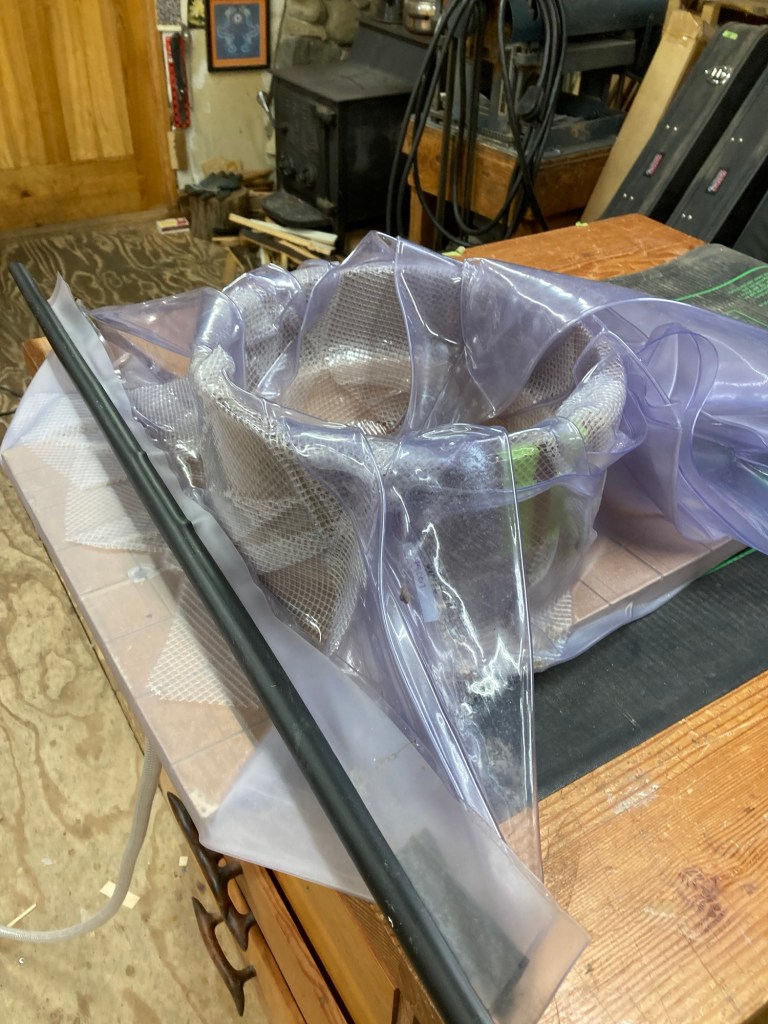
There’s a rim under the one that’s being clamped to give the thick laminating bag space to completely reach the bottom of the rim. Without the lower rim, the bag doesn’t quite reach the bottom of the rim due to the thickness of the bag which doesn’t make a sharp corner at the intersection of the rim & platen, without contact with the bag there’s no clamping pressure there. I tape the veneer to the rim after applying glue to hold it in place while laminating. Cutting the veneer to an exact as length as possible to avoid any overlap where they meet. A not perfect meet on the outside will get covered with the neck heel, on the inside I’ve sometimes put sort of a tail graft to cover/highlight the seam.
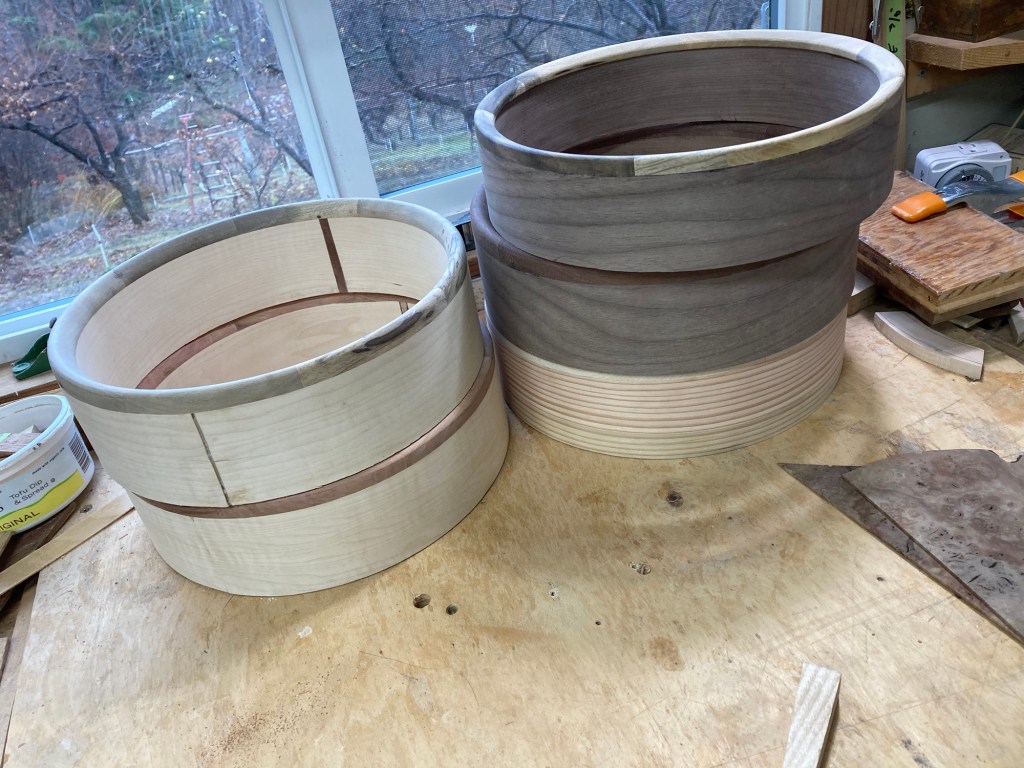
This is where the rims are now, I did make wood tone rims on each of them (6) with different woods. Using the hardest woods I have: Persimmon, Jarra, Douglas (or Rocky Mountain) Maple, Apple and Plum. Next step is to put a decorative trim on the rim, then on to making the necks.





 Hampel Guitars