After the ‘barrels’ are cut they’re ready to turn on the lathe. My current method is to use 3/4″ plywood screwed to a lathe faceplate, using two pieces of plywood is probably a better way, more stable. I center the barrel on the plywood and drill four holes (or more) through the ply into the barrel. It’s important to number the holes and to remember to write the numbers on the work so it can be taken off and on and lined up to where it started, which happens several times.
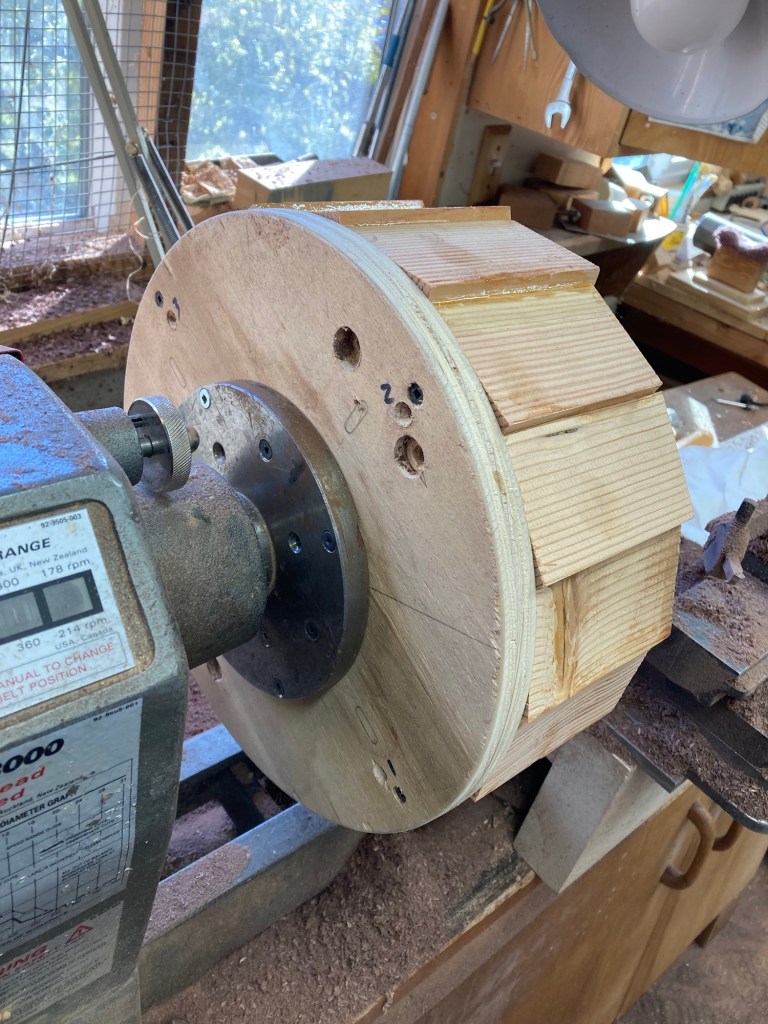
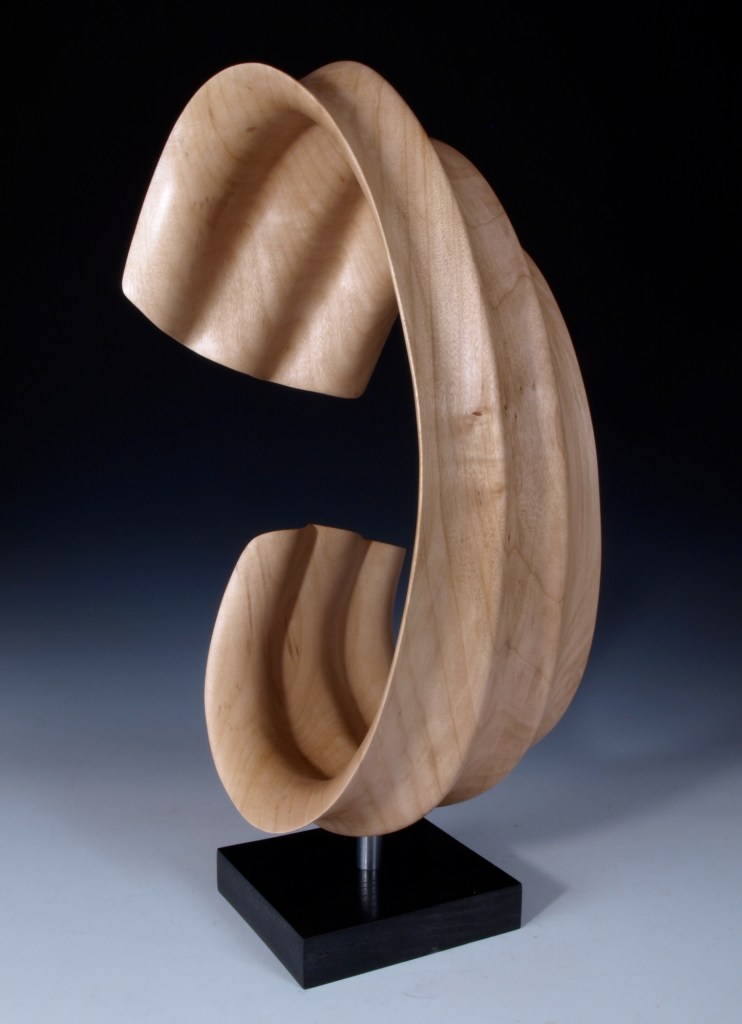
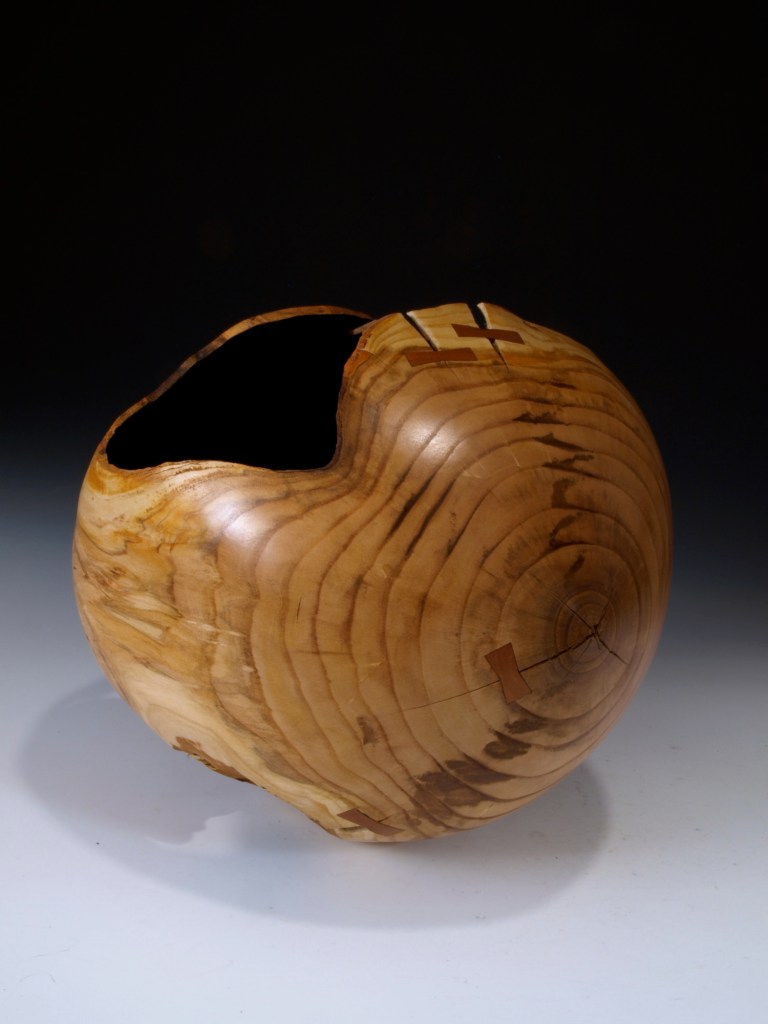
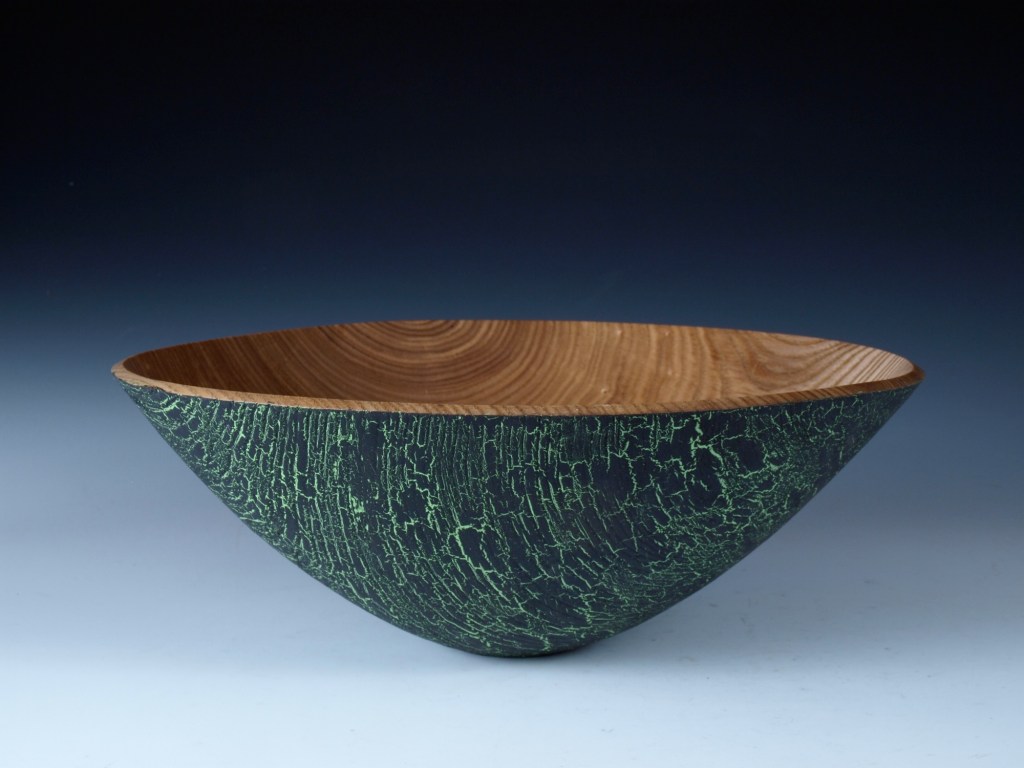
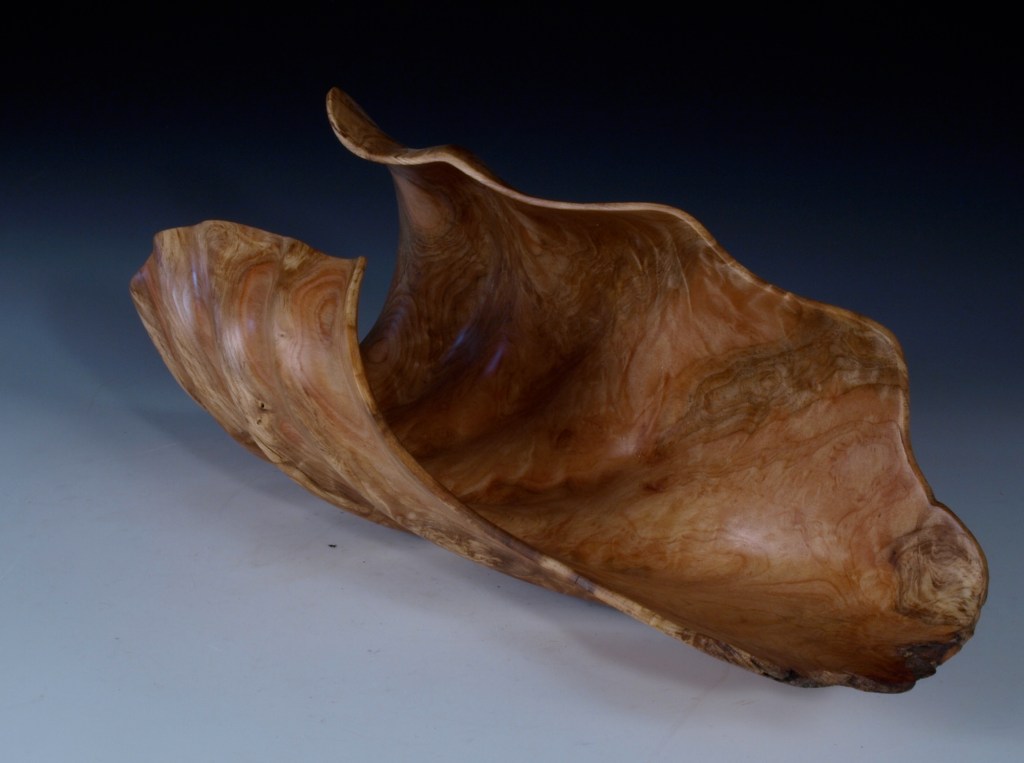
It’s pretty straightforward turning the cylinder, bowl turning methods apply. The first couple of banjos I made, when I got to attaching the necks to the rim I realized that if the rim isn’t a true 90 degree angle it throws off the geometry of your neck heel (angle), which is important for determining the string action, bridge height etc. I spent a lot of time, years ago, turning wood, mostly faceplate work, i.e. bowls, vases, hollow vessels & sculptural work which began on the lathe. One of the goals was to turn a fair curve, or an aesthetically pleasing form, something that didn’t need ornamentation of highly figured wood to succeed. So to need to turn a crisp 90 degree angle is a skill I don’t possess.. Practice, practice would get me there for sure, but my solution was to employ a slide table with a x-y axis.
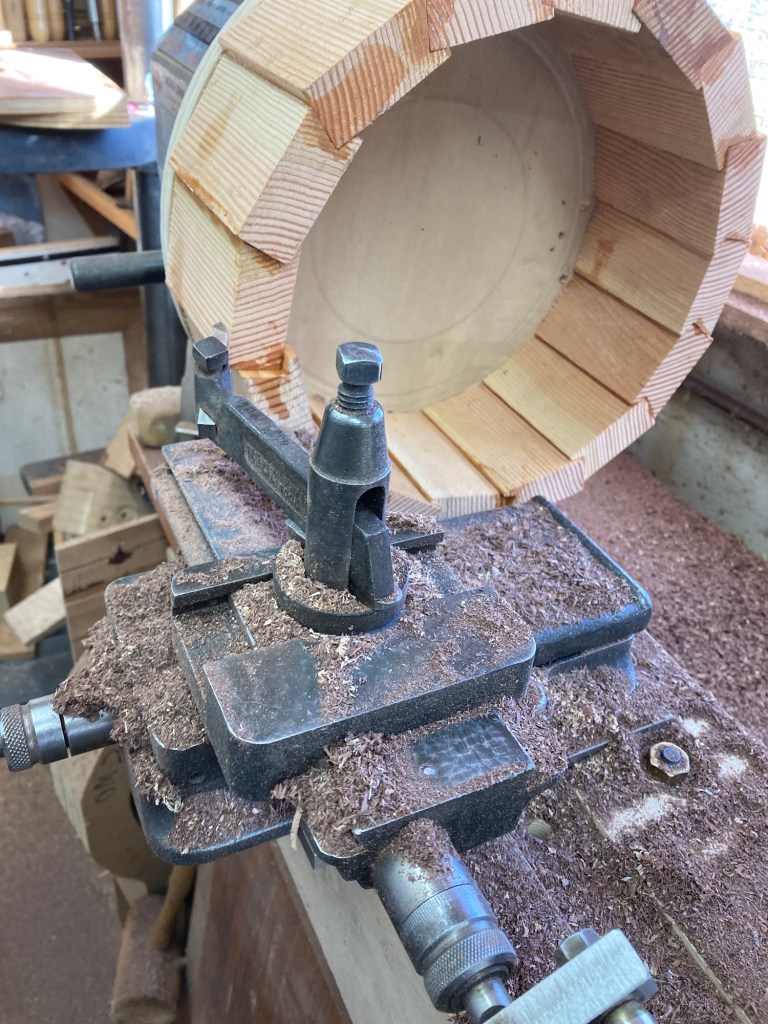
I found the slide table on line for a decent price, I like that it’s an old, heavy tool from a metal lathe, solid. It was designed for a lathe with a 12″ swing, I made a wood base to bring it up and out a bit so it would work on my lathe which has a 16″ swing (8 inches from the bed to center on the spindle). It took a little adjustment so it would cut parallel to the lathe bed/spindle. Works great for inside & outside cuts.
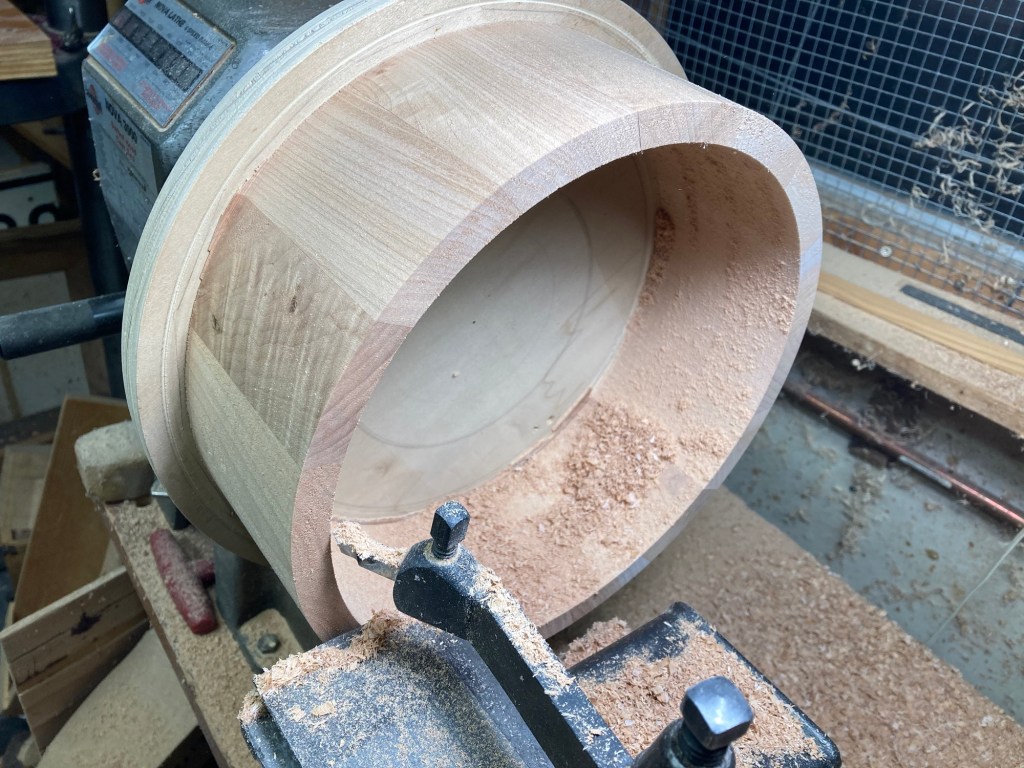
It amuses me that my wood turning goal now is to mimic a machine to get a true cylinder. I would never have guessed that back when I did a lot of lathe work.
 Hampel Guitars