Just finished two guitars which I’m pretty happy with. With the time I have to make guitars I can usually make two a year, sometimes I start and work on more then that, but realistically only two get done a season. These two are a couple I started last Winter, numbers 10 & 11. My goal with these, besides trying to make playable and great sounding instruments, was to make them with as much local wood as I could manage.
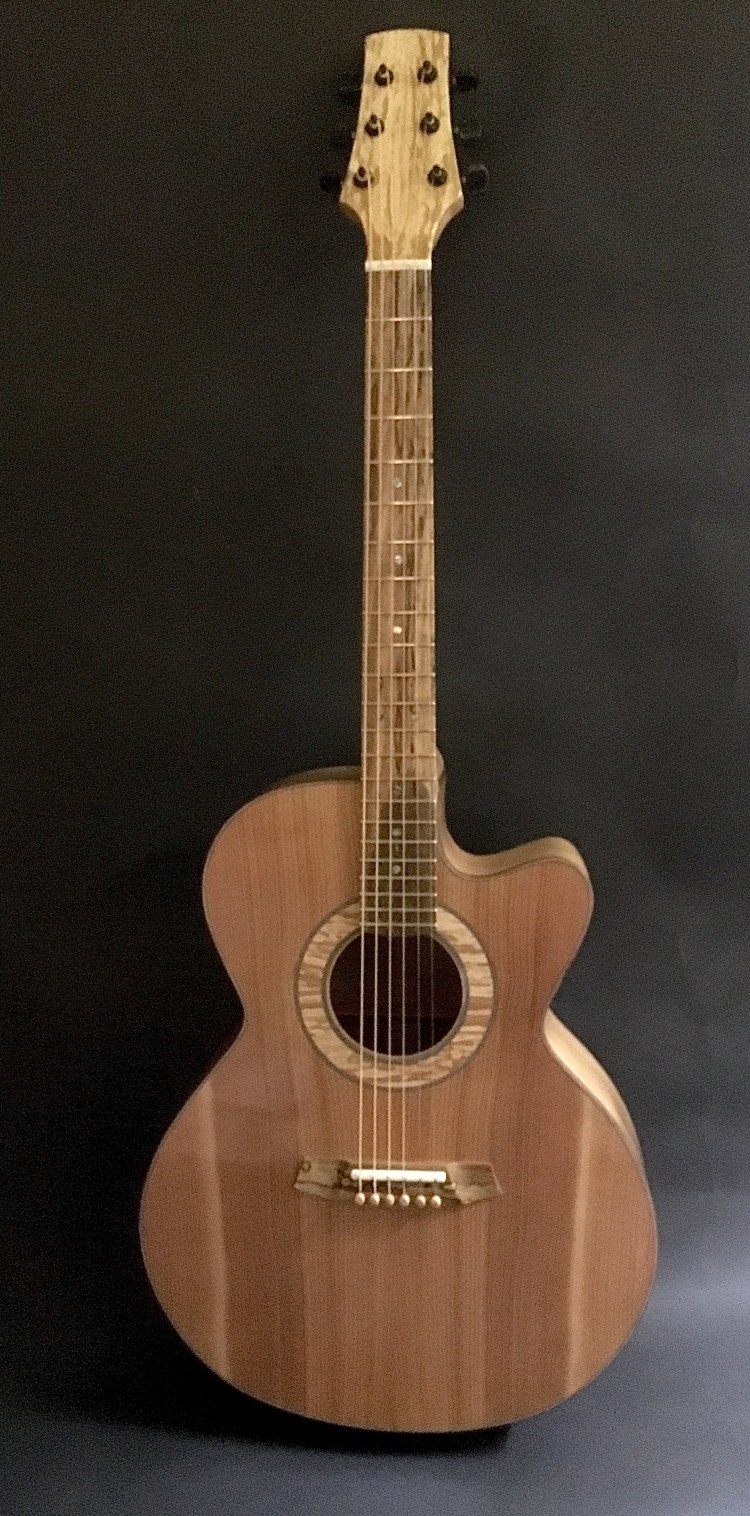
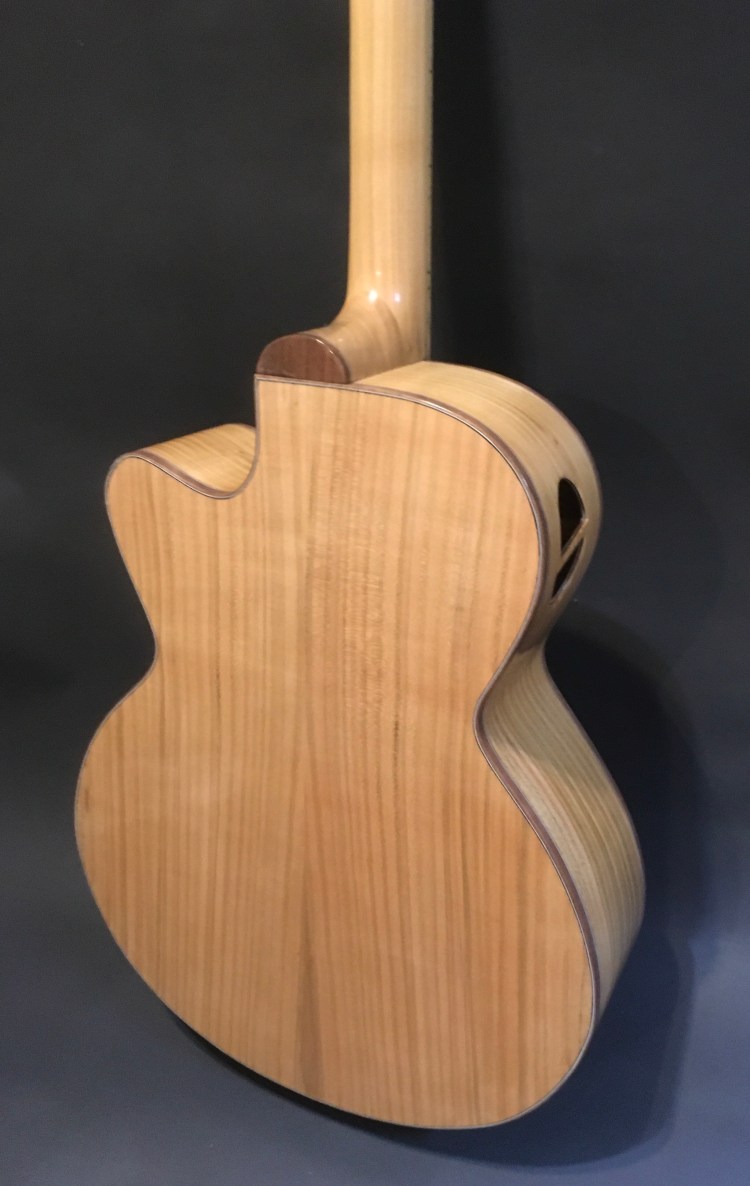
This is #10, every piece of wood came from 25 Mile Creek Valley, which drains into Lake Chelan in the eastern foothills of the North Cascades. Some of the material came from native trees and the rest from trees grown on farms or homesteads.
The back and sides are Cherry from a neighbors home/orchard trees, the soundboard is western Red Cedar, which may or may not have grown in 25 Mile, but was harvested as driftwood on the shore of Lake Chelan at the mouth of 25 Mile Creek. The bracing is made with Douglas Fir from the upper slopes of Grouse Mountain. The kerfing (which goes around the inside, top and bottom, used to attach the top and back of the guitar to the sides) is made from Chestnut wood, grown on our farm. The fretboard and bridge are Persimmon, the northern most relative of ebony (Diospyros) also grown here. The rosette and peghead veneer are apple wood, and the binding is black walnut from one of the oldest settlements in the valley. The only material not from here is the bridge pins which are made from boxwood, the nut and saddle which are cow bone and the abalone fret markers.
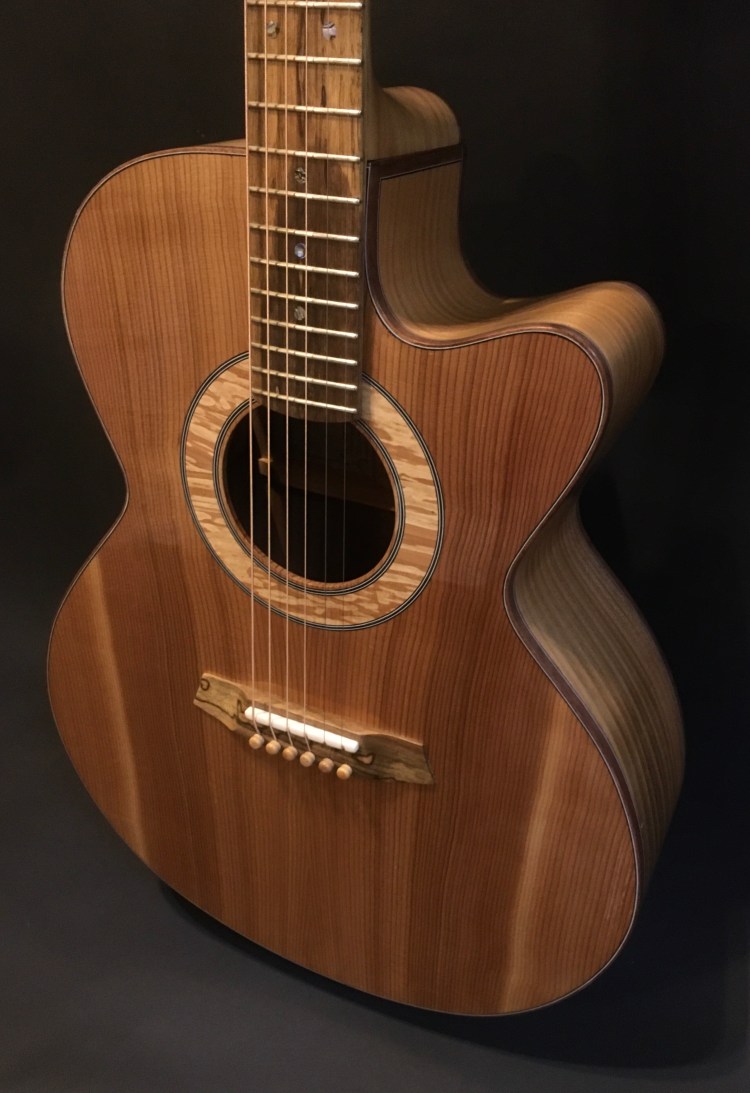

I started putting sound ports on some of my guitars, they’re the openings on the sides of the upper bout. With a conventional sound hole, the sound is directed outward, away from the player, the idea of the sound port is to give the person playing more of the sound coming out of guitar. I haven’t been playing a guitar with a side port for very long, but it really adds so much more sound while playing it.
I’m like the idea of making instruments from domestically grown wood. I don’t have anything against using tropical tonewoods, and I know that only a small percentage of the tropical wood harvest globally goes to making guitars, but there is an incredible selection of woods that grow here, that would and do make great instruments. It’s my drop in the bucket to trying not to contribute to the pillage of tropical forests. That’s not to say that Northern forests aren’t over harvested or that poachers stealing trees from the forest isn’t a problem too. I think it’s worth trying to procure the wood we use from a legit and responsible sources, ask. In truth, I haven’t worked with that much tropical hardwoods, so it could be said that I don’t know what I’m talking about, as far as comparing it with domestic woods. It’s also probably not as easy to sell stringed instruments using non traditional woods, so.. There are plantations in the tropics to try to supply those beautiful woods in managed, sustainable systems, which is great news.
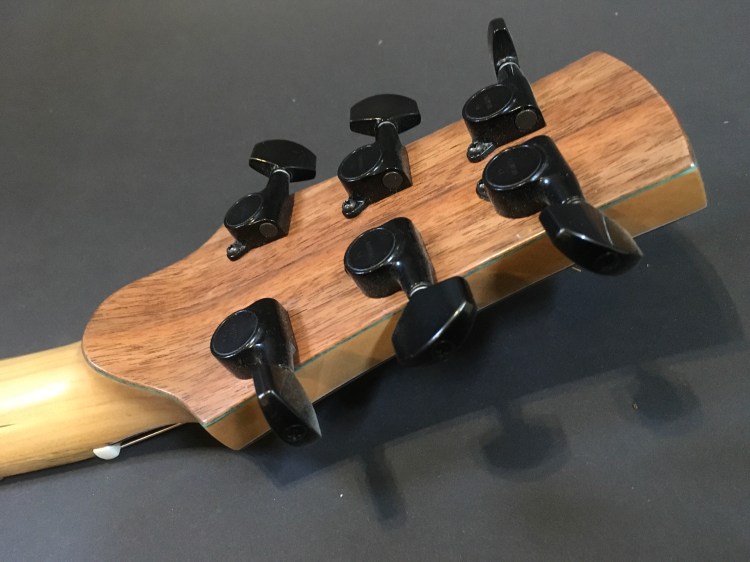
I’ll post #11 in another entry.
 Hampel Guitars